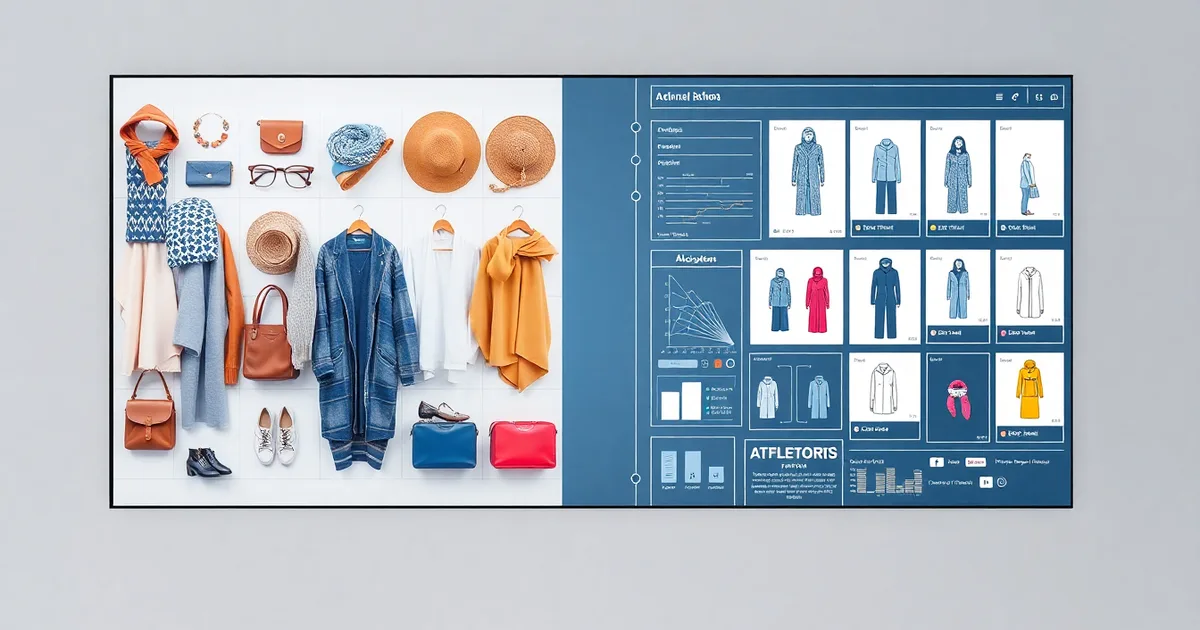
Personalized fashion recommendation engines represent the cutting edge of artificial intelligence in fashion ecommerce, utilizing sophisticated machine learning algorithms to deliver individualized shopping experiences that adapt to each customer's unique style preferences, body type, and purchasing behavior. These advanced AI-powered systems analyze vast datasets including browsing history, purchase patterns, social media activity, and real-time interactions to generate highly accurate product suggestions and styling recommendations. In 2026, leading fashion retailers are leveraging these intelligent platforms to increase conversion rates by up to 40% while significantly reducing return rates and enhancing customer satisfaction through precisely tailored shopping experiences.
What Are Personalized Fashion Recommendation Engines?
Personalized fashion recommendation engines are sophisticated AI-driven systems that analyze individual customer data to provide tailored product suggestions and styling advice in real-time. These platforms combine multiple machine learning techniques including collaborative filtering, content-based filtering, and deep learning neural networks to understand complex fashion preferences and predict future purchasing decisions.
The core components of modern recommendation engines include:
- Data ingestion systems that collect and process customer interactions across all touchpoints
- Machine learning models that identify patterns and preferences from behavioral data
- Real-time processing engines that generate instant recommendations during shopping sessions
- A/B testing frameworks that continuously optimize recommendation accuracy
- Integration APIs that connect with ecommerce platforms and mobile applications
These systems differ significantly from traditional rule-based recommendation systems by their ability to learn and adapt continuously. While basic systems might suggest items based on simple category matching or popularity rankings, AI-powered solutions consider hundreds of variables simultaneously to create truly personalized experiences.
How Do AI-Powered Fashion Recommendation Systems Work?
Modern personalized fashion recommendation engines operate through a multi-layered approach that processes various data sources to understand customer preferences at granular levels. The system architecture typically involves several interconnected components working in harmony.
Data Collection and Processing Layer
The foundation of any effective recommendation engine lies in comprehensive data collection. These systems gather information from multiple sources:
- Explicit feedback - Direct customer inputs such as ratings, reviews, and wishlist additions
- Implicit feedback - Behavioral signals including click patterns, time spent viewing items, and scroll behavior
- Contextual data - Environmental factors such as weather, location, time of day, and seasonal trends
- Social signals - Social media activity, influencer interactions, and peer preferences
- Visual data - Image analysis of previously purchased or viewed items to understand style preferences
Machine Learning Algorithm Framework
The AI processing layer employs various machine learning techniques to transform raw data into actionable insights. Collaborative filtering algorithms identify customers with similar tastes and recommend items popular among peer groups. Content-based filtering analyzes product attributes such as color, style, brand, and material to suggest similar items.
Advanced systems integrate deep learning neural networks that can process complex relationships between multiple variables simultaneously. These networks excel at understanding nuanced style preferences that traditional algorithms might miss, such as the relationship between specific color combinations, seasonal trends, and individual body types.
What Are the Key Benefits of Fashion Personalization Engines?
The implementation of personalized fashion recommendation engines delivers substantial benefits for both retailers and customers, fundamentally transforming the online shopping experience through intelligent automation and precision targeting.
Enhanced Customer Experience and Satisfaction
Personalized recommendations significantly improve customer satisfaction by reducing the time and effort required to discover relevant products. Studies from leading fashion retailers in 2026 show that customers using AI-powered recommendation systems spend 60% less time searching for desired items while discovering 3x more products that align with their preferences.
The systems also provide valuable styling advice and outfit coordination suggestions, effectively serving as virtual personal shoppers. This capability is particularly valuable for customers who lack confidence in fashion choices or want to explore new styles while maintaining their personal aesthetic.
Improved Business Metrics and ROI
Fashion retailers implementing advanced recommendation engines typically experience significant improvements in key performance indicators:
- Conversion rate increases of 25-40% through more relevant product suggestions
- Average order value growth of 15-30% via intelligent cross-selling and upselling
- Return rate reductions of 20-35% due to better size and style matching
- Customer lifetime value improvements of 40-60% through enhanced engagement and loyalty
- Inventory turnover acceleration by promoting slow-moving items to relevant customer segments
Which Technologies Power Modern Fashion Recommendation Engines?
The technological foundation of personalized fashion recommendation engines encompasses multiple layers of sophisticated systems working in concert to deliver seamless, real-time personalization at scale.
Artificial Intelligence and Machine Learning Core
Natural Language Processing (NLP) enables systems to understand and interpret customer reviews, social media posts, and search queries to extract style preferences and sentiment analysis. Computer Vision algorithms analyze product images to understand visual similarities, color palettes, and style attributes that inform recommendation logic.
Reinforcement learning models continuously optimize recommendation strategies based on customer responses and outcomes. These systems learn from both successful recommendations that lead to purchases and unsuccessful suggestions that result in customer disengagement.
Cloud Infrastructure and Scalability
Modern recommendation engines rely on cloud-native architectures that can scale dynamically to handle varying traffic loads. Microservices architecture enables different components of the system to scale independently, ensuring optimal performance during peak shopping periods.
Real-time data processing capabilities powered by streaming technologies allow for instant recommendation updates based on current browsing behavior. This ensures that suggestions remain relevant and timely throughout each customer's shopping journey.
How to Implement Personalized Fashion Recommendation Systems?
Successful implementation of personalized fashion recommendation engines requires careful planning, technical expertise, and strategic alignment with business objectives. The process involves multiple phases, each critical to achieving optimal results.
Implementation Planning and Strategy
The first phase involves defining clear objectives and success metrics for the recommendation system. Organizations must identify specific use cases, target customer segments, and expected business outcomes. This strategic foundation guides technical decisions and resource allocation throughout the implementation process.
Data audit and preparation represent critical early steps. Companies must assess existing data quality, identify gaps in customer information, and establish data collection processes for ongoing system improvement. Customer data platform integration often serves as a prerequisite for comprehensive personalization capabilities.
Technical Implementation Steps
- Data infrastructure setup - Establish robust data pipelines for collecting, processing, and storing customer interaction data
- Model development and training - Create and train machine learning models using historical customer data
- API development - Build integration points with existing ecommerce platforms and mobile applications
- Testing and validation - Implement comprehensive testing frameworks including A/B testing capabilities
- Deployment and monitoring - Launch the system with real-time monitoring and performance tracking
- Optimization and iteration - Continuously refine algorithms based on performance data and customer feedback
What Are the Current Challenges in Fashion Personalization?
Despite significant advances in AI technology, personalized fashion recommendation engines face several persistent challenges that impact their effectiveness and adoption across the industry.
Data Privacy and Compliance Issues
Privacy regulations such as GDPR, CCPA, and emerging data protection laws create complex compliance requirements for fashion retailers. These systems must balance personalization effectiveness with strict data privacy standards, often requiring sophisticated consent management and data anonymization techniques.
Customers increasingly demand transparency about how their data is collected and used, requiring retailers to implement clear privacy policies and provide granular control over personal information sharing. This transparency requirement sometimes conflicts with the need for comprehensive data collection to power effective recommendations.
Technical and Operational Challenges
Fashion products present unique challenges for recommendation systems due to their highly visual and subjective nature. Unlike books or electronics, fashion items involve complex considerations including seasonal relevance, size variations, color preferences, and personal style evolution over time.
- Cold start problems - Difficulty providing accurate recommendations for new customers with limited interaction history
- Seasonal inventory changes - Rapid product turnover requiring constant model retraining and adaptation
- Size and fit complexities - Integrating body measurements and fit preferences with style recommendations
- Cultural and regional variations - Accounting for different fashion preferences across geographic markets
How Do Fashion Brands Measure Recommendation Engine Success?
Measuring the effectiveness of personalized fashion recommendation engines requires a comprehensive approach that considers both quantitative performance metrics and qualitative customer experience indicators.
Key Performance Indicators (KPIs)
Click-through rates (CTR) on recommended products provide immediate feedback on recommendation relevance and visual appeal. Top-performing fashion recommendation engines achieve CTRs of 8-15%, significantly higher than non-personalized product suggestions.
Conversion rates measure the percentage of recommendation views that result in actual purchases. Advanced systems track conversion rates across different recommendation types, such as similar items, complementary products, and trending suggestions.
| Metric | Industry Average | Top Performers | Measurement Period |
|---|---|---|---|
| Recommendation CTR | 3.2% | 12.8% | Monthly |
| Conversion Rate | 2.1% | 6.7% | Monthly |
| Revenue Attribution | 22% | 45% | Quarterly |
| Customer Satisfaction | 7.2/10 | 8.9/10 | Quarterly |
| Return Rate Reduction | 8% | 28% | Quarterly |
Advanced Analytics and Attribution
Revenue attribution analysis tracks the percentage of total sales directly attributable to recommendation engine suggestions. Leading fashion retailers report that 35-50% of their online revenue stems from personalized recommendations, demonstrating the significant impact of these systems on business performance.
Customer lifetime value (CLV) analysis reveals the long-term impact of personalization on customer relationships. Customers who regularly engage with personalized recommendations typically exhibit 40-60% higher CLV compared to those who primarily browse without system assistance.
What Does the Future Hold for Fashion Recommendation Technology?
The evolution of personalized fashion recommendation engines continues to accelerate, driven by advances in artificial intelligence, augmented reality, and real-time data processing capabilities that promise even more sophisticated and immersive shopping experiences.
Emerging Technologies and Innovations
Augmented reality integration allows customers to virtually try on recommended items before purchasing, combining personalization with immersive visualization. These AR-powered systems use body scanning technology to ensure accurate fit predictions and styling visualization.
Voice-activated shopping assistants powered by natural language processing enable conversational commerce experiences where customers can describe desired items in natural language and receive personalized suggestions through voice interfaces.
Integration with virtual fashion design platforms enables real-time customization recommendations, allowing customers to modify suggested items to better match their preferences.
Sustainability and Ethical Fashion Integration
Future recommendation engines will increasingly incorporate sustainability metrics and ethical manufacturing information into their suggestion algorithms. Customers will be able to specify preferences for eco-friendly materials, fair trade manufacturing, and circular fashion principles.
These systems will also promote supply chain transparency by recommending products from brands with verified ethical practices and environmental commitments.
Practical Implementation Tips for Fashion Retailers
Successfully deploying personalized fashion recommendation engines requires careful attention to both technical implementation details and strategic business considerations.
- Start with clean, comprehensive data - Ensure product catalogs include detailed attributes, high-quality images, and accurate categorization
- Implement progressive personalization - Begin with basic collaborative filtering and gradually introduce more sophisticated AI models
- Focus on mobile optimization - Ensure recommendation interfaces work seamlessly across all device types and screen sizes
- Establish feedback loops - Create mechanisms for customers to rate recommendations and provide explicit preference information
- Monitor performance continuously - Implement real-time analytics to track recommendation effectiveness and customer satisfaction
- Respect privacy preferences - Provide transparent privacy controls and clear value propositions for data sharing
- Test recommendation placement - Experiment with different locations and formats for displaying personalized suggestions
- Integrate across channels - Ensure consistent personalization across website, mobile app, email, and social media touchpoints
- Plan for scalability - Design systems that can handle traffic spikes during sales events and seasonal peaks
- Invest in team training - Ensure marketing and customer service teams understand how to leverage recommendation insights
Comparison of Leading Fashion Recommendation Platforms
The market for personalized fashion recommendation engines includes several established players, each offering distinct advantages and specialized capabilities for different types of fashion retailers.
| Platform | Best For | Key Features | Pricing Model | Integration Complexity |
|---|---|---|---|---|
| Dynamic Yield | Enterprise retailers | Omnichannel personalization, A/B testing | Enterprise license | Medium |
| Yotpo | Mid-market brands | Reviews integration, social proof | Subscription tiers | Low |
| Algolia | Search-focused retailers | AI-powered search, instant results | Usage-based | Medium |
| Recombee | Tech-savvy startups | API-first approach, real-time ML | Usage-based | High |
| Salesforce Einstein | Salesforce Commerce users | Native CRM integration, predictive analytics | Per-user pricing | Low |
Integration with Broader Fashion Technology Ecosystem
Personalized fashion recommendation engines achieve maximum effectiveness when integrated with complementary fashion technology systems that enhance the overall customer experience and operational efficiency.
Integration with fashion influencer marketing platforms enables recommendation systems to incorporate trending styles and influencer-endorsed products into their suggestion algorithms. This connection helps brands stay current with rapidly evolving fashion trends and leverage social proof in their personalization strategies.
Inventory management system integration ensures that recommendations reflect real-time stock availability and can prioritize items that need inventory movement. This connection helps optimize inventory turnover while maintaining customer satisfaction through available product suggestions.
Customer service platform integration allows support teams to access customer preference data and recommendation history, enabling more informed assistance and personalized service interactions. This integration creates a unified customer experience across all touchpoints.
Conclusion
Personalized fashion recommendation engines represent a transformative technology that fundamentally reshapes how customers discover and purchase fashion items online. These AI-powered systems deliver significant business value through improved conversion rates, higher customer satisfaction, and enhanced operational efficiency while creating more engaging and relevant shopping experiences. As the technology continues to evolve in 2026, fashion retailers who successfully implement and optimize these systems will gain substantial competitive advantages in an increasingly crowded marketplace. The future of fashion ecommerce lies in intelligent personalization that understands individual preferences, anticipates customer needs, and delivers precisely tailored recommendations that inspire and delight shoppers across all touchpoints.