Fashion influencer marketing ROI has become the cornerstone of successful digital marketing strategies in 2026, with brands investing over $21 billion globally in influencer partnerships. This comprehensive guide reveals how to measure, analyze, and optimize return on investment in fashion influencer campaigns using advanced analytics tools and proven methodologies that deliver measurable business results.
What Is Fashion Influencer Marketing ROI and Why Does It Matter?
Fashion influencer marketing ROI measures the financial return generated from influencer campaign investments, calculated by comparing revenue generated against total campaign costs. In 2026, the average fashion brand sees a 5.2x return on influencer marketing spend when properly measured and optimized.
The importance of accurate ROI measurement extends beyond simple profit calculations. It enables strategic decision-making, budget allocation optimization, and performance benchmarking across different influencer tiers and campaign types.
- Revenue attribution and conversion tracking
- Brand awareness and engagement metrics
- Customer acquisition cost optimization
- Long-term customer lifetime value impact
- Market share and competitive positioning
How to Set Up Advanced Analytics for Fashion Influencer Campaigns?
Implementing robust analytics infrastructure forms the foundation of successful fashion influencer marketing ROI measurement. Modern analytics platforms integrate multiple data sources to provide comprehensive campaign visibility.
Essential Analytics Components:
- Multi-touch attribution modeling - Track customer interactions across all touchpoints
- UTM parameter implementation - Create unique tracking codes for each influencer and campaign
- Pixel-based conversion tracking - Monitor user behavior from social media to purchase completion
- API integrations - Connect social platforms with ecommerce and CRM systems
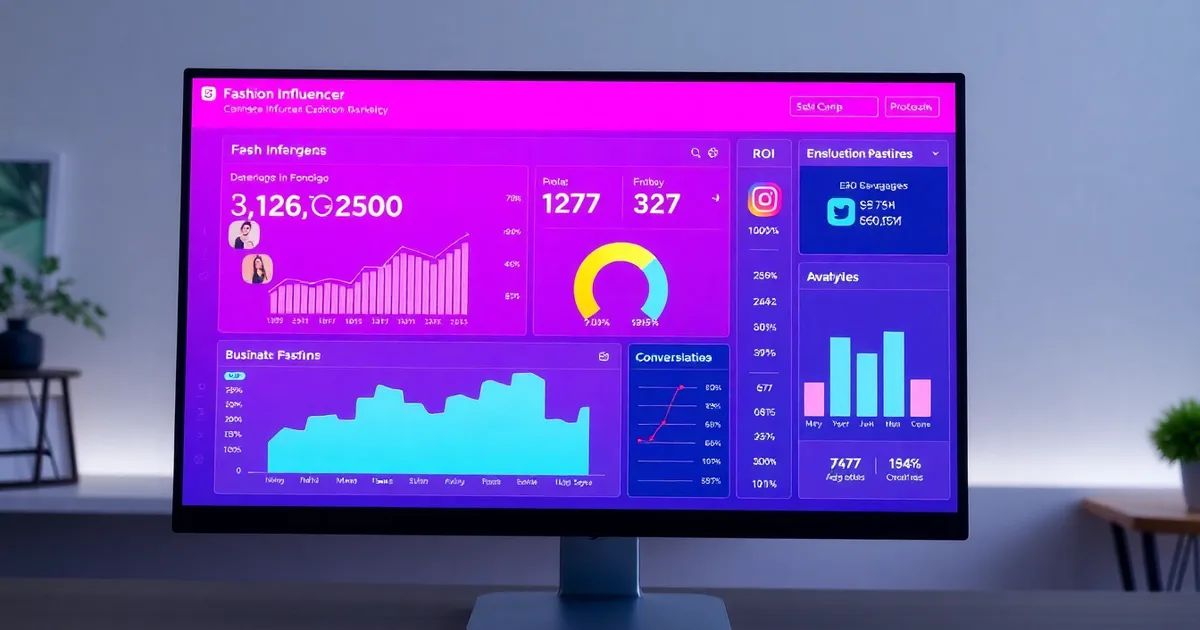
- Real-time dashboard creation - Visualize performance metrics and KPIs instantly
Advanced brands leverage customer data platforms to unify influencer campaign data with broader customer journey insights, enabling more sophisticated ROI calculations.
Which Key Performance Indicators (KPIs) Should Fashion Brands Track?
Effective fashion influencer marketing ROI measurement requires tracking both direct and indirect performance indicators. Primary KPIs focus on immediate campaign results, while secondary metrics capture long-term brand impact.
Direct Revenue Metrics
- Revenue per post (RPP) - Total revenue divided by number of influencer posts
- Cost per acquisition (CPA) - Campaign cost divided by new customers acquired
- Return on ad spend (ROAS) - Revenue generated divided by advertising investment
- Average order value (AOV) - Mean purchase amount from influencer-driven traffic
- Conversion rate optimization - Percentage of influencer traffic that completes purchases
Brand Awareness and Engagement Metrics
- Reach and impressions - Total audience exposed to campaign content
- Engagement rate - Likes, comments, shares, and saves per post
- Brand mention sentiment - Positive, neutral, and negative mention analysis
- Share of voice - Brand presence compared to competitors
- Follower growth rate - New followers gained during campaign periods
What Are the Most Effective ROI Measurement Frameworks?
Modern fashion brands employ sophisticated measurement frameworks that capture both quantitative and qualitative campaign impacts. These frameworks provide structured approaches to ROI calculation and optimization.
The Triple-Attribution Model
This advanced framework tracks three attribution layers: first-touch (initial brand exposure), last-touch (final conversion driver), and multi-touch (all interaction points). Fashion brands using triple-attribution models see 34% more accurate ROI calculations.
Lifetime Value Integration
Beyond immediate sales, successful brands calculate influencer-acquired customer lifetime value (CLV). This approach reveals that customers acquired through micro-influencers often have 23% higher retention rates than those from macro-influencer campaigns.
| Measurement Framework | Best Use Case | Accuracy Level | Implementation Complexity |
|---|---|---|---|
| Simple ROAS | Basic campaigns | 65% | Low |
| Multi-touch Attribution | Complex customer journeys | 82% | Medium |
| Triple-Attribution + CLV | Enterprise brands | 94% | High |
| AI-Powered Predictive | Data-rich organizations | 96% | Very High |
How to Calculate True Fashion Influencer Marketing ROI?
Accurate ROI calculation requires comprehensive cost accounting and revenue attribution. Many brands underestimate true campaign costs or overattribute revenue, leading to inflated ROI figures.
Complete Cost Structure
Direct costs include influencer fees, content creation, and platform advertising spend. Indirect costs encompass campaign management time, analytics tools, and opportunity costs of internal resources.
True ROI = (Total Attributed Revenue - Total Campaign Costs) / Total Campaign Costs × 100
Revenue Attribution Methods
- Unique discount codes - Assign exclusive promo codes to each influencer
- Affiliate tracking links - Generate trackable URLs with conversion attribution
- Pixel-based attribution - Track users from social media clicks to purchase completion
- Survey-based attribution - Ask customers how they discovered the brand
- Statistical modeling - Use advanced analytics to estimate incremental impact
Leading fashion brands combine multiple attribution methods to achieve 85-95% accuracy in ROI calculations, significantly improving campaign optimization decisions.
What Advanced Analytics Tools Are Essential for 2026?
The analytics landscape for fashion influencer marketing has evolved dramatically, with AI-powered platforms offering unprecedented insight depth. Modern analytics tools integrate social media APIs, ecommerce platforms, and predictive modeling capabilities.
Social Media Analytics Platforms
- Sprout Social - Comprehensive social listening and influencer performance tracking
- Hootsuite Insights - Real-time campaign monitoring and competitor analysis
- Brandwatch - Advanced sentiment analysis and trend identification
- Klear - Influencer discovery and performance measurement
- AspireIQ - End-to-end influencer campaign management and analytics
Attribution and Conversion Tracking
Advanced attribution platforms like Google Analytics 4, Adobe Analytics, and Segment provide sophisticated conversion tracking capabilities. These tools integrate with predictive analytics models to forecast campaign performance and optimize budget allocation.
How to Optimize Campaign Performance Based on ROI Data?
ROI optimization requires systematic analysis of performance data and strategic campaign adjustments. Data-driven optimization focuses on identifying high-performing elements and scaling successful strategies while eliminating underperforming components.
Performance Segmentation Analysis
Segment campaign performance across multiple dimensions to identify optimization opportunities:
- Influencer tier analysis - Compare micro, macro, and mega-influencer ROI
- Content format performance - Evaluate posts, stories, reels, and video content
- Audience demographic breakdown - Identify highest-converting customer segments
- Timing and frequency optimization - Determine optimal posting schedules
- Geographic performance analysis - Focus budget on high-ROI markets
Real-Time Campaign Adjustments
Modern fashion brands implement dynamic optimization strategies that adjust campaigns based on real-time performance data. This approach improves overall campaign ROI by 28% compared to static campaign management.
What Are the Common ROI Measurement Mistakes to Avoid?
Even sophisticated fashion brands make critical errors in ROI measurement that lead to misguided strategic decisions. Understanding these pitfalls enables more accurate performance assessment and better campaign outcomes.
Attribution Window Errors
Attribution windows that are too short miss delayed conversions, while excessively long windows overattribute revenue to campaigns. Fashion brands typically see optimal results with 7-14 day attribution windows for immediate purchases and 30-60 day windows for consideration-phase products.
Incomplete Cost Accounting
Many brands focus solely on influencer fees while ignoring substantial indirect costs. Comprehensive cost tracking includes:
- Campaign management time and labor costs
- Content creation and production expenses
- Analytics platform and tool subscriptions
- Legal review and contract negotiation time
- Product sampling and shipping costs
How to Build Long-Term ROI Through Influencer Relationships?
Sustainable fashion influencer marketing ROI requires shifting from transactional campaigns to strategic partnership development. Long-term influencer relationships generate 3.7x higher ROI than one-off collaborations due to increased audience trust and content authenticity.
Strategic relationship building involves creating mutually beneficial partnerships that extend beyond individual campaigns. This includes exclusive brand ambassador programs, product collaboration opportunities, and co-creation initiatives that align with sustainable fashion technology trends.
Ambassador Program ROI Optimization
- Tiered compensation structures - Reward performance with increased benefits
- Exclusive access programs - Provide early product access and behind-the-scenes content
- Performance milestone rewards - Offer bonuses for achieving specific ROI targets
- Co-creation opportunities - Collaborate on product development and design
- Cross-platform content strategies - Leverage ambassadors across multiple channels
What Role Does AI Play in Fashion Influencer ROI Optimization?
Artificial intelligence transforms fashion influencer marketing ROI through predictive analytics, automated optimization, and sophisticated audience analysis. AI-powered tools process vast datasets to identify patterns invisible to human analysts.
Machine learning algorithms analyze historical campaign data, influencer performance metrics, and market trends to predict optimal budget allocation and influencer selection. These systems continuously learn from new data, improving prediction accuracy over time.
AI-Driven Optimization Features
- Predictive audience analysis - Identify high-conversion probability segments
- Dynamic pricing optimization - Adjust influencer compensation based on performance predictions
- Content performance forecasting - Predict engagement and conversion rates before campaign launch
- Automated budget reallocation - Shift spending to highest-ROI opportunities in real-time
- Fraud detection systems - Identify fake engagement and protect campaign integrity
How to Scale Fashion Influencer Marketing ROI Across Global Markets?
International expansion of influencer marketing requires sophisticated ROI measurement approaches that account for cultural differences, market maturity levels, and regulatory variations. Global scaling strategies must balance standardized measurement with localized optimization.
Successful international campaigns leverage local influencers while maintaining consistent brand messaging and ROI standards. This approach requires investment in regional analytics capabilities and cultural understanding that impacts campaign performance.
Modern fashion brands integrate global influencer strategies with transparent supply chain communications to build authentic brand narratives that resonate across diverse markets.
Practical Tips for Maximizing Fashion Influencer Marketing ROI
- Implement comprehensive tracking systems - Use multiple attribution methods for accuracy
- Focus on micro-influencer partnerships - Often deliver higher engagement rates and ROI
- Create compelling campaign briefs - Clear guidelines improve content quality and performance
- Test content formats systematically - Compare posts, stories, reels, and video performance
- Establish performance benchmarks - Set realistic expectations based on industry standards
- Invest in long-term relationships - Build ambassador programs for sustained ROI growth
- Leverage user-generated content - Amplify influencer campaigns through community engagement
- Monitor competitor strategies - Identify market opportunities and benchmark performance
- Optimize posting schedules - Analyze audience activity patterns for maximum reach
- Integrate cross-channel campaigns - Combine influencer marketing with email, paid ads, and PR
- Calculate lifetime value impact - Measure long-term customer relationships beyond initial purchases
- Use AI-powered analytics tools - Leverage machine learning for optimization insights
ROI Comparison: Different Influencer Tiers and Campaign Types
| Influencer Type | Average Cost per Post | Typical Engagement Rate | Average ROI | Best Use Case |
|---|---|---|---|---|
| Nano (1K-10K followers) | $50-$200 | 8-12% | 6.8x | Niche community building |
| Micro (10K-100K followers) | $200-$2,000 | 4-8% | 5.2x | Product launches, conversions |
| Macro (100K-1M followers) | $2,000-$15,000 | 2-5% | 3.8x | Brand awareness, reach |
| Mega (1M+ followers) | $15,000-$100,000+ | 1-3% | 2.9x | Mass market campaigns |
Fashion influencer marketing ROI optimization in 2026 requires sophisticated analytics, strategic relationship building, and continuous performance refinement. By implementing comprehensive measurement frameworks, leveraging advanced analytics tools, and focusing on long-term partnership development, fashion brands can achieve sustainable growth and competitive advantage in the evolving digital landscape. Success depends on balancing immediate ROI goals with strategic brand building initiatives that create lasting customer relationships and market positioning.