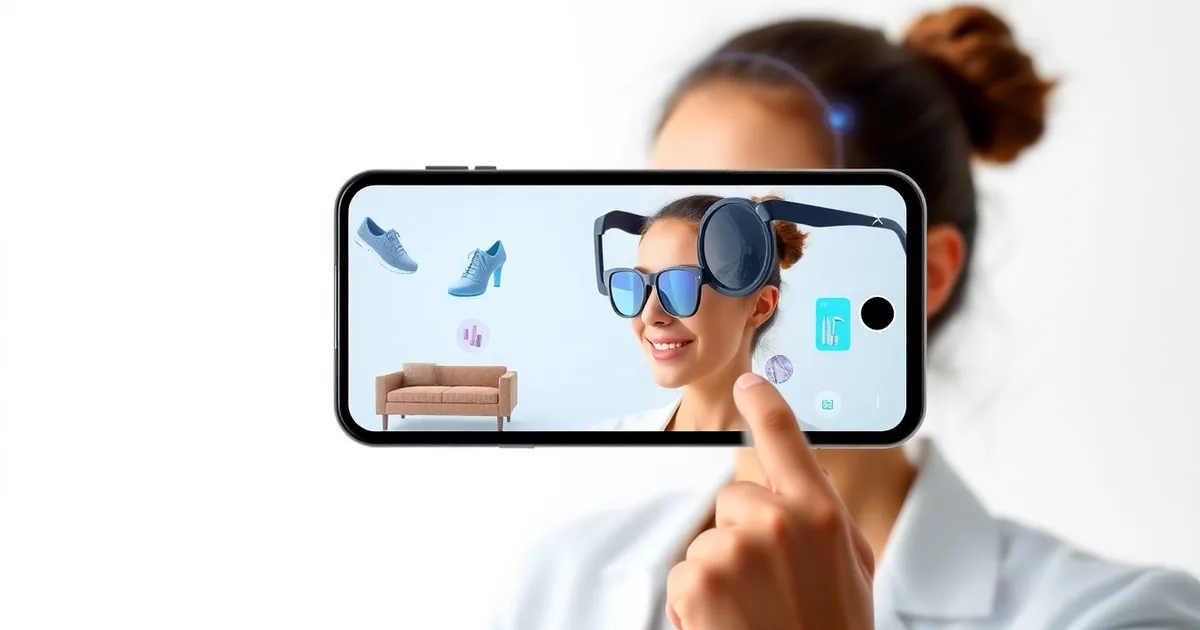
Augmented reality ecommerce is revolutionizing online shopping by bridging the gap between digital and physical retail experiences. This comprehensive guide covers everything you need to implement AR virtual try-on features, 3D product visualization, and immersive shopping experiences that can increase conversion rates by up to 94% and reduce return rates by 40%. From technical implementation to ROI measurement, we'll explore how leading brands are leveraging AR technology to transform customer engagement and drive sales in 2026.
What Is Augmented Reality Ecommerce and Why Does It Matter?
Augmented reality ecommerce refers to the integration of AR technology into online shopping platforms, allowing customers to visualize products in their real environment or try them on virtually before purchasing. This technology overlays digital information onto the physical world through smartphones, tablets, or specialized AR devices.
The importance of AR in ecommerce has grown exponentially, with studies showing that 71% of consumers would shop more frequently if they could use AR. The technology addresses key pain points in online shopping, including uncertainty about product fit, appearance, and functionality.
Key benefits of implementing augmented reality ecommerce include:
- Increased conversion rates: AR experiences can boost conversions by 20-200%
- Reduced return rates: Virtual try-ons decrease returns by up to 40%
- Enhanced customer engagement: AR sessions last 75% longer than traditional browsing
- Improved brand differentiation: Early AR adopters gain competitive advantages
- Higher customer satisfaction: 61% of consumers prefer retailers offering AR experiences
How Do AR Virtual Try-On Solutions Work in Ecommerce?
AR virtual try-on technology uses computer vision, machine learning, and 3D rendering to create realistic simulations of how products look on or interact with users. The process involves several sophisticated technologies working together seamlessly.
The core components of AR virtual try-on systems include:
- Camera input processing: Real-time video capture and analysis
- Face/body tracking: Precise detection and mapping of facial features or body parts
- 3D product models: Detailed digital representations of physical products
- Rendering engine: Real-time overlay of virtual products onto live video
- Physics simulation: Realistic movement and interaction behaviors
Popular AR try-on categories include:
- Beauty and cosmetics: Virtual makeup application, hair color changes
- Eyewear: Glasses and sunglasses virtual fitting
- Fashion accessories: Jewelry, watches, and bags
- Footwear: Virtual shoe try-ons with size matching
- Home decor: Furniture placement and visualization
Technical Requirements for AR Try-On Implementation
Implementing AR virtual try-on requires specific technical infrastructure and considerations. Modern smartphones and tablets provide sufficient processing power for most AR applications, but optimization remains crucial for smooth user experiences.
Essential technical requirements include:
- WebAR compatibility: Browser-based AR for seamless integration
- Mobile optimization: iOS ARKit and Android ARCore support
- High-quality 3D assets: Detailed product models with accurate textures
- Real-time performance: 30+ FPS rendering for smooth interactions
- Cross-platform functionality: Consistent experiences across devices
What Are the Best 3D Product Visualization Strategies?
3D product visualization extends beyond simple try-on experiences to create comprehensive interactive product exploration. This approach allows customers to examine products from every angle, understand scale and proportions, and visualize customization options in real-time.
Effective 3D visualization strategies include:
Interactive 360-Degree Product Views
360-degree product views allow customers to rotate and examine products from all angles. This feature is particularly valuable for complex products with multiple components or intricate details that static images cannot adequately showcase.
Contextual Environment Placement
Placing products within realistic environments helps customers understand scale, functionality, and aesthetic integration. Furniture retailers, for example, can show how a sofa looks in different room settings with various lighting conditions.
Real-Time Customization Visualization
Interactive customization tools allow customers to modify product attributes and see changes instantly. This includes color variations, material options, size adjustments, and feature additions or removals.
| 3D Visualization Type | Best For | Implementation Complexity | ROI Impact |
|---|---|---|---|
| 360° Product Spin | Small to medium products | Low | 15-25% conversion lift |
| Environmental Placement | Furniture, appliances | Medium | 30-50% conversion lift |
| Interactive Configurator | Customizable products | High | 40-80% conversion lift |
| Virtual Showroom | High-value items | Very High | 60-120% conversion lift |
How to Create Immersive Shopping Experiences with AR?
Immersive shopping experiences go beyond individual product interactions to create comprehensive retail environments that engage multiple senses and create memorable customer journeys. These experiences combine AR technology with storytelling, gamification, and personalization to create compelling shopping destinations.
Virtual Showroom Development
Virtual showrooms create digital retail spaces where customers can browse products in curated environments. These spaces can replicate physical stores or create entirely new shopping experiences impossible in traditional retail.
Key elements of successful virtual showrooms include:
- Intuitive navigation: Easy movement between products and sections
- Social integration: Shared shopping experiences with friends or family
- Personal shopping assistance: AI-powered recommendations and guidance
- Seamless checkout: Integrated purchasing without leaving the AR environment
Gamified Shopping Experiences
Gamification elements can significantly increase engagement and time spent in AR shopping environments. These features transform shopping from a transactional activity into an entertaining experience that builds brand loyalty.
Effective gamification strategies include:
- Treasure hunts: Hidden products or discounts discoverable through AR exploration
- Achievement systems: Rewards for trying multiple products or completing shopping missions
- Social competitions: Shareable AR experiences that encourage viral marketing
- Virtual styling challenges: Interactive games that showcase product versatility
Which AR Ecommerce Platforms and Tools Should You Choose?
Selecting the right AR platform is crucial for successful implementation. The choice depends on factors including budget, technical expertise, product types, and desired features. Leading platforms offer different strengths and specializations.
Enterprise AR Solutions
Enterprise-level AR platforms provide comprehensive features, customization options, and robust support for large-scale implementations. These solutions typically offer better performance, security, and integration capabilities.
Top enterprise AR platforms include:
- 8th Wall: WebAR platform with excellent cross-device compatibility
- Snapchat Lens Studio: Powerful creation tools with massive user reach
- Unity AR Foundation: Professional development framework for custom solutions
- Amazon Sumerian: Cloud-based AR/VR development with AWS integration
- Google ARCore: Android-focused platform with advanced tracking capabilities
Specialized Ecommerce AR Tools
Industry-specific AR tools offer pre-built solutions tailored to particular product categories or use cases. These platforms often provide faster implementation but may have limited customization options.
Notable specialized platforms include:
- ModiFace: Beauty and cosmetics virtual try-on solutions
- Vertebrae: Fashion and lifestyle product visualization
- Threekit: B2B product configurators and visualizations
- Perfect Corp: AI-powered beauty AR experiences
- Zakeke: Product customization and personalization tools
What Are the Implementation Steps for AR Ecommerce Integration?
Implementing augmented reality ecommerce requires careful planning, technical preparation, and systematic execution. The process typically spans several months and involves multiple stakeholders including technical teams, designers, and marketing professionals.
Phase 1: Strategy and Planning
The first phase focuses on defining objectives, identifying target use cases, and establishing success metrics. This foundation ensures that AR implementation aligns with business goals and customer needs.
Critical planning steps include:
- Use case identification: Determine which products benefit most from AR experiences
- Technical assessment: Evaluate current platform capabilities and integration requirements
- Budget allocation: Plan for development, content creation, and ongoing maintenance costs
- Success metrics definition: Establish KPIs for measuring AR implementation effectiveness
- Timeline development: Create realistic project schedules with milestone checkpoints
Phase 2: Content Creation and Development
The development phase involves creating 3D assets, building AR experiences, and integrating solutions with existing ecommerce platforms. Quality control and testing are essential throughout this process.
Development activities include:
- 3D model creation: High-quality digital representations of products
- AR experience design: User interface and interaction development
- Platform integration: Connection with existing ecommerce systems
- Performance optimization: Ensuring smooth operation across devices
- Quality assurance testing: Comprehensive testing across platforms and scenarios
Phase 3: Launch and Optimization
The launch phase involves deploying AR features, training support teams, and monitoring performance metrics. Continuous optimization based on user feedback and analytics ensures long-term success.
"The key to successful AR ecommerce implementation is starting with a clear strategy, focusing on user experience, and continuously iterating based on data and feedback." - AR Technology Industry Report 2026
How Do You Measure AR Ecommerce ROI and Success?
Measuring the return on investment for augmented reality ecommerce requires tracking multiple metrics across the customer journey. Success metrics should align with business objectives and provide actionable insights for optimization.
Key Performance Indicators
Essential metrics for AR ecommerce success include both engagement and conversion-focused indicators. These metrics help quantify the impact of AR experiences on business outcomes.
Primary AR ecommerce KPIs:
- AR engagement rate: Percentage of visitors using AR features
- Session duration: Time spent in AR experiences vs. traditional browsing
- Conversion rate lift: Improvement in purchases after AR interaction
- Return rate reduction: Decrease in product returns for AR-experienced purchases
- Customer satisfaction scores: User feedback and review improvements
- Average order value: Changes in purchase amounts with AR usage
Advanced Analytics and Attribution
Understanding the complete customer journey and AR's role requires sophisticated analytics tracking. This includes multi-touch attribution and long-term customer value analysis.
Advanced measurement approaches include:
- Cohort analysis: Comparing AR users vs. non-AR users over time
- A/B testing: Systematic testing of AR features and variations
- Heat mapping: Understanding user interaction patterns within AR experiences
- Customer lifetime value analysis: Long-term impact assessment
The integration with broader ecommerce analytics is crucial for understanding AR's role in the overall customer experience. Tools like advanced customer lifetime value calculations can help quantify the long-term benefits of AR implementation.
What Are the Common Challenges in AR Ecommerce Implementation?
Despite its benefits, implementing augmented reality ecommerce presents several challenges that businesses must address. Understanding these obstacles helps in developing mitigation strategies and setting realistic expectations.
Technical Challenges
Technical hurdles often represent the most significant barriers to AR implementation. These challenges require specialized expertise and careful planning to overcome effectively.
Common technical challenges include:
- Device compatibility: Ensuring consistent experiences across different smartphones and tablets
- Performance optimization: Maintaining smooth framerates on lower-end devices
- 3D asset quality: Creating realistic models that load quickly
- Lighting adaptation: AR experiences working well in various lighting conditions
- Integration complexity: Connecting AR features with existing ecommerce platforms
User Adoption and Education
Getting customers to discover and effectively use AR features requires thoughtful user experience design and education strategies. Many users may be unfamiliar with AR technology or hesitant to try new features.
User adoption strategies include:
- Onboarding tutorials: Clear instructions for first-time AR users
- Progressive disclosure: Gradually introducing advanced AR features
- Social proof integration: Showcasing other customers' AR experiences
- Incentivized trials: Offering discounts or benefits for AR usage
Building trust through social proof automation can significantly improve AR feature adoption rates by demonstrating value to hesitant users.
Best Practices for AR Ecommerce Success
Following proven best practices significantly increases the likelihood of successful AR ecommerce implementation. These guidelines are based on industry experience and successful case studies from leading retailers.
Essential AR ecommerce best practices:
- Start small and scale gradually: Begin with one product category or feature before expanding
- Prioritize mobile optimization: Ensure excellent performance on smartphones and tablets
- Focus on user experience: Make AR features intuitive and valuable, not just novel
- Maintain high-quality 3D assets: Invest in professional product modeling and texturing
- Integrate seamlessly: Ensure AR features feel natural within existing shopping flows
- Provide fallback options: Always offer traditional product views for users who can't access AR
- Monitor performance continuously: Track metrics and optimize based on user behavior
- Update content regularly: Keep AR experiences fresh with new products and features
- Train customer support teams: Ensure staff can help customers with AR-related questions
- Consider accessibility: Design AR features that work for users with different abilities
Future Trends in Augmented Reality Ecommerce
The AR ecommerce landscape continues evolving rapidly, with new technologies and use cases emerging regularly. Understanding future trends helps businesses prepare for upcoming opportunities and challenges.
Key trends shaping AR ecommerce in 2026 and beyond:
- WebAR dominance: Browser-based AR eliminating app download barriers
- AI-powered personalization: Intelligent product recommendations within AR experiences
- Social AR shopping: Collaborative shopping experiences with friends and influencers
- Voice integration: Combining AR with voice commands for hands-free shopping
- Wearable AR devices: Smart glasses and contact lenses expanding AR accessibility
- Haptic feedback: Touch sensations adding realism to virtual product interactions
- Blockchain integration: NFTs and digital ownership concepts in AR experiences
The convergence of AR with other technologies creates new possibilities for immersive commerce. Integration with AI-powered personalization engines enables more targeted and relevant AR experiences for individual customers.
Practical Implementation Checklist
Use this comprehensive checklist to ensure thorough AR ecommerce implementation planning and execution:
- Strategy Development
- Define clear business objectives for AR implementation
- Identify target product categories and use cases
- Establish success metrics and measurement frameworks
- Allocate budget for development, content, and maintenance
- Platform Selection
- Evaluate AR platforms based on features and compatibility
- Consider integration requirements with existing systems
- Assess scalability and future expansion capabilities
- Review platform pricing and licensing terms
- Technical Preparation
- Audit current website and mobile app capabilities
- Plan integration with ecommerce platform and databases
- Establish 3D asset creation workflows and standards
- Set up analytics tracking for AR-specific metrics
- Content Creation
- Develop high-quality 3D models for priority products
- Create user interface designs for AR experiences
- Build onboarding tutorials and help content
- Test content across different devices and scenarios
- Launch and Optimization
- Deploy AR features to production environment
- Train customer service teams on AR functionality
- Monitor performance metrics and user feedback
- Iterate and improve based on data and insights
The integration of AR with other ecommerce technologies becomes increasingly important. Consider how AR features will work alongside AI-powered chatbots and automated inventory management systems for a cohesive customer experience.
Successful augmented reality ecommerce implementation requires careful planning, quality execution, and continuous optimization. By following the strategies and best practices outlined in this guide, businesses can create compelling AR experiences that drive engagement, increase conversions, and reduce returns. The key is starting with clear objectives, choosing the right technology partners, and maintaining focus on customer value throughout the implementation process. As AR technology continues advancing, early adopters will gain significant competitive advantages in the evolving ecommerce landscape.