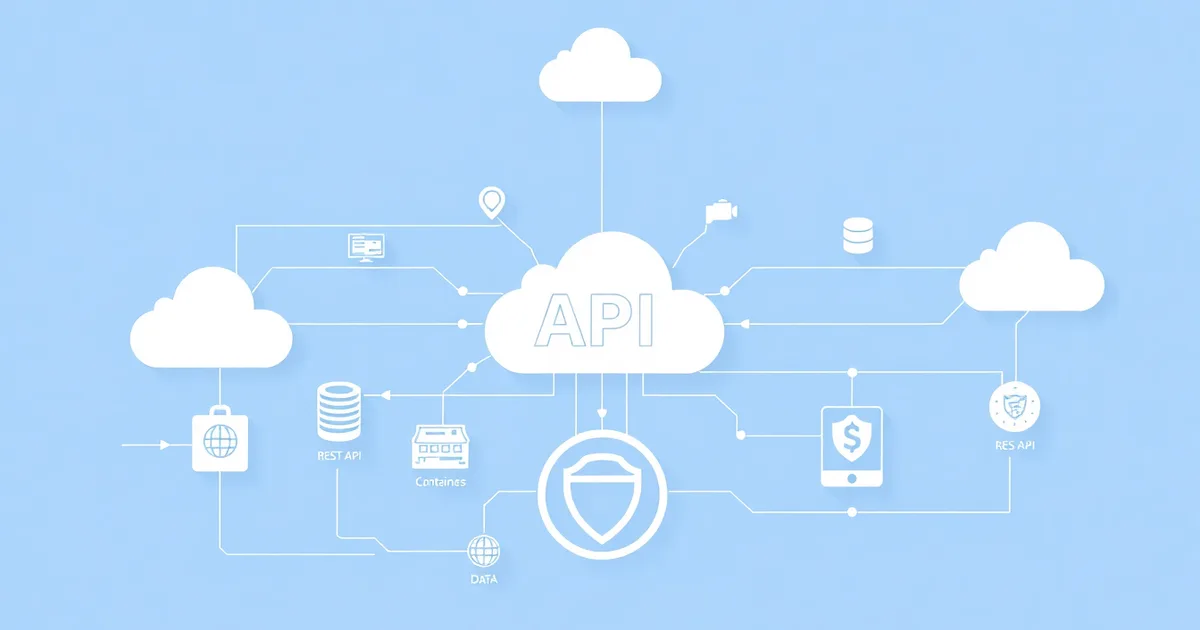
Ecommerce API management represents the backbone of modern digital commerce platforms, enabling seamless integration between diverse systems, applications, and services. In 2026, successful ecommerce businesses rely on sophisticated API management strategies that encompass microservices architecture, real-time data synchronization, and scalable integration patterns. This comprehensive guide explores the essential components of effective API management, from design principles and security protocols to implementation strategies that drive business growth and operational efficiency.
What Is Ecommerce API Management and Why Is It Critical for Modern Platforms?
Ecommerce API management is the systematic approach to designing, deploying, securing, and monitoring Application Programming Interfaces (APIs) that connect various components of an ecommerce ecosystem. Modern ecommerce platforms require robust API management to handle complex integrations between payment processors, inventory systems, customer relationship management tools, and third-party services.
The critical importance of API management stems from the increasing complexity of ecommerce operations. According to industry research from 2026, businesses with well-implemented API strategies experience 40% faster time-to-market for new features and 35% reduction in integration costs. API management platforms serve as the central nervous system that coordinates data flow, ensures security compliance, and maintains performance standards across distributed systems.
Key components of effective ecommerce API management include:
- API Gateway: Central entry point for all API requests, handling routing, authentication, and rate limiting
- Developer Portal: Self-service interface for API documentation, testing, and key management
- Analytics and Monitoring: Real-time tracking of API performance, usage patterns, and error rates
- Security Layer: Authentication, authorization, and threat protection mechanisms
- Version Control: Systematic management of API versions and backward compatibility
How Do Microservices Architecture Transform Ecommerce Scalability?
Microservices architecture revolutionizes ecommerce scalability by decomposing monolithic applications into smaller, independent services that communicate through well-defined APIs. This architectural pattern enables businesses to scale individual components based on demand, deploy updates without system-wide downtime, and maintain technological flexibility.
In the context of ecommerce, microservices typically include dedicated services for user management, product catalog, inventory tracking, order processing, payment handling, and shipping coordination. Each service operates independently, allowing development teams to work in parallel and choose the most appropriate technology stack for specific requirements.
Core Benefits of Microservices in Ecommerce
The adoption of microservices architecture delivers substantial advantages for ecommerce platforms. Scalability improvements allow businesses to handle traffic spikes during peak shopping periods without affecting the entire system. Independent deployment capabilities reduce the risk of system-wide failures and enable continuous integration practices.
Technology diversity becomes possible as each microservice can utilize different programming languages, databases, and frameworks optimized for specific functions. This flexibility proves particularly valuable when integrating with headless CMS solutions or implementing advanced analytics capabilities.
- Independent Scaling: Scale high-demand services like product search or checkout without affecting other components
- Fault Isolation: Service failures remain contained, preventing cascading system breakdowns
- Team Autonomy: Development teams can work independently on specific services
- Technology Flexibility: Choose optimal technology stacks for each service's requirements
- Faster Innovation: Deploy new features and updates without full system releases
What Are the Essential API Integration Strategies for Ecommerce Success?
Successful API integration strategies require careful planning, standardized protocols, and robust error handling mechanisms. Ecommerce platforms must integrate with numerous external services including payment gateways, shipping providers, marketing automation tools, and customer support systems.
The most effective integration strategies emphasize asynchronous communication patterns, event-driven architectures, and comprehensive monitoring systems. These approaches ensure reliable data synchronization while maintaining system performance and user experience quality.
RESTful API Design Principles
RESTful APIs form the foundation of modern ecommerce integration strategies. These APIs follow standardized HTTP methods and status codes, making them intuitive for developers and compatible with a wide range of systems and programming languages.
Essential RESTful design principles include resource-based URLs, stateless communication, proper HTTP status code usage, and consistent data formatting. Well-designed REST APIs reduce integration complexity and improve developer productivity across teams.
| HTTP Method | Purpose | Ecommerce Example | Expected Response |
|---|---|---|---|
| GET | Retrieve data | Get product details | 200 OK with product data |
| POST | Create new resource | Add item to cart | 201 Created with cart ID |
| PUT | Update existing resource | Update customer profile | 200 OK with updated data |
| DELETE | Remove resource | Remove item from cart | 204 No Content |
| PATCH | Partial update | Update inventory quantity | 200 OK with changes |
How to Implement Robust API Security for Ecommerce Platforms?
API security represents a critical concern for ecommerce platforms handling sensitive customer data, payment information, and business-critical operations. Comprehensive security strategies must address authentication, authorization, data encryption, and threat detection across all API endpoints.
Modern ecommerce API security implementations utilize OAuth 2.0 for authorization, JSON Web Tokens (JWT) for secure data transmission, and API rate limiting to prevent abuse. Additional security measures include input validation, SQL injection protection, and comprehensive audit logging for compliance requirements.
Authentication and Authorization Best Practices
Implementing robust authentication and authorization mechanisms ensures that only legitimate users and applications can access API endpoints. Multi-factor authentication, role-based access control, and token-based authentication provide layered security protection.
Integration with customer data platforms requires particularly stringent security measures to protect personal information and maintain regulatory compliance. Regular security audits and penetration testing help identify vulnerabilities before they can be exploited.
- OAuth 2.0 Implementation: Industry-standard authorization framework for secure API access
- API Key Management: Secure generation, distribution, and rotation of API keys
- Rate Limiting: Prevent API abuse through request throttling and usage quotas
- HTTPS Enforcement: Encrypt all API communications with SSL/TLS protocols
- Input Validation: Sanitize and validate all incoming data to prevent injection attacks
- Audit Logging: Comprehensive logging of API access and usage patterns
What Performance Optimization Strategies Maximize API Efficiency?
API performance optimization directly impacts user experience, system scalability, and operational costs. Performance optimization strategies encompass caching mechanisms, database query optimization, response payload minimization, and intelligent routing algorithms.
Effective caching strategies reduce database load and improve response times for frequently requested data. Content Delivery Networks (CDNs) enhance global performance by serving API responses from geographically distributed edge servers. Database optimization techniques, including indexing and query optimization, significantly improve backend processing speed.
Caching and Response Optimization
Caching strategies play a crucial role in API performance optimization. Multi-level caching approaches, including browser caching, CDN caching, and application-level caching, reduce server load and improve response times for end users.
Response optimization techniques include data compression, payload minimization, and pagination for large datasets. These optimizations become particularly important when implementing predictive analytics systems that process large volumes of customer behavior data.
- Redis Caching: Implement in-memory caching for frequently accessed data
- HTTP Caching Headers: Configure proper cache-control headers for browser caching
- Database Query Optimization: Optimize queries and implement proper indexing strategies
- Response Compression: Use GZIP compression to reduce payload sizes
- API Pagination: Implement efficient pagination for large result sets
- CDN Integration: Leverage content delivery networks for global performance
How to Monitor and Analytics API Performance Effectively?
Comprehensive API monitoring and analytics provide essential insights into system performance, user behavior, and potential issues before they impact business operations. Modern monitoring solutions track response times, error rates, traffic patterns, and resource utilization across distributed microservices architectures.
Real-time alerting systems notify development teams of performance degradation, security threats, or system failures. Historical analytics help identify trends, plan capacity scaling, and optimize resource allocation based on actual usage patterns.
Key Performance Indicators for API Management
Tracking the right key performance indicators enables data-driven decisions about API optimization and scaling strategies. Essential metrics include response time percentiles, error rates, throughput measurements, and availability statistics.
Integration with business metrics provides additional context for API performance data. For example, correlating API response times with conversion rates helps prioritize optimization efforts on endpoints that directly impact revenue generation.
"Effective API monitoring goes beyond technical metrics to encompass business impact analysis, enabling organizations to prioritize improvements based on revenue and customer experience implications." - API Management Industry Report 2026
What Are the Best Practices for API Documentation and Developer Experience?
API documentation and developer experience significantly impact adoption rates, integration success, and long-term maintenance costs. Comprehensive documentation should include interactive examples, authentication guides, error handling procedures, and SDK availability across multiple programming languages.
Self-service developer portals enable external partners and internal teams to discover, test, and integrate APIs without extensive support requirements. Interactive documentation tools like OpenAPI (Swagger) specifications provide standardized, machine-readable API descriptions that support automated testing and code generation.
Quality documentation becomes particularly important when integrating with conversational commerce systems or implementing complex workflows involving multiple API endpoints and data transformations.
How to Handle API Versioning and Backward Compatibility?
API versioning strategies ensure smooth evolution of ecommerce platforms while maintaining compatibility with existing integrations. Proper versioning practices prevent breaking changes from disrupting business-critical integrations and provide clear migration paths for deprecated functionality.
Common versioning approaches include URL path versioning, header-based versioning, and query parameter versioning. Each approach offers different trade-offs in terms of implementation complexity, caching efficiency, and developer experience.
Migration Strategies for API Updates
Effective migration strategies minimize disruption during API updates while encouraging adoption of improved functionality. Graduated deprecation schedules, comprehensive migration guides, and automated testing tools help partners transition smoothly between API versions.
Version lifecycle management includes clear communication timelines, support policies for deprecated versions, and automated monitoring to track usage patterns across different API versions. This data informs decisions about when to retire older versions safely.
What Integration Patterns Work Best for Complex Ecommerce Workflows?
Complex ecommerce workflows require sophisticated integration patterns that coordinate multiple systems while maintaining data consistency and transaction integrity. Common patterns include event-driven architectures, saga patterns for distributed transactions, and circuit breaker patterns for fault tolerance.
Event-driven integration enables loose coupling between services while maintaining real-time responsiveness. For example, order placement events can trigger inventory updates, payment processing, shipping notifications, and customer communication workflows simultaneously without direct service dependencies.
Integration with automated return management systems demonstrates the complexity of modern ecommerce workflows, requiring coordination between inventory, customer service, financial, and logistics systems.
Practical Implementation Tips for Ecommerce API Management Success
Successfully implementing comprehensive API management requires systematic planning, proper tooling, and ongoing optimization. These practical tips help organizations avoid common pitfalls and accelerate their API management maturity.
- Start with API-First Design: Design APIs before implementing functionality to ensure consistent, reusable interfaces
- Implement Comprehensive Testing: Use automated testing for functional, performance, and security validation
- Plan for Scale: Design APIs with horizontal scaling and load distribution in mind
- Monitor Business Metrics: Track API performance correlation with business outcomes and customer satisfaction
- Invest in Developer Tooling: Provide SDKs, testing environments, and interactive documentation
- Establish Governance Policies: Create standards for API design, security, and lifecycle management
- Use API Gateways Effectively: Centralize common functionality like authentication, rate limiting, and monitoring
- Implement Circuit Breakers: Protect against cascading failures in distributed systems
- Plan for Multi-Region Deployment: Design APIs for global availability and low-latency access
- Regular Security Audits: Conduct periodic security reviews and penetration testing
Future Trends in Ecommerce API Management for 2026 and Beyond
The evolution of ecommerce API management continues to accelerate with emerging technologies and changing business requirements. Artificial intelligence integration, edge computing, and blockchain technologies are reshaping API design and implementation strategies.
GraphQL adoption is increasing as ecommerce platforms seek more flexible data querying capabilities. Machine learning-powered API optimization automatically adjusts caching strategies, routing decisions, and resource allocation based on usage patterns and performance data.
Integration with blockchain supply chain systems introduces new requirements for API design, including support for distributed ledger technologies and smart contract interactions. These integrations require specialized security considerations and data validation protocols.
Serverless architectures and edge computing are transforming API deployment models, enabling ultra-low latency responses and automatic scaling without infrastructure management overhead. These trends particularly benefit mobile commerce applications and global ecommerce platforms.
API Management Tools and Platform Comparison
| Platform | Best For | Key Features | Pricing Model | Integration Complexity |
|---|---|---|---|---|
| Amazon API Gateway | AWS-native environments | Serverless, auto-scaling, extensive AWS integration | Pay-per-request | Low for AWS users |
| Kong Gateway | Microservices architectures | Open source, plugin ecosystem, Kubernetes native | Open source + Enterprise | Medium |
| Apigee (Google Cloud) | Enterprise-scale platforms | Advanced analytics, AI-powered insights, global edge | Enterprise licensing | High |
| Azure API Management | Microsoft ecosystems | Azure integration, developer portal, hybrid connectivity | Tiered pricing | Low for Azure users |
| MuleSoft Anypoint | Complex integrations | Integration platform, design center, extensive connectors | Enterprise licensing | High |
Ecommerce API management has evolved into a strategic capability that directly impacts business agility, customer experience, and operational efficiency. The integration of microservices architectures, comprehensive security frameworks, and intelligent monitoring systems creates the foundation for scalable, resilient ecommerce platforms. As businesses continue to expand their digital ecosystems and integrate with advanced checkout optimization systems, robust API management becomes increasingly critical for maintaining competitive advantage and delivering exceptional customer experiences. Organizations that invest in comprehensive API management strategies position themselves for sustained growth and innovation in the rapidly evolving ecommerce landscape of 2026 and beyond.