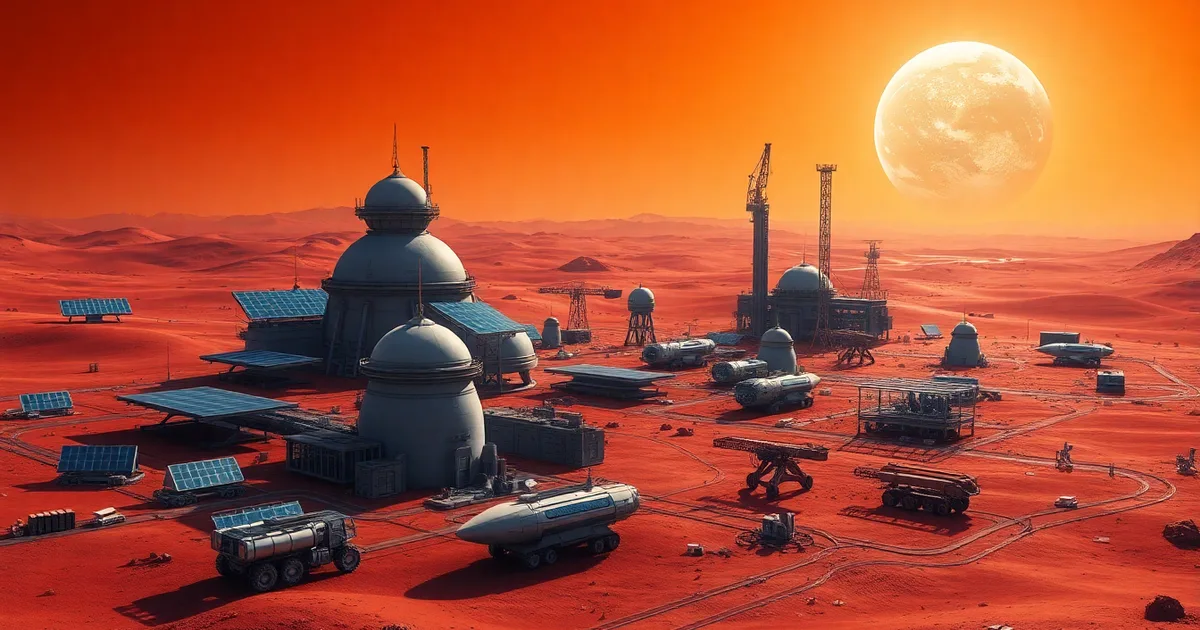
Mars colonization technology has reached unprecedented sophistication in 2026, encompassing life support systems, habitat construction, resource utilization, and communication infrastructure essential for permanent human settlement on the Red Planet. This comprehensive guide explores the advanced technologies required for sustainable Mars missions, from atmospheric processors and closed-loop life support to in-situ resource utilization (ISRU) and nuclear power systems that will enable humanity's next giant leap.
What Are the Essential Life Support Systems for Mars Colonization?
Life support systems represent the cornerstone of mars colonization technology, requiring redundant, self-sustaining mechanisms to maintain human life in Mars' hostile environment. These systems must operate continuously for decades with minimal Earth-based resupply.
The primary life support components include atmospheric processors that convert Mars' carbon dioxide atmosphere into breathable oxygen, advanced water recycling systems achieving 99% efficiency, and closed-loop food production facilities. Modern Mars habitats integrate these systems with artificial intelligence monitoring to predict failures and automatically initiate backup protocols.
Atmospheric control systems maintain precise oxygen, nitrogen, and carbon dioxide levels while filtering out toxic perchlorates present in Martian dust. These systems incorporate electrochemical carbon dioxide reduction technology and molecular sieves for gas separation, ensuring consistent air quality throughout the settlement.
How Do Mars Habitat Construction Technologies Work?
Mars habitat construction leverages in-situ resource utilization (ISRU) combined with advanced 3D printing and robotic assembly systems. These technologies minimize the need for Earth-shipped materials while creating durable, radiation-resistant structures.
The construction process begins with autonomous rovers preparing foundation sites and harvesting local materials. Martian regolith is processed through microwave sintering and polymer binding to create construction blocks with superior thermal insulation properties compared to traditional Earth materials.
Inflatable habitat modules provide initial shelter while permanent structures are constructed using robotic systems. These robots can operate continuously in Mars' environment, assembling modular components and applying protective coatings that shield inhabitants from radiation and temperature extremes.
Advanced Building Materials for Mars
- Regolith-based concrete: Created from local Martian soil with binding agents
- Polymer composites: Lightweight, radiation-resistant synthetic materials
- Metal alloys: Extracted from Martian iron ore using advanced smelting
- Aerogel insulation: Ultra-lightweight thermal protection systems
- Transparent aluminum: Advanced window materials for pressure containment
What Resource Extraction Technologies Enable Mars Settlement?
In-Situ Resource Utilization (ISRU) technologies form the backbone of sustainable Mars colonization, converting local materials into essential supplies including water, oxygen, fuel, and construction materials. These systems reduce dependency on Earth resupply missions by up to 90%.
Water extraction employs multiple methodologies depending on local conditions. Subsurface ice mining uses thermal extraction systems, while atmospheric water harvesting captures moisture from the thin Martian air using advanced condensation technology. Hydrated mineral processing extracts water chemically bound in rocks.
Oxygen production primarily utilizes the MOXIE (Mars Oxygen In-Situ Resource Utilization Experiment) technology, scaled up for colony-level production. This system electrochemically splits carbon dioxide from Mars' atmosphere, producing both oxygen for breathing and carbon monoxide for fuel synthesis.
| Resource | Extraction Method | Daily Output (kg) | Energy Required (kWh) |
|---|---|---|---|
| Water | Ice Mining | 1000 | 150 |
| Oxygen | CO2 Electrolysis | 500 | 200 |
| Methane | Sabatier Reaction | 300 | 100 |
| Iron | Ore Processing | 200 | 250 |
How Do Power Generation Systems Support Mars Colonies?
Reliable power generation represents a critical challenge for mars colonization technology, requiring systems that operate efficiently despite dust storms, extreme temperatures, and reduced solar irradiance. Multiple complementary power sources ensure continuous energy supply.
Nuclear fission reactors provide baseload power with compact, scalable designs specifically engineered for Mars deployment. These systems utilize highly enriched uranium fuel and passive safety features, generating 10-100 megawatts continuously for 15-20 years without refueling.
Solar power systems incorporate dust-resistant panels with automated cleaning mechanisms and high-efficiency photovoltaic cells optimized for Mars' light spectrum. Advanced battery storage systems using lithium-sulfur and solid-state technologies provide backup power during dust storms that can last weeks.
Mars Power System Specifications
- Nuclear Reactors: 40MW modular systems with 95% uptime reliability
- Solar Arrays: 25% efficiency panels with automated dust removal
- Battery Storage: 500MWh capacity using next-generation chemistry
- Fuel Cells: Backup systems utilizing locally produced hydrogen
- Geothermal Systems: Experimental systems in volcanic regions
What Communication Infrastructure Connects Mars to Earth?
Communication systems for Mars colonies must overcome the 4-24 minute signal delay between planets and maintain connectivity despite orbital mechanics. Advanced relay networks and autonomous communication protocols ensure reliable data transmission.
Deep Space Internet Protocol manages store-and-forward communication, automatically routing messages through available satellites when direct Earth-Mars communication is blocked. This system reduces communication blackouts from 14 days to less than 2 hours during solar conjunction periods.
High-gain antenna arrays with adaptive beamforming track Earth's position automatically, while laser communication systems provide high-bandwidth data transfer for scientific research and colony operations. Local mesh networks connect all settlement facilities with redundant pathways.
How Do Transportation Systems Move People and Cargo on Mars?
Mars surface transportation requires specialized vehicles capable of traversing diverse terrain while protecting occupants from radiation and environmental hazards. These systems enable resource gathering, exploration, and inter-settlement connectivity.
Pressurized rovers serve as mobile habitats for extended expeditions, featuring life support systems, sleeping quarters, and scientific equipment. Advanced terrain-following suspension systems and puncture-resistant wheels ensure reliable mobility across rocky Martian landscapes.
Aerial vehicles utilize Mars' thin atmosphere through innovative designs including solar-powered helicopters and hybrid electric aircraft. These systems provide rapid transportation and aerial surveys, complementing ground-based logistics networks. Similar to how space tourism commercial flights revolutionized Earth-based space access, Mars aerial systems will transform planetary mobility.
What Medical Technologies Support Mars Colonist Health?
Medical infrastructure for Mars colonies must provide comprehensive healthcare with limited Earth-based support, requiring advanced diagnostic equipment, surgical robotics, and pharmaceutical production capabilities. These systems address both routine healthcare and emergency medical situations.
Telemedicine systems connect Mars medical personnel with Earth specialists despite communication delays, utilizing AI-assisted diagnosis and treatment recommendations. Advanced medical imaging including MRI, CT, and ultrasound systems enable comprehensive diagnostics within the colony.
Pharmaceutical manufacturing uses automated systems to produce essential medications from locally sourced or carefully stored raw materials. 3D bioprinting technology creates replacement tissues and organs, while advanced surgical robots perform complex procedures with precision exceeding human capabilities.
Critical Medical Technologies
- AI Diagnostics: Machine learning systems for medical analysis
- Robotic Surgery: Autonomous surgical systems for emergencies
- Pharmaceutical Production: Local drug manufacturing capabilities
- Radiation Treatment: Advanced shielding and medical countermeasures
- Mental Health Support: VR therapy and psychological monitoring
How Do Food Production Systems Sustain Mars Colonies?
Sustainable food production on Mars requires closed-loop agricultural systems that maximize yield while minimizing resource consumption. These systems integrate hydroponics, aeroponics, and cellular agriculture to provide complete nutrition for colonists.
Controlled Environment Agriculture (CEA) utilizes LED lighting systems optimized for plant photosynthesis, automated nutrient delivery, and precise environmental controls. These facilities achieve 10-15 times higher productivity per square meter compared to traditional Earth farming while using 95% less water.
Cellular agriculture produces meat proteins through bioreactor systems, eliminating the need for livestock while providing essential amino acids and nutrients. Algae cultivation systems generate both food supplements and oxygen, contributing to the colony's overall life support infrastructure.
What Waste Management Technologies Keep Mars Colonies Clean?
Comprehensive waste management systems for mars colonization technology must achieve near-zero waste through advanced recycling, composting, and material recovery processes. These systems convert all waste streams into useful resources or safely contained byproducts.
Organic waste processing utilizes anaerobic digesters and plasma gasification to convert biological materials into methane fuel, fertilizer, and water. Advanced recycling systems break down plastics, metals, and electronic components at the molecular level for reuse in manufacturing processes.
Atmospheric waste management captures and processes carbon dioxide, water vapor, and trace contaminants to maintain air quality. These systems integrate with life support infrastructure to create closed-loop resource cycles that minimize waste accumulation.
Essential Technologies for Mars Colony Success
- Deploy redundant life support systems with AI monitoring and automatic failover capabilities
- Establish ISRU operations immediately upon arrival to reduce Earth dependency
- Install nuclear power systems for reliable baseload energy generation
- Implement advanced communication networks with store-and-forward protocols
- Develop local manufacturing capabilities using 3D printing and robotics
- Create comprehensive medical facilities with telemedicine and AI diagnostics
- Build sustainable food production using controlled environment agriculture
- Establish waste recycling systems achieving near-zero waste goals
Mars Technology Implementation Priorities
| Priority Level | Technology Category | Implementation Timeline | Earth Dependency |
|---|---|---|---|
| Critical | Life Support Systems | Pre-arrival | High Initial |
| Critical | Power Generation | Phase 1 | Medium |
| High | ISRU Systems | Phase 1 | Low |
| High | Habitat Construction | Phase 2 | Medium |
| Medium | Manufacturing | Phase 3 | Low |
Advanced Mars Colony Integration Systems
Modern mars colonization technology requires sophisticated integration systems that coordinate multiple technological components seamlessly. These systems utilize artificial intelligence and machine learning algorithms similar to those found in ecommerce predictive analytics systems to optimize resource allocation and predict maintenance needs.
Central control systems monitor all colony operations in real-time, automatically adjusting power distribution, life support parameters, and resource allocation based on current needs and predictive models. These systems ensure optimal efficiency while maintaining safety margins across all critical infrastructure.
Integration platforms connect diverse technological systems through standardized APIs and communication protocols, enabling seamless data sharing and coordinated responses to changing conditions. This approach mirrors successful API management strategies used in complex terrestrial systems.
"The success of Mars colonization depends not on individual technologies, but on the seamless integration of all systems working together to create a self-sustaining human presence on another world." - Dr. Sarah Chen, Mars Technology Integration Specialist, 2026
Mars colonization technology in 2026 represents humanity's most ambitious technological undertaking, combining advanced life support systems, resource utilization, construction robotics, and sustainable infrastructure to enable permanent settlement of the Red Planet. These integrated systems work together to create self-sufficient colonies capable of supporting thousands of residents while continuing to expand human presence throughout the solar system. The technologies developed for Mars colonization will ultimately benefit Earth through improved resource efficiency, advanced manufacturing techniques, and revolutionary approaches to sustainable living in challenging environments.