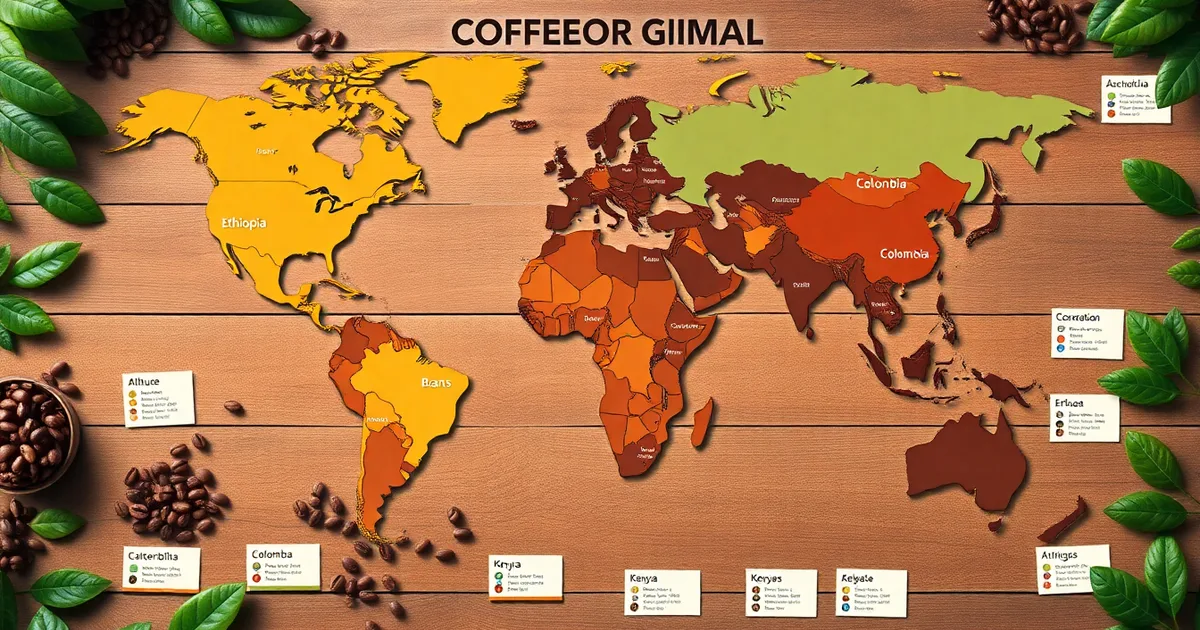
A specialty coffee origins guide is essential for understanding how geography, climate, and processing methods create the distinctive flavor profiles that define exceptional coffee. This comprehensive exploration covers terroir effects, regional characteristics, and flavor nuances from the world's premier coffee-growing regions, helping coffee enthusiasts and professionals navigate the complex landscape of specialty coffee in 2026.
What Is Coffee Terroir and Why Does It Matter?
Coffee terroir refers to the environmental factors that influence a coffee's flavor profile, including altitude, soil composition, climate, and rainfall patterns. Similar to wine terroir, coffee terroir creates unique characteristics that cannot be replicated elsewhere.
The concept encompasses several key elements that directly impact flavor development. Altitude affects bean density and acidity levels, with higher elevations typically producing more complex flavors. Soil minerals contribute to the plant's nutrient uptake, influencing taste compounds.
Climate patterns, including temperature fluctuations and seasonal variations, determine the cherry ripening process. These factors combine to create the foundation for exceptional specialty coffee that reflects its specific geographic origin.
How Do Major Coffee Growing Regions Differ in Flavor Characteristics?
Major coffee-producing regions exhibit distinct flavor signatures based on their unique environmental conditions and processing traditions. Understanding these regional differences helps coffee professionals and enthusiasts appreciate the diversity within specialty coffee origins.
Central and South American Coffee Characteristics
Central American coffees typically showcase bright acidity, clean body, and balanced flavor profiles. Countries like Guatemala, Costa Rica, and Honduras produce coffees with chocolate and caramel notes, often complemented by citrus brightness.
South American origins, particularly Colombian and Brazilian coffees, tend toward fuller bodies with nutty and chocolatey characteristics. The region's diverse microclimates create everything from delicate, tea-like coffees to robust, full-bodied varieties.
African Coffee Origin Profiles
African coffees are renowned for their complex flavor profiles and distinctive characteristics. Ethiopian coffees often display floral and fruity notes, while Kenyan coffees are famous for their wine-like acidity and black currant flavors.
East African origins like Tanzania and Rwanda produce coffees with bright acidity and complex fruit characteristics. These regions benefit from volcanic soils and high altitudes that contribute to exceptional cup quality.
Asian and Pacific Coffee Regions
Asian coffee origins offer unique processing methods and flavor profiles. Indonesian coffees, processed using the wet-hulling method, develop earthy, herbal characteristics with full body and low acidity.
Pacific island coffees from Hawaii and Papua New Guinea showcase clean, balanced profiles with subtle complexity. These regions often produce limited quantities of highly sought-after specialty coffee.
What Are the Top Specialty Coffee Origins to Know in 2026?
The specialty coffee landscape continues evolving, with established origins maintaining excellence while emerging regions gain recognition. Understanding the top origins helps coffee professionals make informed sourcing decisions.
Premium Ethiopian Coffee Regions
Ethiopia remains the birthplace of coffee and a cornerstone of specialty coffee origins. The Yirgacheffe region produces coffees with distinctive floral aromatics and bright, tea-like qualities. Sidamo coffees offer wine-like characteristics with complex fruit flavors.
Ethiopian coffee benefits from heirloom varieties and traditional processing methods. Natural processing enhances fruit characteristics, while washed processing highlights floral and citrus notes.
Colombian Specialty Coffee Regions
Colombian coffee regions like Huila, Nariño, and Cauca have gained prominence for exceptional quality. These high-altitude regions produce coffees with bright acidity, caramel sweetness, and complex flavor development.
The country's focus on quality improvement and traceability has elevated Colombian specialty coffee. Regional distinctions are becoming more pronounced as processing techniques evolve.
How Does Processing Method Affect Regional Coffee Characteristics?
Processing methods significantly influence how terroir characteristics are expressed in the final cup. Different regions have developed distinct processing traditions that complement their environmental conditions.
Washed processing highlights origin characteristics by removing fruit influence, allowing terroir to shine through. This method is common in Central America and East Africa, where clean, bright flavors are prized.
Natural processing enhances fruit characteristics and body, popular in Ethiopia and Brazil. Honey processing, common in Costa Rica, creates intermediate characteristics between washed and natural methods.
Which Altitude Ranges Produce the Best Specialty Coffee?
Altitude plays a crucial role in specialty coffee quality, with higher elevations generally producing more complex flavors. High-altitude coffee develops more slowly, concentrating sugars and acids that create superior cup quality.
Coffees grown above 1,200 meters (4,000 feet) are considered high-altitude, with the best specialty coffees often grown above 1,500 meters (5,000 feet). These elevations create ideal conditions for flavor development.
Temperature fluctuations at high altitudes stress the coffee plant, encouraging the production of protective compounds that contribute to complexity. However, each region has optimal altitude ranges based on latitude and local climate conditions.
What Soil Types Contribute to Exceptional Coffee Flavors?
Volcanic soils are highly prized in coffee cultivation due to their mineral content and drainage properties. Regions like Guatemala, Costa Rica, and parts of Africa benefit from volcanic soil that contributes to complex mineral flavors.
Well-draining soils prevent root rot while allowing proper nutrient uptake. Soil pH affects nutrient availability, with slightly acidic soils (pH 6.0-6.5) considered optimal for coffee cultivation.
Organic matter content influences soil structure and nutrient retention. Regions with rich, organic soils often produce coffees with more complex flavor profiles and better body characteristics.
How to Identify Quality Markers in Specialty Coffee Origins
Identifying quality markers helps coffee professionals and enthusiasts select exceptional origins. Several factors indicate high-quality specialty coffee from reputable growing regions.
- Traceability: Detailed information about farm, processing method, and harvest date
- Altitude specification: Precise elevation data indicating growing conditions
- Varietal information: Specific coffee variety and its characteristics
- Processing details: Clear description of post-harvest processing methods
- Cupping scores: Professional quality assessments above 80 points
- Certification: Organic, Fair Trade, or other quality certifications
- Harvest date: Recent harvest information ensuring freshness
- Producer information: Details about the farming operation and practices
Regional Coffee Flavor Profile Comparison
| Region | Primary Flavors | Acidity Level | Body | Notable Characteristics |
|---|---|---|---|---|
| Ethiopia | Floral, Fruity, Wine-like | Bright to Medium | Light to Medium | Complex aromatics, tea-like qualities |
| Kenya | Black currant, Wine, Citrus | High | Full | Distinctive wine-like character |
| Guatemala | Chocolate, Spice, Citrus | Medium-High | Medium-Full | Balanced complexity, smoky notes |
| Colombia | Caramel, Nuts, Citrus | Medium-Bright | Medium | Clean, well-balanced profiles |
| Brazil | Nuts, Chocolate, Low Acid | Low-Medium | Full | Consistent, approachable flavors |
| Jamaica | Mild, Sweet, Balanced | Low-Medium | Medium | Subtle complexity, premium pricing |
| Indonesia | Earthy, Herbal, Spicy | Low | Full | Unique wet-hulling processing |
Essential Tips for Exploring Specialty Coffee Origins
Successfully exploring specialty coffee origins requires systematic approach and attention to detail. These practical tips help coffee enthusiasts and professionals maximize their origin exploration experience.
- Start with established origins: Begin with well-known regions like Ethiopia, Colombia, and Guatemala before exploring emerging origins
- Compare similar processing methods: Taste washed coffees from different regions to understand terroir differences
- Document tasting notes: Keep detailed records of flavor characteristics and preferences
- Consider seasonal availability: Plan purchases around harvest seasons for optimal freshness
- Work with reputable suppliers: Partner with importers who provide detailed origin information
- Attend cupping sessions: Participate in professional tastings to develop palate skills
- Learn processing terminology: Understand how different methods affect flavor development
- Study altitude and climate data: Connect environmental factors to flavor characteristics
- Experiment with brewing methods: Different brewing techniques can highlight various origin characteristics
- Store beans properly: Proper storage methods preserve origin characteristics
Emerging Specialty Coffee Origins to Watch
The specialty coffee industry continues discovering new origins with exceptional potential. Several emerging regions are gaining recognition for unique flavor profiles and quality improvements.
Myanmar has emerged as a promising origin with high-altitude growing conditions and unique processing methods. The country's coffees display bright acidity and complex fruit characteristics similar to other Southeast Asian origins.
Bolivian coffee is gaining attention for exceptional quality at extreme altitudes. Some farms operate above 2,000 meters, producing coffees with intense brightness and complexity.
Chinese coffee regions, particularly in Yunnan province, are developing specialty coffee with government support and international investment. These coffees show promise for balanced profiles and consistent quality.
How to Evaluate Coffee Bean Quality by Origin Characteristics
Evaluating coffee quality requires understanding how origin characteristics should be expressed in properly processed and roasted coffee. Proper roasting techniques are essential for highlighting origin characteristics.
Visual inspection reveals important quality indicators. Specialty coffee beans should show uniform size and color, with minimal defects. Origin characteristics often influence bean density and appearance.
Aroma evaluation provides insight into origin expression and processing quality. Fresh specialty coffee should display distinct aromatic characteristics that reflect its geographic origin and processing method.
Cup evaluation assesses how successfully the coffee expresses its origin characteristics. Quality coffee should demonstrate clear flavor distinction and complexity appropriate to its origin.
Understanding Coffee Origin Certification and Traceability
Certification and traceability systems help ensure quality and sustainability in specialty coffee origins. These systems provide transparency about farming practices, processing methods, and supply chain integrity.
Direct trade relationships offer the highest level of traceability, connecting roasters directly with producers. This approach often results in better quality control and origin expression.
Third-party certifications like Organic, Fair Trade, and Rainforest Alliance provide standardized quality and sustainability measures. These certifications often correlate with higher attention to processing details that preserve origin characteristics.
The Future of Specialty Coffee Origins in 2026 and Beyond
The specialty coffee origins landscape continues evolving with climate change, technological advances, and changing consumer preferences. Understanding these trends helps industry professionals prepare for future developments.
Climate adaptation is driving cultivation to higher altitudes and new geographic regions. Traditional coffee areas are implementing new varieties and processing methods to maintain quality under changing conditions.
Technology integration, including precision agriculture and data analytics, is improving quality consistency and origin expression. These tools help producers optimize growing conditions and processing parameters.
Consumer education about origin characteristics is driving demand for transparency and unique flavor experiences. This trend supports premium pricing for exceptional origins and encourages quality improvements.
The specialty coffee origins guide serves as a roadmap for understanding the complex relationship between geography, processing, and flavor development. By appreciating these connections, coffee professionals and enthusiasts can better select, prepare, and enjoy exceptional coffee that truly represents its unique origin characteristics in 2026.