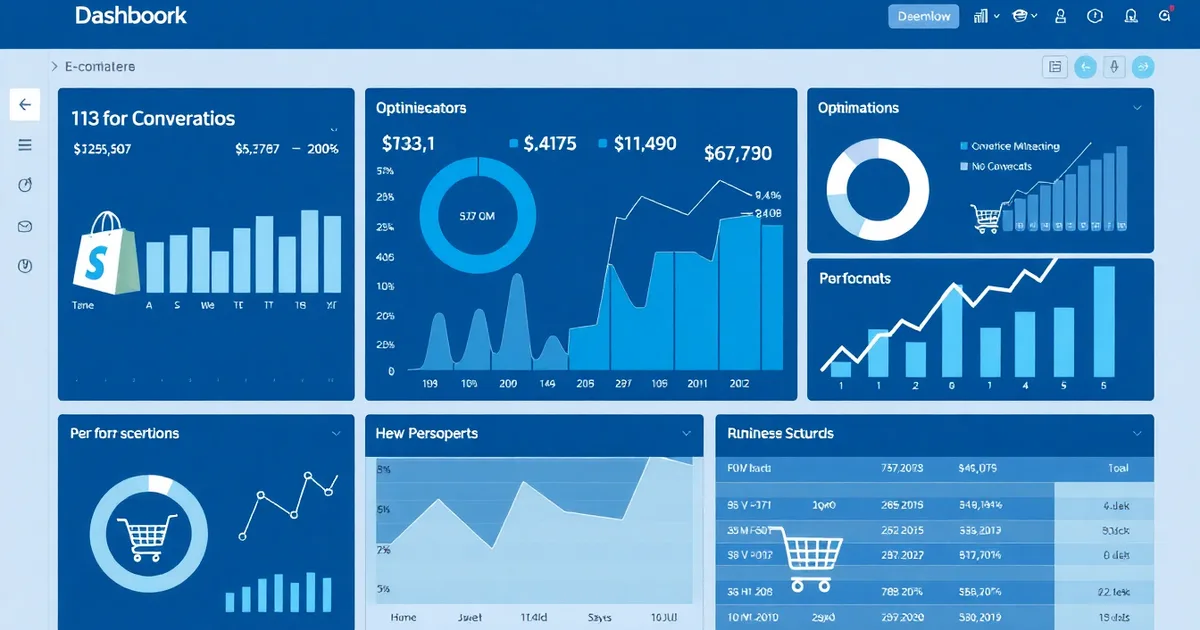
Shopify conversion optimization has evolved dramatically in 2026, with advanced techniques now capable of increasing store sales by 30-50% or more. This comprehensive guide explores cutting-edge strategies including AI-powered personalization, advanced A/B testing methodologies, sophisticated user experience optimization, and data-driven conversion rate improvements. Modern e-commerce success depends on implementing these proven techniques systematically to transform visitors into loyal customers and maximize revenue per visitor.
What Is Shopify Conversion Optimization and Why Does It Matter in 2026?
Conversion optimization is the systematic process of increasing the percentage of website visitors who complete desired actions, such as making purchases, signing up for newsletters, or creating accounts. For Shopify stores, this translates directly to revenue growth without increasing advertising spend.
In 2026, the average e-commerce conversion rate ranges from 2-4%, meaning 96-98% of visitors leave without purchasing. However, optimized stores achieve conversion rates of 8-15% through advanced techniques. The financial impact is substantial: improving conversion rates from 2% to 4% doubles revenue while maintaining the same traffic costs.
Modern conversion optimization combines behavioral psychology, data analytics, user experience design, and emerging technologies like AI-powered personalization. Unlike basic optimization tactics, advanced techniques create comprehensive systems that adapt to user behavior and preferences in real-time.
How Does Advanced User Experience Design Impact Conversion Rates?
User experience (UX) design fundamentally determines whether visitors trust your store enough to complete purchases. Advanced UX optimization focuses on removing friction points while building confidence throughout the customer journey.
Page load speed optimization remains critical, with studies showing 40% of users abandon sites loading longer than 3 seconds. Advanced techniques include:
- Implementation of Progressive Web App (PWA) technology for mobile users
- Advanced image optimization using next-generation formats like WebP and AVIF
- Critical CSS inlining and JavaScript optimization
- Content Delivery Network (CDN) configuration for global performance
- Database query optimization for faster product loading
Mobile-first design is essential as mobile commerce accounts for over 70% of e-commerce traffic in 2026. Advanced mobile optimization includes gesture-based navigation, thumb-friendly button placement, and seamless mobile checkout experiences.
Trust signals significantly impact conversion rates. Advanced implementations include real-time inventory displays, customer photo reviews, live chat with response time guarantees, and detailed shipping information with tracking integration.
What Are the Most Effective Advanced Personalization Strategies?
AI-powered personalization has become the cornerstone of high-converting Shopify stores in 2026. Advanced personalization goes beyond basic demographic targeting to create individualized experiences based on behavior, preferences, and purchase history.
Dynamic content personalization adapts website elements in real-time based on user behavior. This includes personalized product recommendations, customized homepage layouts, targeted promotional banners, and individualized pricing strategies for different customer segments.
Advanced recommendation engines use machine learning algorithms to analyze:
- Browsing patterns and time spent on specific products
- Cart abandonment behavior and recovery strategies
- Seasonal purchasing trends and lifecycle stages
- Cross-selling and upselling opportunities based on purchase history
- Social proof integration showing what similar customers purchased
Behavioral trigger campaigns automatically respond to specific user actions. Examples include exit-intent popups with personalized offers, browse abandonment emails with viewed products, and post-purchase upselling sequences based on customer lifetime value predictions.
Geographic personalization adapts content based on location, including local currency display, region-specific shipping options, culturally relevant product recommendations, and localized social proof elements.
How Can Advanced A/B Testing Methodologies Improve Results?
Traditional A/B testing often yields inconclusive results due to inadequate sample sizes and poor test design. Advanced testing methodologies in 2026 use sophisticated statistical approaches and comprehensive testing frameworks.
Multivariate testing simultaneously tests multiple page elements to understand interaction effects between different components. This approach provides deeper insights than simple A/B tests by revealing how changes work together to impact conversions.
Advanced testing focuses on high-impact elements:
- Product page layouts and information hierarchy
- Checkout flow optimization and form field reduction
- Call-to-action button design, placement, and messaging
- Pricing presentation and discount communication strategies
- Trust signal placement and social proof integration
- Navigation structure and category organization
Sequential testing builds upon previous test results to create iterative improvements. This methodology ensures continuous optimization rather than one-time improvements, leading to compound conversion rate gains over time.
Statistical significance calculations in advanced testing account for multiple comparisons, seasonal variations, and user segment differences to ensure reliable results that translate to long-term improvements.
What Role Does Psychology Play in Advanced Conversion Optimization?
Understanding customer psychology enables the creation of persuasive experiences that naturally guide users toward purchases. Advanced psychological techniques leverage cognitive biases and behavioral triggers to increase conversions ethically.
Scarcity and urgency psychology creates motivation for immediate action. Advanced implementations include real-time inventory counters, limited-time offers with countdown timers, and exclusive access messaging for registered users.
Social proof psychology builds trust through various mechanisms:
- Customer review integration with photos and verified purchase badges
- Real-time purchase notifications showing other customers' activities
- User-generated content displays featuring customer photos and stories
- Expert endorsements and influencer partnerships
- Sales volume displays and popularity indicators
Loss aversion techniques emphasize what customers might miss by not purchasing. This includes highlighting limited stock situations, showing potential savings from bulk purchases, and emphasizing unique product benefits that competitors don't offer.
Cognitive ease principles reduce mental effort required for purchases through simplified navigation, clear product categorization, intuitive search functionality, and streamlined decision-making processes.
How Should Product Pages Be Optimized for Maximum Conversions?
Product pages serve as the primary conversion points where visitors decide whether to purchase. Advanced optimization techniques transform product pages into persuasive sales tools that address customer concerns and build purchase confidence.
Visual optimization significantly impacts conversion rates through high-quality imagery, 360-degree product views, zoom functionality, and lifestyle context photos showing products in use. Video integration, including product demonstrations and customer testimonials, increases engagement and conversion rates by 15-25%.
Advanced product description strategies combine emotional appeals with technical specifications. Effective descriptions address customer pain points, highlight unique benefits, include relevant keywords for search optimization, and use bullet points for easy scanning.
Information architecture on product pages should follow the inverted pyramid structure:
- Key benefits and value propositions prominently displayed
- Essential product details and specifications clearly organized
- Supporting information like shipping details and return policies
- Social proof elements including reviews and ratings
- Related products and upselling opportunities
Interactive elements increase engagement and conversion rates. These include product configurators for customizable items, size guides with fit recommendations, comparison tools for similar products, and wishlist functionality for future purchases.
What Advanced Checkout Optimization Techniques Reduce Cart Abandonment?
Cart abandonment affects 70% of e-commerce transactions, making checkout optimization crucial for conversion improvement. Advanced techniques address both technical and psychological barriers that prevent purchase completion.
Progressive disclosure presents checkout information in logical steps without overwhelming users. Advanced implementations include step indicators showing progress, the ability to edit cart contents without leaving checkout, and guest checkout options that don't require account creation.
Payment method optimization accommodates diverse customer preferences through multiple payment options including digital wallets, buy-now-pay-later services, cryptocurrency payments, and international payment methods for global customers.
Advanced security measures build trust while maintaining usability:
- SSL certificate displays and security badge placement
- Transparent privacy policy links and data usage explanations
- Two-factor authentication options for account security
- PCI compliance messaging and secure payment processing indicators
- Clear refund and return policy communication
Form optimization reduces friction through smart form design, auto-fill capabilities, real-time validation with helpful error messages, and minimal required fields with optional information clearly marked.
Shipping and tax calculation transparency prevents surprise costs that cause abandonment. Advanced stores display shipping costs early in the process, offer multiple shipping options with delivery date estimates, and clearly communicate any additional fees.
How Can Email Marketing Integration Boost Conversion Rates?
Email marketing integration creates multiple touchpoints that guide customers through the purchase journey. Advanced strategies combine behavioral triggers with personalized messaging to recover lost sales and increase customer lifetime value.
Cart abandonment sequences use sophisticated timing and personalization to recover lost sales. Effective sequences include immediate confirmation emails, 24-hour reminder messages with product images, 72-hour emails with discount incentives, and final attempt messages with limited-time offers.
Browse abandonment campaigns target users who viewed products without purchasing. These campaigns include personalized product recommendations, related item suggestions, customer review highlights, and social proof elements specific to viewed products.
Advanced segmentation creates targeted campaigns for different customer types:
- First-time visitors with welcome series and introduction offers
- Repeat customers with loyalty rewards and exclusive previews
- High-value customers with premium product recommendations
- Inactive customers with re-engagement campaigns and win-back offers
Post-purchase email sequences increase customer lifetime value through cross-selling opportunities, review request campaigns, loyalty program invitations, and educational content about product usage and care.
What Analytics and Data-Driven Strategies Improve Optimization Results?
Data-driven optimization relies on comprehensive analytics that reveal customer behavior patterns and conversion bottlenecks. Advanced analytics go beyond basic metrics to provide actionable insights for strategic improvements.
Conversion funnel analysis identifies specific drop-off points in the customer journey. Advanced analysis includes heat mapping to understand user interaction patterns, session recordings to observe user behavior, and cohort analysis to track customer retention and lifetime value.
Customer segmentation analysis reveals different behavior patterns among user groups. This includes demographic segmentation, behavioral segmentation based on purchase history, geographic segmentation for international stores, and psychographic segmentation based on interests and values.
Advanced metrics for optimization include:
- Revenue per visitor (RPV) to measure overall site effectiveness
- Average order value (AOV) trends and improvement opportunities
- Customer acquisition cost (CAC) and return on advertising spend (ROAS)
- Lifetime value (LTV) calculations and customer retention rates
- Page-specific conversion rates and engagement metrics
Predictive analytics use machine learning to forecast customer behavior, identify high-value prospects, predict churn risk, and optimize inventory management based on demand forecasting.
Advanced Shopify Conversion Optimization Checklist
Implement these advanced techniques systematically to maximize conversion rate improvements:
- Technical Foundation: Ensure page load speeds under 2 seconds, implement PWA technology, optimize for Core Web Vitals, and establish comprehensive analytics tracking
- User Experience: Create mobile-first responsive design, implement intuitive navigation structure, optimize search functionality, and ensure accessibility compliance
- Personalization: Deploy AI-powered product recommendations, implement behavioral trigger campaigns, create dynamic content based on user segments, and establish geographic personalization
- Product Optimization: Use high-quality imagery with zoom functionality, create compelling product descriptions, implement video demonstrations, and optimize information architecture
- Checkout Enhancement: Streamline checkout process with minimal fields, offer multiple payment methods, display security badges prominently, and implement guest checkout options
- Social Proof: Integrate customer reviews with photos, display real-time purchase notifications, showcase user-generated content, and highlight expert endorsements
- Email Integration: Set up abandoned cart recovery sequences, create browse abandonment campaigns, implement post-purchase follow-up, and establish customer segmentation
- Testing Framework: Establish A/B testing protocols, implement multivariate testing capabilities, create testing calendar and priorities, and ensure statistical significance in results
- Analytics Setup: Configure conversion funnel tracking, implement customer behavior analysis, establish performance benchmarks, and create automated reporting systems
Shopify Conversion Optimization Techniques Comparison
| Technique | Difficulty Level | Expected Improvement | Implementation Time | Cost |
|---|---|---|---|---|
| Page Speed Optimization | Medium | 10-25% | 1-2 weeks | Low-Medium |
| AI Personalization | High | 20-40% | 1-3 months | Medium-High |
| Advanced A/B Testing | Medium | 15-30% | Ongoing | Medium |
| Checkout Optimization | Low-Medium | 20-35% | 2-4 weeks | Low |
| Email Integration | Medium | 25-45% | 2-6 weeks | Medium |
| Social Proof Enhancement | Low | 10-20% | 1-2 weeks | Low |
What Common Mistakes Should You Avoid in Shopify Conversion Optimization?
Avoiding common optimization mistakes prevents wasted effort and ensures consistent improvement results. Understanding these pitfalls helps prioritize effective strategies over popular but ineffective tactics.
Over-optimization occurs when too many changes are implemented simultaneously, making it impossible to determine which modifications actually improve conversions. Advanced optimization requires systematic testing and gradual implementation of proven techniques.
Ignoring mobile users represents a critical oversight as mobile commerce dominates e-commerce traffic. Many stores optimize desktop experiences while neglecting mobile-specific challenges like touch navigation, loading speeds, and form completion difficulties.
Statistical insignificance in testing leads to false conclusions about optimization effectiveness. Advanced practitioners ensure adequate sample sizes, account for external factors like seasonality, and run tests long enough to achieve reliable results.
Focusing solely on conversion rates without considering customer lifetime value can optimize for low-value customers while alienating high-value prospects. Comprehensive optimization balances immediate conversions with long-term customer relationships.
Remember that successful e-commerce businesses, similar to those explored in our Amazon FBA private label strategies, require systematic approaches to customer acquisition and retention optimization.
How Do You Measure Advanced Conversion Optimization Success?
Measuring optimization success requires comprehensive metrics that capture both immediate improvements and long-term business impact. Advanced measurement goes beyond simple conversion rate increases to evaluate overall business performance.
Primary metrics include conversion rate improvements, revenue per visitor increases, average order value growth, and customer acquisition cost reductions. These metrics should be tracked across different traffic sources, customer segments, and device types to understand optimization impact comprehensively.
Secondary metrics provide context for primary improvements:
- Customer lifetime value changes and retention rate improvements
- Shopping cart abandonment rate reductions and recovery effectiveness
- Page engagement metrics including time on site and pages per session
- Email marketing performance including open rates and click-through rates
- Customer satisfaction scores and review ratings
Advanced attribution modeling tracks multi-touchpoint customer journeys to understand how different optimization elements contribute to conversions. This approach reveals the compound effect of various improvements working together.
Regular performance reviews should compare results against industry benchmarks, seasonal trends, and historical performance to ensure optimization efforts deliver meaningful business improvements. Like successful dropshipping business strategies, conversion optimization requires continuous monitoring and adjustment based on performance data.
Shopify conversion optimization in 2026 demands sophisticated approaches that combine technology, psychology, and data analysis to create exceptional customer experiences. By implementing these advanced techniques systematically and measuring results comprehensively, Shopify store owners can achieve conversion rate improvements of 30-50% or more. Success requires commitment to continuous testing, customer-centric design, and data-driven decision making. The investment in advanced optimization techniques pays dividends through increased revenue, improved customer satisfaction, and sustainable competitive advantages in the evolving e-commerce landscape.