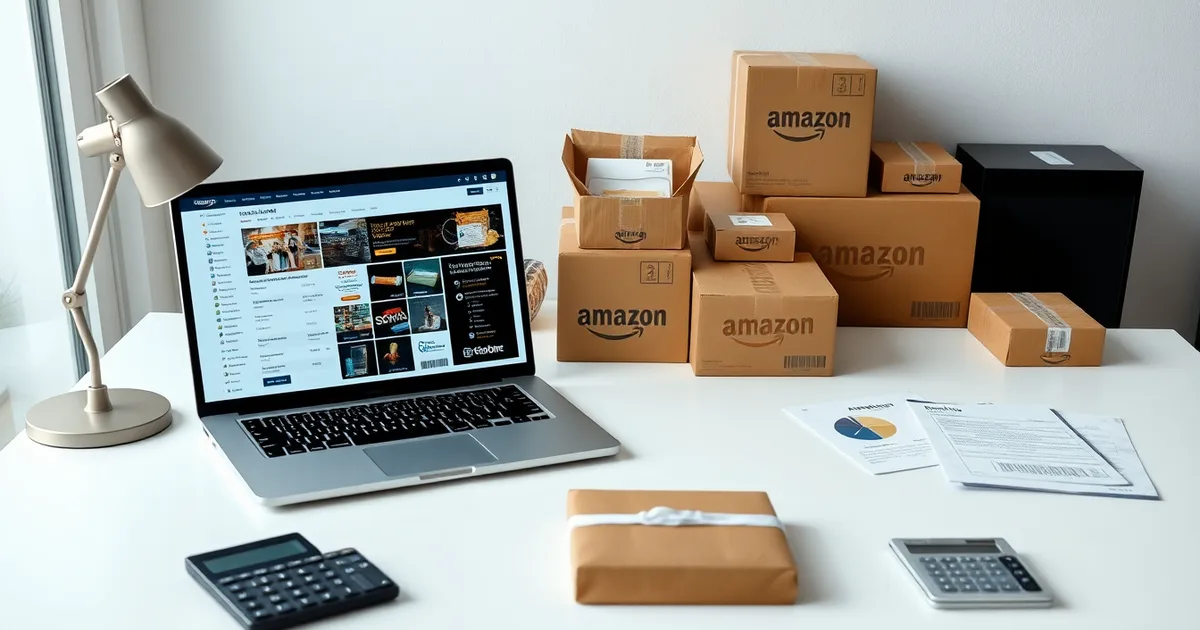
Amazon FBA private label represents one of the most lucrative e-commerce opportunities in 2026, allowing entrepreneurs to build profitable brands by sourcing generic products, adding their own branding, and selling them through Amazon's fulfillment network. This comprehensive guide covers everything from initial product research and supplier sourcing to advanced marketing strategies and brand scaling techniques. Unlike dropshipping business models, private labeling offers greater control over product quality, branding, and profit margins while leveraging Amazon's massive customer base and logistics infrastructure.
What Is Amazon FBA Private Label and How Does It Work?
Amazon FBA private label is a business model where entrepreneurs source generic or unbranded products from manufacturers, typically overseas, and rebrand them under their own private label before selling on Amazon. The FBA (Fulfillment by Amazon) component means Amazon handles storage, packaging, shipping, and customer service for your products.
The process involves identifying profitable product opportunities, finding reliable suppliers, creating unique branding and packaging, and optimizing product listings for maximum visibility. Successful private label sellers can achieve profit margins of 20-40% while building valuable brand equity that can be sold for 3-5 times annual profit.
Key advantages include complete control over pricing, branding, and product modifications, plus access to Amazon Prime customers who prefer fast, reliable shipping. The model differs significantly from retail arbitrage or wholesale selling because you own the brand and can make strategic decisions about product development and marketing.
How to Conduct Profitable Product Research for Private Label Success?
Effective product research forms the foundation of any successful Amazon FBA private label venture. Start by analyzing market demand, competition levels, and profit potential using specialized tools like Helium 10, Jungle Scout, or AMZScout to identify opportunities with high search volume but manageable competition.
Focus on products meeting specific criteria: selling price between $15-50, monthly sales volume of 300+ units, fewer than 100 reviews for top competitors, and profit margins exceeding 30%. Avoid highly seasonal items, fragile products, or those requiring regulatory compliance unless you have relevant expertise.
- Search for keywords with 2,000+ monthly searches but low advertising competition
- Analyze competitor reviews to identify improvement opportunities
- Calculate all costs including product, shipping, Amazon fees, and advertising
- Verify supplier availability and minimum order quantities
- Check for patent or trademark restrictions
Consider trending categories like health and wellness, home organization, pet supplies, and outdoor recreation, which consistently show strong growth. Validate demand through Google Trends, social media engagement, and competitor sales velocity before making final product selections.
Where to Find Reliable Suppliers for Amazon FBA Private Label Products?
Sourcing quality suppliers represents a critical success factor for Amazon FBA private label businesses. Alibaba.com remains the most popular platform for finding manufacturers, but consider alternative sources like Global Sources, Made-in-China.com, and direct manufacturer websites for better pricing and quality control.
When evaluating potential suppliers, prioritize those with Gold Supplier status, high response rates, and positive buyer feedback. Request product samples from 3-5 different manufacturers to compare quality, and always verify business licenses and certifications before placing large orders.
- Contact 10-15 potential suppliers for initial quotes and product specifications
- Narrow down to 3-5 suppliers based on pricing, quality, and communication
- Order samples and conduct thorough quality testing
- Negotiate pricing, minimum order quantities, and payment terms
- Establish quality control procedures and inspection protocols
Consider working with sourcing agents or inspection services for added quality assurance, especially for first-time importers. Build long-term relationships with reliable suppliers who can accommodate growing order volumes and product customization requirements.
What Are the Essential Legal Requirements for Private Label Selling?
Navigating legal requirements protects your Amazon FBA private label business from costly compliance issues and potential account suspension. Start by registering your business entity, obtaining necessary licenses, and understanding product liability implications in your jurisdiction.
Product compliance varies by category but commonly includes safety certifications, labeling requirements, and FDA approvals for consumables. Electronics need FCC certification, children's products require CPSIA compliance, and cosmetics must meet FDA cosmetic regulations.
Trademark protection becomes crucial as your brand grows. Register your brand name and logo through the USPTO and enroll in Amazon's Brand Registry program for enhanced listing control and intellectual property protection. This prevents competitors from hijacking your listings and enables access to A+ Content and sponsored brand advertising.
- Register business entity and obtain EIN for tax purposes
- Research product-specific compliance requirements
- File trademark applications for brand name and logo
- Obtain appropriate product liability insurance
- Ensure packaging meets Amazon's requirements
How to Create Compelling Brand Identity and Product Packaging?
Strong branding differentiates your Amazon FBA private label products from generic competitors and justifies premium pricing. Develop a cohesive brand identity including memorable name, professional logo, consistent color scheme, and clear value proposition that resonates with your target audience.
Professional packaging design significantly impacts perceived value and customer satisfaction. Invest in custom packaging that reflects your brand personality while meeting Amazon's packaging requirements and environmental considerations increasingly important to consumers in 2026.
Work with experienced graphic designers familiar with Amazon marketplace dynamics and consumer psychology. Your packaging should be Instagram-worthy, as many customers share unboxing experiences on social media, providing free marketing exposure.
| Branding Element | Key Considerations | Budget Range |
|---|---|---|
| Logo Design | Scalable, memorable, category-appropriate | $200-$1,000 |
| Packaging Design | Protective, branded, unboxing experience | $500-$2,000 |
| Brand Guidelines | Colors, fonts, messaging consistency | $300-$800 |
| Photography | Lifestyle shots, infographics, white background | $800-$2,500 |
What Strategies Optimize Amazon Product Listings for Maximum Sales?
Optimized product listings drive organic visibility and conversion rates for Amazon FBA private label products. Conduct thorough keyword research to identify high-volume, relevant search terms and incorporate them naturally throughout your title, bullet points, and description.
Product titles should include primary keywords, key features, and brand name while remaining readable and compelling. Front-load the most important keywords since Amazon's algorithm weighs earlier terms more heavily for search ranking purposes.
High-quality product images remain crucial for conversion, with the main image following Amazon's requirements while lifestyle and infographic images showcase benefits and usage scenarios. Include at least 7-9 professional images covering different angles, features, and use cases.
- Research competitor keywords and identify content gaps
- Write benefit-focused bullet points addressing customer pain points
- Create detailed product descriptions with HTML formatting
- Optimize backend search terms with relevant keywords
- Monitor and respond to customer questions and reviews
Continuously test and optimize listing elements based on conversion data and customer feedback. A/B test different images, titles, and descriptions to improve performance metrics and organic ranking over time.
How Much Capital Do You Need to Start an Amazon FBA Private Label Business?
Starting an Amazon FBA private label business requires careful financial planning, with initial investment typically ranging from $5,000 to $25,000 depending on product selection and order quantities. Budget allocation should cover product sourcing, shipping, Amazon fees, branding, and marketing expenses for the first 3-6 months.
Product costs usually represent 60-70% of initial investment, including manufacturing, shipping, and customs duties. Factor in minimum order quantities often ranging from 500-3,000 units for competitive pricing and reduced per-unit costs.
Additional expenses include professional photography ($800-$2,500), branding and packaging design ($1,000-$3,000), and initial advertising budget ($1,000-$5,000) to drive early sales velocity and organic ranking improvements.
- Product sourcing and inventory: $3,000-$15,000
- Branding and design: $1,000-$3,000
- Photography and content creation: $800-$2,500
- Initial advertising and marketing: $1,000-$5,000
- Miscellaneous expenses and working capital: $500-$2,000
Consider starting with validated product ideas and smaller order quantities to minimize risk while testing market demand. Scale inventory investment as sales volume and profitability become established.
What Are the Most Effective Amazon PPC Strategies for Private Label Brands?
Amazon PPC advertising accelerates product visibility and sales velocity for new private label launches while providing valuable keyword and market data. Start with automatic campaigns to discover relevant keywords, then create targeted manual campaigns based on performance data and competitor analysis.
Sponsored Products campaigns should target both high-intent keywords and competitor ASINs, with initial bids set 20-30% above suggested amounts to ensure adequate impression share. Monitor search term reports weekly to identify negative keywords and optimization opportunities.
Sponsored Brands campaigns work effectively for building brand awareness once you have multiple products or achieve Brand Registry status. These ads appear at the top of search results and can significantly improve click-through rates compared to standard product ads.
- Launch automatic campaigns for keyword discovery
- Create exact, phrase, and broad match manual campaigns
- Target competitor products with similar features
- Implement dayparting to optimize ad scheduling
- Test different ad copy and landing pages
Maintain advertising cost of sales (ACoS) below 25-30% for profitability while achieving organic rank improvements through increased sales velocity. Successful PPC management often determines the difference between profitable and struggling private label businesses.
How to Scale Your Amazon FBA Private Label Business Beyond the First Product?
Scaling Amazon FBA private label success requires systematic expansion through additional products, market diversification, and operational optimization. Focus on complementary products within your established niche to leverage existing customer base and brand recognition rather than entering completely unrelated categories.
Analyze customer purchase patterns and frequently bought together data to identify logical product extensions. Successful sellers often develop 5-10 related products creating a cohesive brand ecosystem with higher customer lifetime value and reduced advertising costs.
Consider expanding to international Amazon marketplaces once domestic operations stabilize. European markets (UK, Germany, France) and emerging markets like Australia and Japan offer significant growth opportunities with less competition than the US marketplace.
| Scaling Strategy | Timeline | Investment Required | Expected ROI |
|---|---|---|---|
| Second Product Launch | 3-6 months | $5,000-$15,000 | 15-25% |
| International Expansion | 6-12 months | $10,000-$30,000 | 20-35% |
| Brand Portfolio | 12-18 months | $25,000-$75,000 | 25-40% |
What Common Mistakes Should New Private Label Sellers Avoid?
Avoiding common pitfalls dramatically improves success rates for new Amazon FBA private label sellers. The most frequent mistake involves insufficient market research, leading to product selection in oversaturated niches or categories with declining demand trends.
Inadequate quality control represents another critical error resulting in negative reviews, returns, and potential account suspension. Always order and test product samples before committing to large inventory purchases, and establish clear quality standards with your suppliers.
Underestimating total costs leads to cash flow problems and unprofitable operations. Factor in all expenses including Amazon fees (15% referral fee plus FBA fees), advertising costs, returns, and working capital requirements for inventory replenishment.
- Choosing products based on personal preference rather than market data
- Ordering large quantities without testing market demand
- Neglecting trademark research and intellectual property protection
- Setting unrealistic profit margins without considering all costs
- Ignoring customer feedback and review management
- Failing to diversify supplier relationships
- Underestimating time investment for business management
Many entrepreneurs also underestimate the time and effort required for successful private label operations. Unlike passive income claims often promoted online, building a profitable Amazon FBA business requires consistent attention to inventory management, customer service, and marketing optimization.
Practical Implementation Steps for Amazon FBA Private Label Success
Follow this proven implementation roadmap to launch your Amazon FBA private label business systematically and minimize common startup challenges:
- Market Research Phase (Weeks 1-2): Use product research tools to identify 10-15 potential products meeting profitability criteria. Analyze competition, demand trends, and keyword opportunities.
- Product Validation (Weeks 3-4): Narrow selection to 3-5 products and conduct deeper analysis including competitor review mining, cost calculations, and supplier availability verification.
- Supplier Sourcing (Weeks 5-7): Contact manufacturers, negotiate terms, and order samples for quality testing. Select primary and backup suppliers for final product choice.
- Branding and Design (Weeks 8-10): Develop brand identity, create packaging design, and produce marketing materials. Register trademarks and prepare legal documentation.
- Product Ordering (Week 11): Place initial inventory order with selected supplier. Arrange shipping and customs clearance for international orders.
- Listing Optimization (Weeks 12-13): Create compelling product listings with professional photography, keyword-optimized content, and competitive pricing strategy.
- Launch and Marketing (Weeks 14-16): Launch PPC campaigns, implement review generation strategies, and monitor performance metrics closely.
- Optimization and Scaling (Ongoing): Continuously optimize listings, expand advertising, and plan second product launch based on initial results.
Track key performance indicators including organic ranking, conversion rate, advertising cost of sales, and customer lifetime value. Similar to developing a comprehensive business plan for traditional ventures, successful Amazon FBA operations require detailed planning and consistent execution.
Essential Tools and Software for Amazon FBA Private Label Management
Leverage specialized software tools to streamline operations and gain competitive advantages in Amazon FBA private label selling. Product research tools like Helium 10, Jungle Scout, and Viral Launch provide crucial market intelligence for product selection and keyword optimization.
Inventory management becomes critical as you scale operations across multiple products and marketplaces. Tools like RestockPro, InventoryLab, and ForecastRx help optimize reorder quantities, track profitability, and prevent stockouts that damage organic rankings.
Financial tracking and tax compliance require specialized solutions due to Amazon's complex fee structure and inventory accounting requirements. Consider tools like A2X, TaxJar, or Link My Books for accurate bookkeeping and tax preparation.
- Product Research: Helium 10, Jungle Scout, Viral Launch
- Keyword Research: MerchantWords, Sonar, Keyword Tool
- Inventory Management: RestockPro, InventoryLab, SoStocked
- PPC Management: Sellics, PPC Entourage, Ad Badger
- Review Management: FeedbackWhiz, AMZFinder, Feedback Genius
- Analytics and Reporting: ManageByStats, HelloProfit, AMZInsight
Understanding Amazon's Algorithm and Ranking Factors
Amazon's A10 algorithm determines product visibility and ranking based on relevance, performance, and customer satisfaction metrics. Unlike traditional SEO, Amazon prioritizes factors that directly impact sales conversion and customer experience.
Sales velocity represents the most important ranking factor, measuring units sold per day relative to competitors in your category. Higher sales velocity signals market demand and customer satisfaction to Amazon's algorithm, resulting in improved organic positioning.
Conversion rate optimization involves improving the percentage of visitors who purchase your product through enhanced listings, competitive pricing, and positive reviews. Products with higher conversion rates receive preferential treatment in search results and advertising auctions.
Customer satisfaction metrics including review ratings, return rates, and seller performance impact long-term ranking stability. Maintain ratings above 4.3 stars and address customer concerns promptly to avoid algorithmic penalties.
Building a successful Amazon FBA private label brand in 2026 requires strategic planning, thorough market research, and consistent execution across multiple business areas. Focus on product differentiation, customer satisfaction, and operational excellence to create sustainable competitive advantages in an increasingly crowded marketplace. Success comes from treating private label selling as a legitimate business requiring professional management rather than a quick-profit scheme. With proper planning and execution, Amazon FBA private label can provide substantial returns and valuable business assets that appreciate over time.