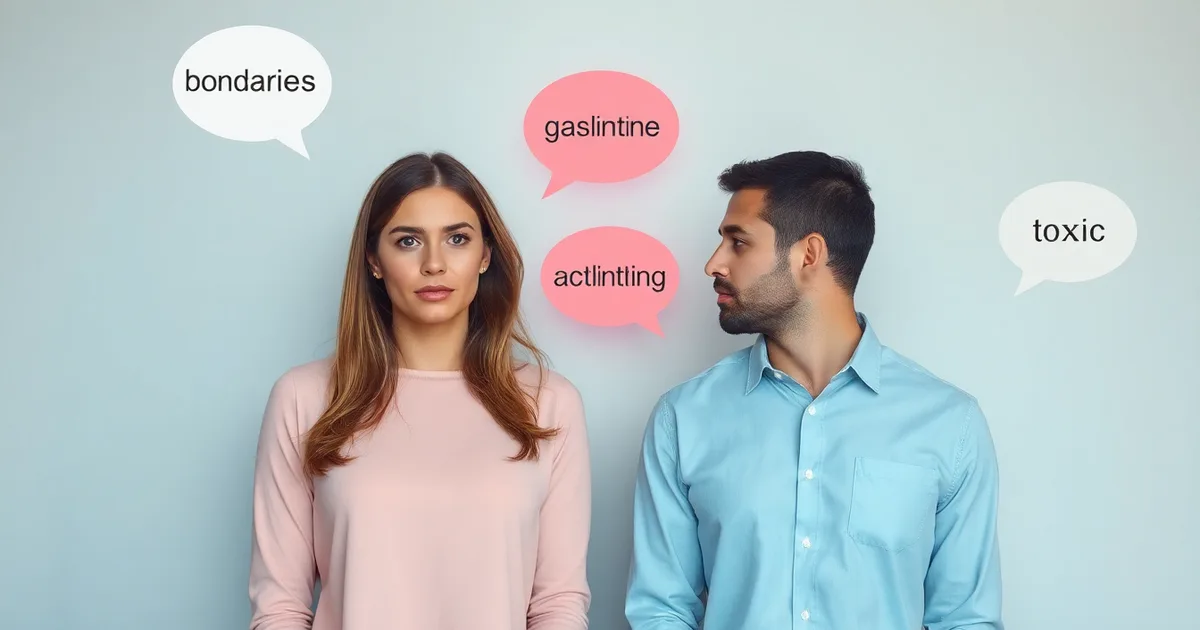
Your partner probably gets angry because your tears trigger a stress response — helplessness, feeling accused, or emotional flooding — not because they don't care. That reaction is learned, often in childhood, and it only changes if they own it. You are allowed to cry without managing their face.
Watch what happens around the ninety-second mark. When heart rate climbs past roughly 100 bpm, a state the Gottman Institute calls flooding, the prefrontal cortex largely goes offline and constructive conversation stops being possible. That is why a 20-minute break is usually the floor for a useful pause, not a luxury. Someone shouting "stop crying" is often someone whose own body has already left the room.
Men in particular get taught early to convert sadness into anger, because anger reads as strength and grief reads as weakness. Research on gender role conflict traces this to socialization, not biology, and that matters: a learned reflex can be unlearned. Attachment research points the same direction. Mikulincer and Shaver (2016) describe avoidant partners withdrawing and anxious partners pursuing during conflict, which is exactly how a cry/anger loop sustains itself — one person reaches harder, the other retreats harder, and neither move is about who loves whom.
Here is the part that is not neutral. A 2018 study in the Journal of Family Psychology found couples who practiced emotional validation — naming the other person's feeling without arguing with it — reported higher satisfaction within eight weeks. Vingerhoets' 2013 work on emotional tears shows crying generally signals vulnerability and draws support. If your partner reads your tears as manipulation every time, the difference is not your crying. It is their interpretation, and whether they will work on it.
- Flooding kills talking: above roughly 100 bpm, constructive conversation becomes nearly impossible, so a 20-minute break is the usual minimum effective pause.
- Anger is often learned: gender role conflict research shows men are socialized to suppress sadness and convert it to anger, which means the pattern is trainable in both directions.
- Attachment sets the loop: Mikulincer and Shaver (2016) link avoidant withdrawal and anxious pursuit during conflict — the mechanical engine behind cry-then-rage arguments.
- Repair has a window: the Gottman Institute finds repair attempts work best in the first few minutes of an argument, before flooding sets in.
- Validation measurably helps: a 2018 Journal of Family Psychology study found couples using emotional validation reported higher satisfaction within eight weeks.
Why does my partner get angry when I cry?
Anger is frequently a secondary emotion. Underneath it sits something the person cannot tolerate feeling: helplessness, shame, or plain overwhelm. When you cry, your partner is confronted with a problem they cannot fix, and for many people an unfixable problem registers in the body as a threat. The threat response is fight-or-flight, and fight is the one available. This is why the fury often looks disproportionate to the trigger. It is not really about the tears. It is about what the tears do to their sense of competence and control.
John Gottman's research describes what happens next as flooding: once heart rate passes roughly 100 beats per minute during conflict, the prefrontal cortex goes partly offline, and people lose access to empathy, listening, and problem-solving. They stop being able to take in new information. Watch your partner's jaw, breathing, or hand gestures when you start crying — if they are flooded, they are not choosing their response in any meaningful sense, and neither are you if your own pulse has climbed with theirs. A 2023 study in Frontiers in Psychology found that a 20-minute break after conflict reduces physiological arousal by about 40% and improves subsequent problem-solving. That number is why Gottman-trained therapists push a structured pause rather than talking it out in the moment. The pause is not avoidance. It is a precondition for the conversation working at all.
Childhood leaves a longer mark. Adults who grew up hearing "stop crying or I'll give you something to cry about" learned that tears predict punishment, not comfort. That lesson generalises. Ad Vingerhoets and colleagues found in a 2021 meta-analysis that 65% of adults report discomfort when someone cries in front of them, and 2019 Gallup data put men at 2.5 times more likely than women to name anger as their primary response to sadness. The mechanism is gender role conflict: sadness reads as weakness, weakness reads as danger, and anger is the only emotion the script permits. It is a learned reflex, not a character defect — which is also why it does not disappear simply because you have explained, calmly, several times, that you are not attacking them.
Defense or control: how to tell which one you are dealing with
The distinction that matters clinically is what happens after the anger. A partner defending against vulnerability will, given time and a low-stakes moment, be able to say something like "I panicked" or "I hate that I can't fix it." They may apologise badly, or late, or only after a walk. But the pattern bends. Sue Johnson's emotionally focused therapy data show roughly 70% of couples improving measurably within 8–12 sessions, which means the reflex is workable when both people are willing to look at it. The pattern that does not bend is the one where your crying, specifically, is policed. If you are told you are manipulative for crying, if your tears are used as evidence in an argument about your character, if the anger escalates when you seek comfort and subsides only when you go quiet — that is control, not overwhelm. A 2020 APA survey of 1,200 adults found only 18% of people who cry during an argument report their partner responds with comfort. Low, yes. But "uncomfortable and defensive" and "punishing you for having feelings" are different problems requiring different answers. The first is a conversation, ideally in a therapist's office. The second is not something you fix by crying more quietly.
Is it normal for couples to fight when one person cries?
Conflict in a long-term relationship is not a sign that something has gone wrong. It is the baseline condition. The useful question is not whether you fight, but what a fight does to you over time — whether it ends with repair or with one person quietly deciding that crying is no longer safe.
Here is what the research and clinical literature actually show, point by point:
- Most conflict never gets solved, and that is not a failure. John Gottman's longitudinal work at the Gottman Institute found that roughly 69% of relationship conflict is perpetual — it stems from stable differences in personality, needs and background that will not be negotiated away. The remaining 31% is resolvable. Couples who last do not solve more; they learn to talk about the unsolvable 69% without contempt.
- A partner's frustration is common. Punishment is not. Frustration looks like "I can't do this right now, give me twenty minutes." Punishment looks like mocking the crying, calling you manipulative, storming out to make you chase, or bringing up the tearfulness weeks later as evidence in an unrelated argument. Frustration is a nervous-system event. Punishment is a choice, repeated.
- Crying is physiologically hard to watch. A 2021 meta-analysis by Ad Vingerhoets and colleagues found that around 65% of adults report discomfort when someone cries in front of them, personal or professional. Tears signal distress and request help, and if your partner has no idea how to help, that helplessness has to go somewhere. In men it often goes to anger — 2019 Gallup data puts men at 2.5 times more likely than women to name anger as their primary response to sadness. Gender role conflict does the rest.
- Only 18% of people who cry mid-argument get comfort. That figure comes from a 2020 American Psychological Association survey of 1,200 adults. So if your experience is crying and receiving irritation instead of a hand on your back, you are in the large majority, not the broken minority. This is worth sitting with, because the isolation of the cry–anger–withdraw cycle comes partly from believing you are the only one living in it.
- Flooding has a number attached to it. Per Gottman Institute research published in 2023, a heart rate above 100 beats per minute during conflict marks the point where the prefrontal cortex largely goes offline. Nobody — you or them — is processing language well at that point. A 2023 study in Frontiers in Psychology found that a 20-minute break after conflict cuts physiological arousal by about 40% and improves subsequent problem-solving. Twenty minutes. Not an hour, not a night on the sofa.
- The pattern is usually about their capacity, not your volume. Attachment research — Mary Ainsworth's Strange Situation work, later extended into adult relationships by Mikulincer and Shaver — shows that people with avoidant strategies read distress as a demand and pull away or push back. Stephen Porges's polyvagal theory adds the mechanism: a nervous system that reads tears as threat recruits fight-or-flight, and fight is the version you see. Emotionally focused therapy, developed by Sue Johnson, targets exactly this cycle. A 2019 review by Johnson reports that roughly 70% of couples show measurable improvement within 8–12 sessions.
- One number worth knowing before you decide anything. The Gottman Institute reports that couples wait an average of 6 years from the onset of a problem before seeking outside help. Six years is long enough for a pattern to harden into a personality trait in both people.
The item people most often misread is the first one. "69% of conflict is perpetual" gets repeated as permission to stop trying — as if unresolvable means unaddressable. It does not. Perpetual conflict still has rules: no name-calling, no contempt, no weaponising your tears, a break at 100 bpm, and a return to the conversation within the hour. A couple that argues about the same thing for a decade and stays kind is doing fine. A couple that argues about it for a decade while one person gets called manipulative every time they cry is not doing the same thing at all, and the difference is not the crying.
Which brings this to the part most articles skip. Communication advice — I-statements, soft startups, scheduling difficult conversations — assumes both people want the cycle to end. If your partner consistently punishes you for crying, that assumption is false, and no script will fix it. You can change how you raise something. You cannot perform the work they owe themselves. Some partners, given a clear and repeated statement of the pattern and a real consequence attached, will get into individual therapy and change. That is a real outcome and it happens. Others will treat every attempt at repair as further evidence of your instability. That is also a real outcome, and staying means accepting it. Crying quietly to keep the peace is not a compromise. It is a slow deletion of yourself, and the person best positioned to notice is you.
What is happening in your partner's body when you cry?
When you start to cry, your partner's body responds before their mind forms an opinion about it. Stephen Porges's polyvagal theory describes the vagus nerve as the brake pedal on the nervous system: when it is engaged, heart rate stays steady and the face stays expressive. When someone perceives a threat they cannot control, that brake releases. Heart rate climbs, the voice tightens, and the thinking part of the brain gets less blood flow than the alarm system does. John Gottman's research puts a number on it — once heart rate passes roughly 100 beats per minute, what he calls flooding sets in, and the person genuinely cannot process what you are saying.
Your tears register as that threat. Mirror neuron networks mean your partner's brain partly simulates your distress rather than just observing it, and if they have no reliable way to soothe themselves, the feeling arrives without an exit. Anger is the exit. Gallup's 2019 data found men were 2.5 times more likely than women to name anger as their primary response to sadness, which fits what Ad Vingerhoets and colleagues documented in a 2021 meta-analysis: about 65% of adults report discomfort when someone cries in front of them, professional setting or not. None of that makes the anger acceptable. It does mean the anger is often a panic response wearing a costume.
The 20-minute rule is not a rejection
A 2023 study in Frontiers in Psychology found that a 20-minute break after conflict cuts physiological arousal by about 40% and improves the quality of problem-solving when the couple returns to the topic. Walking away mid-argument feels like abandonment in the moment. But a flooded nervous system cannot hear "I'm sad" — it hears "you are failing," which is exactly why the same fight recurs for six years, the average delay Gottman's institute reported in 2022 between a problem starting and a couple seeking outside help.
The break only works with a return time attached. "I need 20 minutes, I will come back at 8:15" is a biological necessity. Leaving the room with no return is something else entirely, and it is fair to say so out loud.
Learned responses: how childhood shapes adult reactions to tears
Mary Ainsworth's Strange Situation work in the 1970s described a pattern that still holds up: infants whose caregivers responded inconsistently to distress learn to treat their own need for comfort as a problem to be managed, not expressed. Mikulincer and Shaver's later research on adult attachment extended this into romantic relationships. A partner with an avoidant style did not decide, as an adult, that your tears are manipulative. They learned early that strong emotion in someone else signals a demand they cannot meet, and the fastest way to make that demand stop is often irritation. That is not an excuse. It is a mechanism, and it is the one running the machinery.
Gender socialization adds a second layer on top of the first. A boy who is told to stop crying and "toughen up" does not stop feeling sadness; he learns to route it through the one emotion that gets him taken seriously instead. That translation is what researchers call gender role conflict, and the numbers show how common it still is: men are roughly 2.5 times more likely than women to name anger as their primary response to sadness, per 2019 Gallup data. Watch it happen in real time during an argument. You tear up. Their jaw tightens, their voice sharpens, and the conversation becomes about your crying rather than whatever started it. The anger is usually not the real content — it is the only channel that feels available.
Emotional invalidation, and what it leaves behind
Emotional invalidation in childhood is quieter than outright abuse but leaves a similar fingerprint. A parent who says "you're fine, stop being dramatic" every time a child is upset teaches that feelings are negotiable facts rather than data. Adults raised that way often cannot name what they are feeling in the moment, only that something is wrong and someone needs to stop making noise about it. This is where the accusation that you are "too emotional" or "manipulating" them usually comes from: it is the script they were handed, repeated without examination. Ad Vingerhoets's 2021 meta-analysis found that 65% of adults report discomfort when someone cries in front of them, so your partner is not unusual in the raw reaction. What separates a workable relationship from an unworkable one is what happens after the discomfort.
That distinction matters more than the origin story. A partner who grew up invalidated can unlearn the reflex, but only if they can say out loud "I get angry because I don't know what to do with your sadness" instead of "you're doing this on purpose." When conflict pushes heart rates above roughly 100 beats per minute, John Gottman's research calls it flooding, and no one learns anything in that state. If your partner's learned pattern is fixed and defended, the therapy outcome data is blunt: roughly 70% of couples improve with emotionally focused therapy, but only among those who actually show up. You are not required to keep crying at a lower volume to spare someone a feeling they have never tried to understand.
When anger is not just discomfort: red flags of emotional abuse
Discomfort is common and, to a point, forgivable. A 2021 meta-analysis by Ad Vingerhoets and colleagues found that 65% of adults report feeling uncomfortable when someone cries in a professional or personal setting, and men are 2.5 times more likely than women to report anger as their primary response to sadness (Gallup, 2019). None of that makes your partner abusive. What separates a partner who is bad at tears from one who uses your tears against you is not the anger itself. It is what happens in the twenty minutes after.
A 2020 survey of 1,200 adults by the American Psychological Association found that only 18% of people who cry during an argument report that their partner responds with comfort. So low comfort is the norm, not proof of abuse. The distinguishing behavior is repair.
| Behavior | Discomfort (workable) | Emotional neglect (damaging) | Abuse (controlling) |
|---|---|---|---|
| Immediate reaction to your tears | Goes quiet, looks away, heart rate climbs past the 100 bpm flooding threshold identified by Gottman Institute research (2023) | Leaves the room mid-sentence, returns 2+ hours later without acknowledgment | Mocks your crying, mimics your face, or tells you it is a performance |
| What they say afterward | "I don't know what to do when you cry, I shut down." | "You're too sensitive, that's a you problem." | "If you cry again I'll leave," or threats to call your family, employer, or police |
| Who owns the pattern | Takes responsibility and asks what would help | Waits for you to apologize for crying | Reframes your tears as the abuse — you are "emotionally manipulating" them |
| Change over 6 months | Agrees to couples therapy; 70% of EFT couples show measurable improvement in 8–12 sessions (Johnson, 2019) | Promises to change, attends 0 sessions, restates the same complaint | Escalates — crying becomes a trigger for punishment, withdrawal of money, or physical intimidation |
| Your body during conflict | You can take a 20-minute break; arousal drops ~40% and problem-solving improves (Frontiers in Psychology, 2023) | You hide crying in bathrooms or cars to avoid the fallout | You flinch, rehearse what you will say, or cry silently to avoid being heard |
| Effect on you after 12 months | You cry less often in conflict and feel heard on at least some occasions | You stop crying entirely — a common adaptation to a partner who punishes tears | You describe yourself as "too much," "crazy," or "the problem" to friends and a therapist |
The discomfort column wins for the majority of couples who write in with this question — roughly speaking, if your partner is uncomfortable, takes some ownership, and shifts even slightly over six months, the anger is a nervous-system problem you can work on together, ideally with an emotionally focused therapist (Sue Johnson's model, 8–12 sessions, 70% measurable improvement). The threshold that flips the answer is the third column: if your partner blames you for your tears, threatens consequences for crying, or has you apologizing for the thing they did, the framework changes from "we need better tools" to "you are being controlled," and the honest answer is that no amount of calmer crying will fix it. On average, couples wait six years from the onset of a problem before seeking help (Gottman Institute, 2022). Six years is long enough to lose the version of yourself who cries without checking the room first.
What actually helps both people in the moment?
Everything below assumes two things: your partner is not the person described in the red-flags section, and both of you want the argument to end better than the last one did. If the second condition is missing, a scripted de-escalation plan will not save you — you will just be performing calm into a void. Given the other previous sections, you already know what is probably happening under the surface. This is the part you do with your hands and your voice.
One number to keep in mind: a 2023 study in Frontiers in Psychology found that a 20-minute break after conflict drops physiological arousal by about 40% and improves how well couples solve the actual problem. Twenty minutes is not a figure of speech. It is roughly how long it takes for the cardiovascular system to come back below the flooding threshold John Gottman identified — a heart rate above 100 beats per minute, at which point nobody is listening, they are surviving.
- Call the break before either of you says something you cannot take back. The window is short. In practice you have maybe 30 to 90 seconds after the pitch changes — voice rising, jaw tightening, your own crying getting hiccup-y — before the exchange turns into scoring points. The sentence that works is short and it commits you to a return: "I need 20 minutes and then I want to finish this with you." Both halves matter. Without the second half it is stonewalling, which Gottman's research treats as one of the strongest predictors of relationship breakdown.
- Say the time and mean it. Twenty minutes, not "a bit." Set a timer on your phone if you have to. What goes wrong here is the most common version of this failure: one partner takes the break, gets absorbed in a screen or a chore, and comes back 90 minutes later — or does not come back at all and assumes the storm has passed. To the person who was left in the room, that reads as abandonment, and the anger comes back with interest. If you are the one who cries, you may be tempted to let the delay slide because the quiet is a relief. Do not. Come back.
- Do not use the break to rehearse your case. This is the step people botch most. Twenty minutes spent mentally drafting the counter-argument is not regulation, it is reloading. The physiology only resets if you actually let it. Walk, shower, breathe with a longer exhale than inhale — the exhale is where the parasympathetic branch of the vagus nerve does its work, which is the mechanism Stephen Porges describes in polyvagal theory. If you are the one who gets angry, physical movement helps more than sitting still. Either way, the point is to let your body drop below roughly 100 beats per minute so the next conversation is between two forebrains instead of two alarm systems.
- Reopen with a repair attempt, not a recap. A repair attempt is anything that signals "I am still on your side, this is still us against the problem." It can be a phrase — "I am not going anywhere, I just needed to stop" — or a gesture: a hand on the arm, a cup of tea set down in front of them, sitting on the same side of the table instead of across it. The Gottmans have been measuring these for decades; the specific form matters far less than the fact that it arrives early. If you wait until you have made your point to offer warmth, it is no longer a repair attempt, it is a reward for agreeing with you.
- Name your own state without making it a charge. This is where a sentence like "I'm crying because I'm overwhelmed, not because you're a bad partner" does real work — it removes the interpretation that is driving their defensiveness. Attach it to yourself, not to them. "I cry when I'm flooded; it is not a verdict on you" lands differently than "you always make me cry." The first is information. The second is an indictment, and indictments escalate.
- Ask them to name their state too, and wait for the answer. Men are about 2.5 times more likely than women to report anger as their primary emotional response to sadness (Gallup, 2019), and gender role conflict research suggests the anger is often the only channel that felt permitted. So the question "what is happening for you right now?" is often more useful than "why are you angry?" The second one asks them to defend a label. The first one lets them find the softer thing underneath it — usually helplessness, sometimes shame, occasionally feeling accused. Give them five seconds of silence to answer. Most people fill silence with the first thing that surfaces, and the first thing is usually the truth.
- Close the loop, even if the argument is not resolved. You do not have to agree. You do need an ending: "we're not done with this, but we're okay." That distinction is what makes the next round possible. Couples who can do this consistently are the ones who respond to the 8–12 sessions of emotionally focused therapy Sue Johnson describes as producing measurable improvement in roughly 70% of cases — the therapy is largely teaching this sequence until it is automatic.
The failure mode is this: you learn the script, you run it perfectly, you call the break, you use the soft voice, you name your emotion without accusing anyone — and your partner learns that your tears now come with an exit and a reset button, and nothing about their response changes. Roughly 18% of people who cry during an argument report being met with comfort (APA survey of 1,200 adults, 2020). If you are running the procedure every time and still falling in that other 82%, the problem is not the procedure. The procedure is not a substitute for the other person doing their half of it, and no amount of well-timed repair attempts can be performed alone.
How can we talk about this when we're both calm?
The conversation you need is not the one you keep having at 11:40 p.m. while one of you is crying and the other is doing dishes too loudly. It is a scheduled talk with a start time, an end time, and no unresolved argument attached to it. The list below is a structure for that talk, drawn from the conflict protocols John and Julie Gottman use at the Gottman Institute and from Sue Johnson's emotionally focused therapy work.
- Pick a time and a place neither of you associates with fighting. A walk works better than a couch, partly because walking together regulates breathing and eye contact. Avoid the bedroom and avoid anything within two hours of bedtime. If either person is already agitated, postpone it — don't negotiate about whether you're "allowed" to postpone.
- State the pattern as a shared problem, not a crime scene. Something like: "When I cry, you get angry, and then we both shut down. I don't think either of us wants that." This framing does not accuse, and it does not apologise for the crying. It names a loop you are both inside.
- Use one specific behaviour request, not a personality overhaul. "I need you to stop being dismissive" is not actionable. "When I start crying, I need you to say 'I'm listening' and stay in the room for 60 seconds before you respond" is. Ask for one thing you could observe happening or not happening.
- Ask what happens in their body when you cry. Many people who default to anger are describing a fight-or-flight surge they never learned to name. That does not excuse the anger, but it turns "you're cruel" into "your heart rate spikes and you say things you regret." The Gottman Institute treats a heart rate above 100 bpm during conflict as the threshold for flooding, and at that point nobody is processing anything.
- Agree on a pause signal before you need it. A word or a hand gesture, chosen in advance, that either of you can use without penalty. A 2023 study in Frontiers in Psychology found a 20-minute break after conflict cut physiological arousal by around 40% and improved how well couples solved the actual problem. The pause is not stonewalling if you name a return time — "I need 20 minutes, I'll come back at 9:30" — otherwise it is.
- Say out loud what each of you will do if the pause gets used as a weapon. If one person calls the pause every time the topic turns to their behaviour, the mechanism is dead. Name that risk in the calm conversation, not during the fight. "If either of us uses the break more than once in a row, we revisit it the next day."
- Set a review date. Two weeks out, same structure, same walk. Ask two questions: did the signal get used, and did the specific behaviour request get met. If the answer is no on both after three or four cycles, the problem is not communication style — see the red-flags section, and consider a therapist trained in emotionally focused therapy. Roughly 70% of couples who receive EFT show measurable improvement within 8 to 12 sessions, per Johnson's 2019 outcome data, but that figure assumes both people show up.
The step people most often get wrong is the pause signal, because they treat it as a concession to the angry partner rather than a protection for both. In practice it usually collapses in one of two ways: the angry partner invokes it the moment tears appear and never returns, or the crying partner refuses to use it because leaving feels like abandonment. Both versions leave the same person dysregulated and the same person unaccountable. If a pause is called and the person who called it does not come back within the stated window, that is data. Write it down, along with the date. Six years is the average gap between a problem appearing and a couple seeking outside help, according to Gottman Institute figures from 2022, and that gap is normally filled with exactly this kind of quiet accounting.
When to seek therapy — for you, your partner, or both
The average couple waits six years from the onset of a problem before seeking help, according to Gottman Institute data from 2022. Six years is long enough for a pursue–withdraw pattern to harden into the relationship's default setting, which is why couples who arrive at a therapist's office in year six usually need more sessions than couples who arrive in year one. The threshold for going is not "we're in crisis." It is: the same fight has happened more than three times, you can predict the ending before it starts, and neither of you can describe what the other person is feeling without guessing wrong. If you are already googling whether your partner is abusive, that itself is a reason to book an appointment, individually if your partner refuses to go. You do not need their permission to get help for yourself.
For couples stuck in the cycle where one person cries and the other escalates, the best-evidenced option is emotionally focused therapy, developed by Sue Johnson and grounded in attachment theory. In Johnson's 2019 clinical summary, roughly 70% of couples who complete EFT show measurable improvement within 8–12 sessions. That is a high number for couples therapy, and it holds specifically for the pattern EFT was built to treat: the pursuer who reaches harder, the withdrawer who defends harder, both of them misreading the other's behaviour as an attack. EFT does not teach you to cry less. It teaches the withdrawer to say what the anger is protecting, and the pursuer to ask for contact without flooding the room. If your partner can tolerate a therapist naming their anger as a defence rather than a justified response, this is the work with the best track record. If they cannot, EFT will stall.
Some partners need individual work first. This is not a punishment and it is not a way to make them the identified patient. It is that a person who goes from zero to rage in two seconds when their partner's face crumples is usually running an old script — often from a household where tears meant danger or manipulation — and that script does not respond well to being unpacked in front of the person it fires at. Gender role conflict is part of it here: Gallup's 2019 data found men are 2.5 times more likely than women to report anger as their primary emotional response to sadness, and a therapist who understands that mapping can do more in six individual sessions than a couples therapist can do in twenty with both of you in the room. Look for someone trained in attachment-based or trauma-informed work, not generic talk therapy. And note the 2021 Vingerhoets meta-analysis finding that 65% of adults report discomfort when someone cries in front of them — your partner's discomfort is common. Their explosion is not required by it.
Waiting makes all of this harder. A 2023 study in Frontiers in Psychology found a 20-minute break after conflict lowers physiological arousal by 40% and improves later problem-solving, which means the raw material for change is there — but only if the pattern has not already calcified. If you are past year six and your partner has heard the request plainly more than twice and still will not read a single article, attend one session, or name a single thing they would change, that is information. Go to individual therapy for yourself, and be honest with the therapist about what you are actually asking: whether to stay. Crying quietly to keep the peace is a strategy, not a relationship, and no amount of therapy on your side alone will convert it into one.
You are allowed to cry: protecting your own emotional health
There is a line between accommodating a partner's discomfort and amputating your own emotional range to keep the room calm. Accommodation sounds like "I'll give you twenty minutes after a hard conversation before we pick it back up." Suppression sounds like teaching yourself, over months, to swallow tears in the bathroom and come back with a flat face. The first is negotiation. The second is a slow leak. A 2020 survey of 1,200 adults by the American Psychological Association found that only 18% of people who cry during an argument say their partner responds with comfort — which suggests the problem is widespread, not that you are uniquely broken. If your partner's baseline reaction to your tears is irritation, you are in the majority, and that is the exact reason it needs to be addressed out loud rather than absorbed.
Support outside the relationship is not a betrayal of it. It is a load-bearing wall. A therapist who works with attachment — someone trained in the tradition of Mary Ainsworth or the adult-attachment framework of Mikulincer and Shaver — can help you separate "my crying is a problem" from "my crying is being treated as a problem." Ad Vingerhoets, whose lab at Tilburg University has studied crying for three decades, is blunt about why tears trigger discomfort in others: they signal need, and need is costly to witness. That is useful information about the witness, not a diagnosis of you. Friends, a sibling, a therapist, or a support group for partners of emotionally volatile people can hold the parts of this your partner currently cannot. One caveat worth naming: if you find yourself only telling friends the bad parts and never the good, or only telling your partner the good and never the bad, you have stopped being a reliable narrator to anyone, including yourself.
When crying is consistently punished or weaponised
Consider leaving when the crying itself becomes evidence against you. That looks like being told you are manipulating, performing, or "doing it on purpose" every time you tear up — particularly if the accusation arrives faster than any attempt to understand what hurt. It looks like your partner escalating when you cry ("this is why I can't talk to you") and then using your reaction as the reason the conversation ends. It looks like you crying less and less over years, and feeling smaller rather than safer. Emotionally focused therapy, the approach Sue Johnson developed, has good evidence behind it — roughly 70% of couples show measurable improvement within 8–12 sessions (Johnson, 2019) — but it requires both people in the room, willing to be changed. One person cannot do couples therapy alone. If your partner refuses, minimises, or turns the request into another grievance, that refusal is the answer to the question you are googling.
You are allowed to cry. Not as a tactic, not as a test, but as a nervous system doing what nervous systems do when something matters. If your partner can hold that — even imperfectly, even with a sigh first — there is something to work with. If they cannot, and will not, you are not obligated to spend the next decade practising a dry-eyed version of yourself to keep the peace. The Gottman Institute's own data on how long couples wait before seeking help (a median of six years) is not a warning to be patient. It is a warning about the cost of waiting.
Frequently Asked Questions
Why does my boyfriend get angry when I cry but not when I'm angry?
Anger is familiar ground for many men; tears are not. When you shout, he has a script — argue back, defend, cool off. When you cry, the encounter asks him to sit with sadness he may have been taught to treat as weakness, and anger is the faster exit. A 2019 study in Frontiers in Psychology found men often rate sadness as less acceptable to express than anger, which partly explains the reflex.
It also isn't about you. Somewhere around boyhood, plenty of men learned that tears in a room meant someone was failing — either you or him. He defaults to irritation because it feels like control.
Is it manipulative to cry during an argument?
No. Crying during conflict is a physiological stress response — heart rate climbs, the throat tightens, and the lacrimal glands fire before you decide anything. Tears become manipulative only when they are deployed deliberately to shut down accountability or redirect blame, which is far rarer than the accusation suggests. If you couldn't stop it, it wasn't a tactic.
How do I stop crying when my partner gets angry?
You can't reliably override tears, but you can shorten the flood. Slow your exhale to roughly six breaths per minute — four seconds in, six to eight out — press your feet into the floor, and name five objects in the room. If your chest is already heaving, ask for a 20-minute break. That's a nervous system intervention, not an admission of guilt. You do not owe anyone a tear-free argument.
Worth knowing: suppressing tears typically raises physiological arousal, so the crying often returns harder ten minutes later.
What does it mean if my partner shows no emotion when I cry?
A flat face is usually a shutdown, not indifference. Dissociation and emotional avoidance — both common in people with histories of neglect or harsh discipline — switch off expression when a partner's distress spikes. He may be flooded internally and showing nothing. It still leaves you crying alone in the room, and that loneliness is the part that needs naming out loud.
Can a relationship survive if my partner gets angry every time I cry?
Yes, if he owns the pattern and the two of you work on it, often with a couples therapist using something like Gottman-method or emotionally focused therapy. No, if he denies it, calls you manipulative, and keeps blaming your tears. Judge by six-month trends, not one good week. Research on conflict repair consistently finds that partners who can exit a flooding episode and return within about 20-30 minutes do measurably better.
What should I say to my partner when they get angry at me for crying?
Wait until a calm moment — not mid-argument. Then say something close to: "When I cry, I'm not attacking you. I need you to take a breath and just be with me for a minute. Can we try that?" That sentence separates your tears from an accusation, which is what his anger is usually defending against. Pick one specific request and repeat it across several weeks; repetition, not a single heartfelt talk, is what shifts the pattern.