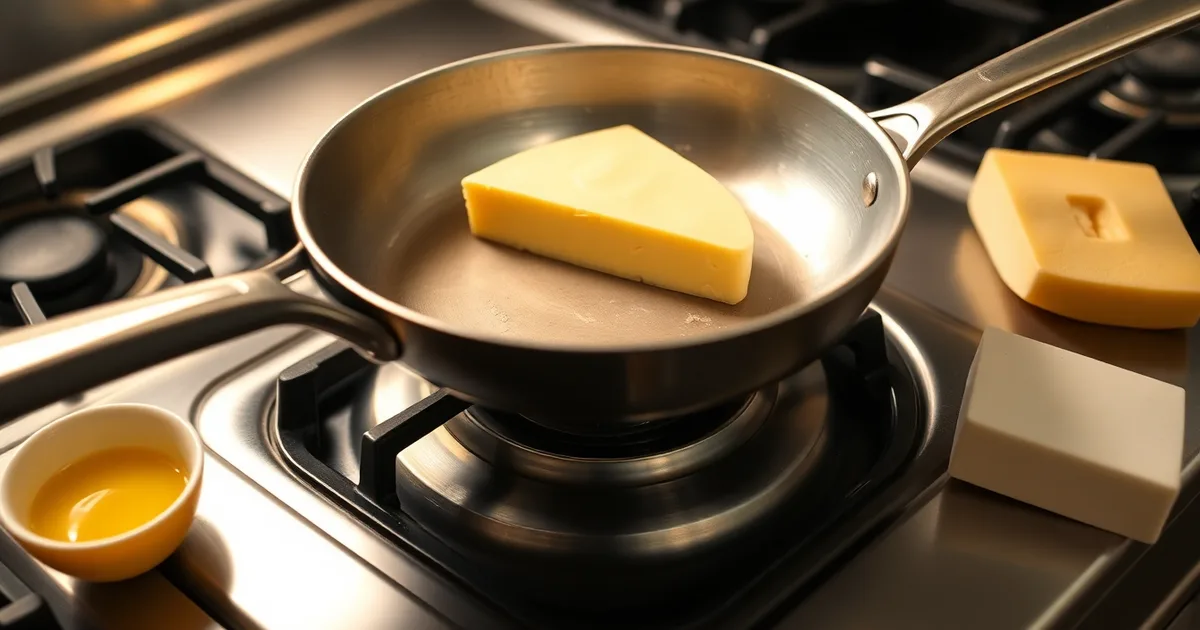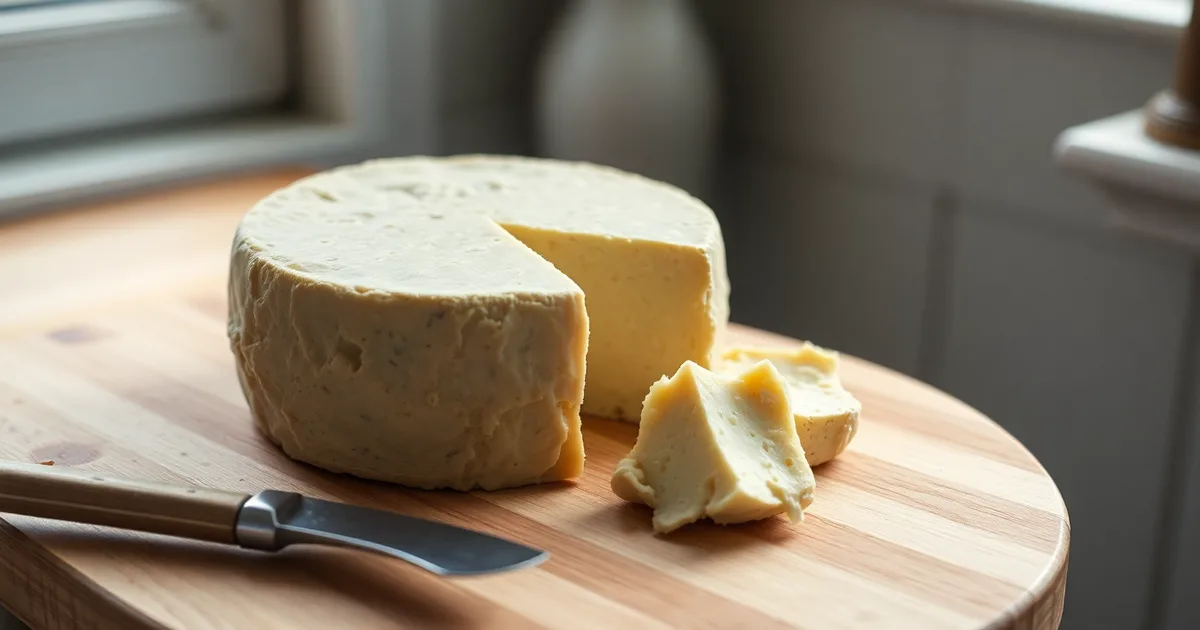
A foot-like smell in vegan cheese usually comes from beneficial bacteria making butyric acid, or from sulfur compounds in nutritional yeast and added lactic acid. It is normal in aged and rind-washed varieties. But if the odor arrives suddenly alongside pink, green, or black mold, slime, or a bitter taste, throw the cheese out.
Butyric acid is the same molecule behind the smell of feet and vomit, and it turns up legitimately in aged vegan wheels inoculated with Propionibacterium freudenreichii or Clostridium butyricum. Nutritional yeast does its own version of this: its sulfur-bearing amino acids break down into hydrogen sulfide and methanethiol, which read as feet or rotten egg. Neither is a defect. A washed-rind cashew cheese that smells like a locker room is doing what it was designed to do.
The number that catches people off guard: the USDA's two-hour rule. Perishable food sits out no longer than two hours at room temperature, and one hour once the ambient temperature passes 90°F (32°C). A 2021 study in the Journal of Food Science found commercial vegan cheeses routinely carry high loads of lactic acid bacteria, which is fine in the fridge and not fine on a counter. Leave a tub out through a long dinner and those bacteria start converting added lactic acid into butyric acid. The cheese did not arrive smelling like that. It became that.
Your nose will not settle the question. An FDA survey published in 2022 found 25% of consumers could not tell harmless fermentation apart from spoilage in plant-based cheese. Go by eyes and fingers instead.
- Foot smell is expected: Butyric acid from Propionibacterium freudenreichii and Clostridium butyricum is a normal fermentation product in aged vegan cheeses, not evidence of contamination.
- Nutritional yeast contributes sulfur: Its sulfur-containing amino acids degrade into hydrogen sulfide and methanethiol, the compounds behind feet and rotten-egg odors.
- Two-hour refrigeration limit: The USDA caps unrefrigerated perishable food at 2 hours, cut to 1 hour above 90°F (32°C), before spoilage risk climbs sharply.
- Sniff tests mislead: A 2022 FDA survey found 25% of consumers could not distinguish harmless fermentation from spoilage odors in plant-based cheeses.
- Visible mold means discard: Pink, green, or black mold, surface slime, or a bitter taste indicates spoilage regardless of how the cheese smells.
What exactly causes that foot-like smell in vegan cheese?
The compound doing most of the work is butyric acid. It is the same short-chain fatty acid that gives vomit, rancid butter and, yes, human feet their shared signature, and it is detectable by the human nose at concentrations between 0.1 and 1 part per million in air. That threshold is why a vegan cheese can smell alarming while containing only trace amounts of the stuff. Four-carbon fatty acids are volatile and they escape the matrix easily, so a sealed block of cashew cheese at room temperature will announce itself the moment you peel back the wrapper.
In cultured vegan cheese, the usual producer is Propionibacterium freudenreichii, the same organism responsible for the nutty holes in Emmental. Given lactose-free or sugar-supplemented bases and a warm spot, it ferments optimally at 30°C (86°F) for 24 to 48 hours. Keep it at that temperature too long and the metabolic output tilts from mild propionic acid toward butyric acid, which is why a batch left on a counter overnight can taste faintly of Swiss and smell like a locker room. Commercial brands such as Miyoko's and Violife control this with tight temperature logs; a home kitchen with a faulty thermometer does not.
When the smell is a sulfur problem, not a butyric one
Not all foot odor is butyric. Nutritional yeast, the yellow flakes used to fake a cheddar tang, is rich in sulfur-containing amino acids, and fermentation or heating can convert those into hydrogen sulfide and methanethiol, which read as rotten eggs and boiled cabbage respectively. Added lactic acid, often listed on Violife and Daiya labels as a preservative, can carry its own faint sulfur note depending on the supplier. These compounds are pungent at parts-per-billion levels, far below anything the FDA considers a safety concern, but the nose does not care about regulatory thresholds.
The case worth worrying about is Clostridium butyricum. This spore-former grows between 15°C and 45°C (59°F–113°F), thrives in low-oxygen environments, and produces butyric acid alongside gas. If your vegan cheese is both smelly and visibly swollen, or the pH has climbed above 5.5 from the normal 4.5–5.5 range, you are likely looking at clostridial spoilage rather than a lively culture. Salt above 3% inhibits most of these organisms, which is one reason traditional rind-washed cheeses survive their own aging. A 2023 Plant Based Foods Association survey found 35% of consumers reported off-odors within three days of opening, and a 2021 Journal of Food Science study detected lactic acid bacteria in 60% of commercial vegan cheeses. Most of those smells were fermentation, not infection. But if the block is soft, weeping or fizzy, the USDA's two-hour rule for perishables left above 40°F (4°C) applies, and the answer is the bin.
Is it normal fermentation or dangerous spoilage?
The smell itself tells you almost nothing. Butyric acid, the compound responsible for most foot-like odors in vegan cheese, has a human detection threshold of 0.1–1 ppm in air — so a cheese can reek at concentrations far too low to signal a safety problem. What separates a safe batch from a dangerous one is the pattern of change: how fast it appeared, what else changed alongside it, and whether the cheese was aged or fresh.
Clostridium butyricum, the spore-former most likely to cause a sudden rancid, footy smell in a sealed container, grows between 15°C and 45°C (59°F–113°F). A cashew cheese left on a warm counter overnight sits squarely in that range. A cultured, salt-brined cheese aged at 4°C does not.
| Signal | Normal fermentation | Spoilage — discard |
|---|---|---|
| Odor onset | Gradual over 3–14 days, stable once established | Sudden, within 12–24 hours, intensifies hourly |
| Mold | White or cream-colored surface growth (desired rind) | Pink, green, black, or fuzzy patches; any mold on fresh cheese |
| Texture | Firm, sliceable; surface may be tacky but not wet | Slime, stringiness, or liquid pooling at the base |
| Gas | None, or slight rind openness in aged wheels | Bubbles in the paste, bulging lid, hiss on opening |
| pH | 4.5–5.5 (measured with a calibrated probe) | Above 5.5, or rising over successive readings |
| Temperature history | Held at 4°C (40°F) or below, or 30°C (86°F) for 24–48 hours during Propionibacterium freudenreichii fermentation | Above 4°C (40°F) for more than 2 hours per USDA guidance |
| Salt level | Above 3% by weight, which inhibits most spoilage bacteria | Below 2%, in a fresh cheese, with no acidification step |
The pH row is the one that settles most arguments. A reading below 5.5 means lactic acid bacteria have done their job and the environment is hostile to pathogens. A reading above 5.5 in a cheese that also smells wrong is a discard, no exceptions. The temperature row flips the verdict for aged, rind-washed styles: a Limburger-style vegan cheese deliberately inoculated with Brevibacterium linens will smell like a locker room and still be perfectly safe, because the culture and the salt brine kept the pH low and the competing organisms out. The same smell in a fresh cashew cheese that sat out overnight is a different answer entirely. That one goes in the bin.
Clostridium botulinum is the line you do not test. If a vacuum-sealed or oil-packed vegan cheese shows gas bubbles, a bulging package, or a putrid rather than cheesy odor, discard it without tasting. Botulinum spores germinate in anaerobic, low-acid conditions — exactly what an oil-packed cheese with pH above 5.5 provides. There is no safe way to verify this at home.
How do commercial vegan cheeses differ from homemade ones?
Commercial vegan cheese is built for shelf stability, not for fermentation, and that changes the chemistry of what you smell. Most brands acidify with lactic acid rather than letting a culture produce it, and they add nutritional yeast for a savoury, cheesy note. That combination is where the foot odour usually starts. Nutritional yeast is rich in sulfur-containing amino acids, and the same volatile compounds that give aged dairy cheese its punch — methanethiol and hydrogen sulfide — can form from it during processing or after the package is opened. A 2021 study in the Journal of Food Science found detectable lactic acid bacteria in 60% of commercial vegan cheeses tested, so the acid isn't always purely synthetic; live cultures sneak through the process and keep working in the pack.
Texture agents matter too. Carrageenan and other stabilizers are added to mimic melt and sliceability, but they also create a gel network that traps moisture and limits oxygen diffusion through the block. Clostridium butyricum is anaerobic and grows between 15°C and 45°C (59°F–113°F), and it produces butyric acid — the compound responsible for the classic vomit-and-feet note, detectable in air at just 0.1–1 ppm. In a tightly wrapped, moisture-rich block of coconut-oil-based cheese (Daiya and Violife both lean on this fat system), that's close to ideal conditions if the cold chain ever slips.
What the cold chain does to a sealed package
Cold chain breaks are the most common cause of a genuine off-odour in a store-bought product, and they're invisible from the outside. A pallet left on a loading dock in July, a refrigerator door propped open in a shop, a delivery van whose compressor fails — none of it shows on the packaging. USDA guidance is blunt: discard perishable food left above 40°F (4°C) for more than two hours. A 2023 Plant Based Foods Association survey found 35% of consumers reported off-odours in vegan cheese within three days of opening, a figure that lines up with storage failures rather than manufacturing defects.
Brands differ in how much they expose themselves. Miyoko's uses cultured cashew cheese with live cultures and a higher moisture content than the slice-and-shred products, so it behaves more like a fresh cheese and spoils faster once opened; the foot note there is usually real fermentation, and often intentional. Violife and Daiya, working from coconut oil and starch, are far more inert — an off-smell in those is more likely to mean a temperature breach than active fermentation. If a sealed package of either smells sharply of feet the moment you open it, and the surface looks greasy or the block has softened unevenly, treat it as a cold chain failure and return it.
What should you do if your vegan cheese smells like feet?
This applies the moment you open a tub or unwrap a wheel and get hit with something that smells like a locker room. You need five minutes, good light, a clean plate, and a bin bag within reach. Work in this order — the cheap checks come first, and the expensive one (throwing away £8-15 of cashew cheese) comes last.
- Look before you sniff again. Tip the cheese onto a white plate under bright light. Any fuzzy patches in blue, green, grey or black are mould, and fuzzy means spores, not just surface yeast. A thin wet film that strings when you drag a knife through it is slime. Both are discard-on-sight. Hard vegan parmesan can sometimes be salvaged by cutting 2 cm (about an inch) past the visible mould, but soft cashew or almond cheese cannot — the mycelium has already spread through it.
- Check the texture against what it should be. A firm aged wheel should resist a thumbnail. Commercial blocks from Violife or Daiya should be uniform, with no pooling liquid in the vacuum pack. If the block has gone spongy, cracked, or is leaking cloudy brine, treat it as spoiled. This takes thirty seconds and catches most real problems.
- Smell it, walk away for 10 minutes, then smell it again. This is the step almost everyone skips, and it is the single most useful one. Butyric acid — the compound behind both foot odour and rancid butter — has an air detection threshold of 0.1-1 ppm, so your nose saturates within about 30 seconds and stops reporting accurately. Leave the room, come back, and sniff. If the second impression is much milder or reads as sharp and cheesy rather than sewage or vinegar, you are probably dealing with normal fermentation. If it is stronger on the second pass, stop here.
- Cross-check the calendar. A 2023 Plant Based Foods Association survey found 35% of consumers reported off-odours in vegan cheese within 3 days of opening, which is why the date matters more than the smell. Unopened and in date — plausible. Opened more than a week ago for a soft cheese, or left out of the fridge above 40°F (4°C) for over two hours per USDA guidance — discard without tasting.
- Taste a pinhead-sized amount on the tip of a teaspoon. Do not chew and swallow a normal bite. You are testing for three things: bitterness, a fizzy or tingling sensation, and a burning aftertaste. Bitterness usually means the culture overran or the salt was too low. Fizzing on your tongue means active gas production — Clostridium butyricum is a common culprit and it grows anywhere between 15°C and 45°C (59°F-113°F). Either result: spit, rinse, discard the batch.
- If it passed steps 1-5, use it in a cooked dish tonight. Melt it into a sauce, fold it through pasta, or bake it into a gratin at 180°C for 20 minutes. Heat drives off the volatile short-chain acids that your nose objects to. What you should not do is put it on a cracker raw and hope. Cooked within 24 hours, or freeze the portion you will not use — cooked vegan cheese does not improve in the fridge.
- If it failed, bin it inside a tied bag, then clean the shelf. Wipe the shelf with hot soapy water, dry it fully, and check neighbouring items — a leaking tub contaminates whatever it sits against. Wash the container or knife that touched the cheese in hot water above 60°C before it goes back in the drawer.
The failure mode here is not eating spoiled cheese — most people flinch away from that. It is the opposite: binning a perfectly good batch because a rind-washed style made with Propionibacterium freudenreichii smells exactly like the feet it is supposed to, and then repeating the same mistake next weekend because you never worked out which variable was off. Salt below 3%, a warm ageing spot above 25°C, or a starter culture that drifted will all push a batch towards foot odour. Fix those, and the smell stops being a surprise.
How can you prevent foot odor in your next batch?
Off-odors in homemade vegan cheese are almost always a fermentation problem, and fermentation problems respond to a small number of controllable variables: which microbes you introduce, how much salt you add, how warm you let it sit, and how clean your equipment is. Get those four right and butyric acid, hydrogen sulfide and methanethiol stop showing up in the first place. Chasing the smell after the fact rarely works.
- Inoculate deliberately instead of relying on wild fermentation. Mesophilic cultures (Lactococcus lactis, Leuconostoc) suit cashew and almond cheeses held at 20–22°C, while thermophilic strains (Streptococcus thermophilus, Lactobacillus delbrueckii) want 40–43°C. If you are making a rind-washed style, a controlled Propionibacterium freudenreichii culture at 30°C (86°F) for 24–48 hours gives you the nutty propionic note you actually want, without the butyric runaway that wild spores produce.
- Push salt to at least 3% of the total weight. Salt concentrations above 3% inhibit many spoilage bacteria, including the Clostridium species that generate butyric acid. Weigh the salt rather than measuring by spoon: 3% of a 500 g batch is 15 g, and coarse flake salt and fine table salt differ enough in density that volume measures drift by 20–30%. Salt your mix before it goes into the aging container, not after.
- Hold aging temperatures at 10–12°C for rind-washed cheeses. This is the band where Clostridium butyricum, which grows between 15°C and 45°C (59–113°F), is effectively stalled while surface yeasts and Brevibacterium linens still work. A domestic fridge set to 4°C is too cold for rind development; a kitchen counter at 21°C is too warm for safety. A wine fridge or a converted mini-fridge with an external thermostat covers the gap for around $150–250.
- Shorten the room-temperature phase and watch the clock. USDA guidance is to discard perishable food left above 40°F (4°C) for more than 2 hours. That figure is written for meat and dairy, but the same window applies to a rehydrated cashew base sitting on your counter, which is a warm, moist, near-neutral medium. If your recipe calls for a 12-hour culturing step, use a temperature-controlled setup rather than leaving it out overnight.
- Sanitize everything the base touches. Clostridium and Propionibacterium spores survive ordinary washing-up liquid and resist heat, so a cheese that went butyric once will do it again in the same mold. Use a no-rinse acid sanitizer at the label dilution on molds, cheesecloth, weighted followers and your hands, and retire any plastic or wood item that has held a spoiled batch.
- Keep oxygen in the picture during the first 24–48 hours. Strict anaerobiosis favors Clostridium. Pressing a young cashew cheese under a heavy weight in a sealed jar creates exactly the low-oxygen environment those spores prefer, so use a breathable wrap or a loose lid until the pH drops below 5.0. The typical pH of vegan cheese sits between 4.5 and 5.5, and values above 5.5 are a warning sign that acid production has not kept pace.
- Check your added flavorings for hidden culprits. Nutritional yeast contributes its own sulfurous, cheesy notes, and commercial lactic acid powders bring a sharpness that can read as stale at high doses. Neither turns into butyric acid on its own, but both can mask a batch that is already drifting. Taste the base before you add them, and add in stages rather than dumping in the full amount a recipe specifies.
The step people skip most often is the salt calculation, usually because a recipe says "1 teaspoon" and a teaspoon of Diamond Crystal weighs about 3 g while the same teaspoon of Morton kosher weighs closer to 5 g. That difference alone can take a batch from 2% to 3.5% salt, which is the line between a permissive growth medium and an inhibitory one. Weigh it. If you only fix one thing after reading this, fix that.
Which vegan cheeses are most prone to this smell?
Rind-washed and aged wheels carry the highest risk, because the whole point of their production is to encourage surface bacteria that produce volatile sulfur compounds. Miyoko's Aged Cashew and similar cultured nut wheels are washed or misted during aging, which feeds Brevibacterium linens and related organisms. That is the same family of bacteria responsible for Limburger and Époisses, and their signature aroma is methanethiol and hydrogen sulfide — the literal foot-and-ammonia note. Violife Just Like Feta lands in a milder version of the same category. It is a brined, acid-set block rather than a true aged cheese, but its brine and coconut oil base hold lactic acid bacteria that keep working in the package.
Commercial shreds and blocks with added nutritional yeast form a second cluster, and Daiya Cheddar Style Block is the usual example people cite. Nutritional yeast is not itself the problem. The problem is that it is a dead yeast product rich in free amino acids and B vitamins, so any live culture still present has an easy food source, and it brings its own savory-sulfur top notes that read as "cheesy feet" to anyone sensitive to them. A 2021 study in the Journal of Food Science found detectable lactic acid bacteria in 60% of commercial vegan cheeses tested, which means a lot of these products arrive at your fridge with an active culture, not a sterile one.
Homemade and high-moisture cases
Home cashew cheese is the third and most reliable offender, and it is almost entirely about time and temperature. Soak, blend, culture, and let it sit 48 hours at 25°C and you have given Clostridium butyricum — which grows anywhere from 15°C to 45°C (59°F–113°F) — a comfortable window, and butyric acid is detectable in air at just 0.1–1 ppm. That is roughly the concentration in a gym locker. Long fermentation also drives pH down toward the normal 4.5–5.5 range, but a batch that stalls above 5.5 is both smellier and riskier.
Soft fresh cheeses — spreadable cashew, almond, and coconut-oil-based tubs — round out the group for a different reason. Their high moisture and low salt give spoilage organisms room to move. Salt above 3% inhibits most of them, but a typical homemade spreadable sits closer to 1%. A 2023 Plant Based Foods Association survey found 35% of consumers reported off-odors in vegan cheese within three days of opening, and soft fresh formats dominate that number. If you want to keep a batch around, either push the salt, keep it under 4°C, or eat it within a week.
What do food safety experts say about smelly vegan cheese?
The official position is narrower than most people expect. The USDA's guidance covers perishable food left above 40°F (4°C) for more than two hours: discard it. That rule tells you about time and temperature, not about odor. A cashew cheese that spent three hours on a picnic table is a discard regardless of how it smells, and one that stayed cold and smells like a gym sock may be perfectly fine. The regulators are not in the business of sniffing your lunch; they are in the business of counting hours.
The FDA has been more specific, and in one direction only. Its botulism warnings for plant-based cheeses center on anaerobic conditions, low-acid recipes, and long storage without refrigeration. Clostridium botulinum produces no reliable smell of its own, so a nut cheese that looks and smells acceptable can still be the dangerous kind. The practical takeaway is that foot odor is a bad proxy for safety in both directions: it can flag a harmless Propionibacterium freudenreichii fermentation at 30°C (86°F), and it can be entirely absent in a batch that will put you in a hospital.
What the research actually measures
A 2021 study published in the Journal of Food Science found that 60% of commercial vegan cheeses contained detectable levels of lactic acid bacteria, which is unsurprising for a fermented product and not by itself a defect. The more useful number for home cooks is pH. Vegan cheese typically sits between 4.5 and 5.5, and values above 5.5 are a genuine warning sign: the acid that keeps spoilage organisms in check has stopped doing its job. Salt matters too. Concentrations above 3% inhibit many spoilage bacteria, which is why a well-salted rind-washed style holds up longer than a low-salt spread.
Food safety extension specialists tend to give the same answer when asked directly, and it is the one worth remembering: trust your nose for quality, not for safety. A 2023 Plant Based Foods Association survey found 35% of consumers reported off-odors in vegan cheese within three days of opening, a figure that would be alarming if the odors meant illness. They mostly do not. What does warrant a warning is visible gas production in a sealed container, a pH that has drifted alkaline, or any cheese that was stored above 40°F (4°C) for more than two hours. Those are the conditions where Clostridium butyricum, which grows between 15°C and 45°C (59°F–113°F), stops being a flavor nuisance and starts being a genuine hazard. When the smell is accompanied by swelling, slime, or a pinkish cast, throw it out without tasting it. When it is just feet and everything else looks right, the consensus is that you are dealing with chemistry, not contamination.
Frequently Asked Questions
Is vegan cheese supposed to smell like feet?
Sometimes, yes. Aged and fermented vegan cheeses—especially those cultured with Propionibacterium freudenreichii, the same organism used in Emmental—produce butyric acid, which reads as foot-like or barnyard at low concentrations. A bloomy-rind cashew cheese left to ripen three to six weeks will smell distinctly funky.
A fresh vegan cheese, though, should smell mild and slightly tangy. If a cream cheese or mozzarella analogue that smelled neutral yesterday smells like socks today, that is spoilage, not character.
Can I eat vegan cheese that smells like feet?
Only if three things are true: you know it is a fermented style, there is no visible mold or surface slime, and the smell has been stable rather than appearing overnight. If the cheese also tastes bitter or sharp in an unpleasant way, discard it. A 2023 UK Food Standards Agency guidance note on plant-based dairy alternatives puts the safe refrigerated window for opened fresh vegan cheese at roughly 3–5 days.
Why does my homemade vegan cheese smell like feet?
Butyric acid is the usual answer. Lactic acid bacteria and any wild Clostridium butyricum present will convert sugars into short-chain fatty acids during fermentation, and butyric acid has a threshold of roughly 1–10 parts per million before humans detect it. Long fermentation at warm temperatures accelerates this.
Check your process: culturing above 30°C, or leaving a batch to ferment beyond 48 hours at room temperature, will push a mild tang into full foot territory. Nutritional yeast amplifies the effect because of its sulfur compounds.
How do I get rid of the foot smell in vegan cheese?
You cannot remove it once it is strong—butyric acid binds into the fat phase and does not evaporate off. You can mask it by melting the cheese into a dish with strong spices: cumin, smoked paprika, garlic, or a tomato base will bury most of the note. A 1:4 ratio of strongly flavored sauce to cheese works better than trying to dilute it.
For the next batch, cut fermentation time by a third, lower the temperature to 22–24°C, and increase salt to around 1.5–2% of total weight to slow bacterial activity.
Does nutritional yeast make vegan cheese smell like feet?
Yes, often. Nutritional yeast is rich in sulfur-containing amino acids and added B vitamins, and when combined with lactic acid bacteria in a cultured cashew or oat base, the sulfur volatiles can produce a foot-like or broth-like odor. The effect gets stronger with heat and longer fermentation.
Reducing nutritional yeast from, say, 4 tablespoons per batch to 2 usually softens the smell noticeably without losing the cheesy umami.
What bacteria causes foot odor in vegan cheese?
Propionibacterium freudenreichii and Clostridium butyricum are the usual culprits, both producing butyric acid as a fermentation byproduct. Spoilage organisms such as Pseudomonas species and certain Bacillus strains can also generate off-odors after contamination.
If the smell appears without deliberate fermentation, the likely source is Pseudomonas, which grows at refrigeration temperatures as low as 4°C and is a common cause of spoiled plant-based dairy.