Your home charging is slow because the weakest link sets the speed, not the number on the box. Four limits stack up: leftover service capacity after the NEC 80% continuous-load rule, your car's onboard charger, the breaker size, and shared-circuit derating. Find the real bottleneck before buying anything bigger.
You bought a 48-amp Level 2 charger expecting the 40-plus miles per hour on the product page. The car adds 25 to 30. Nothing is broken. A 48 A unit draws 11.5 kW, and it only delivers that if every component downstream of the utility transformer also allows 48 A through.
The limit most people never check lives inside the car. The onboard charger is a physical component with a hard ceiling, and plenty of mainstream EVs stop at 7.2 kW or 11 kW. A 7.2 kW cap means roughly 24 miles per hour in a car that consumes 300 Wh per mile, no matter what you plug into it. On the circuit side, NEC 625.42 caps a continuous EV load at 80% of the branch-circuit rating: 40 A breaker gives 32 A, 50 A gives 40 A, 60 A gives 48 A. So a "48 A" charger on a 50 A breaker is really a 40 A charger.
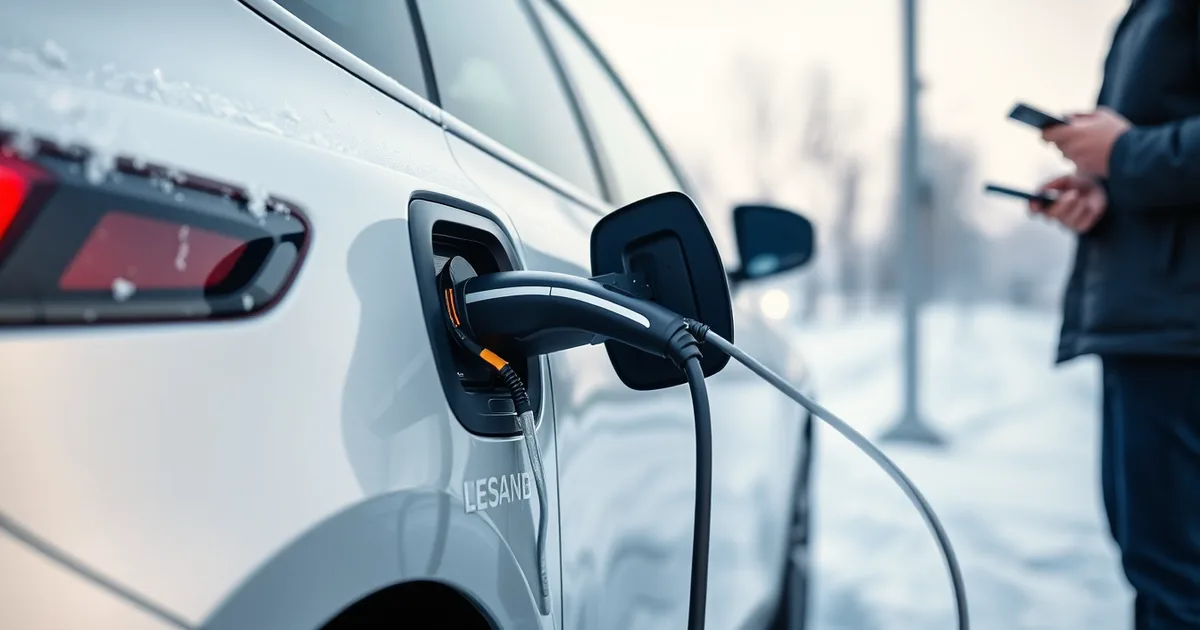
Then there is the electrician's calculation. If your service panel is 100 A and the EV breaker takes 50 A, the load calculation may fail, and the fix is usually a load-management device such as the DCC-9 or Wallbox Power Boost rather than a service upgrade costing several thousand dollars. Those devices throttle charging when the house draws power, which is correct behavior and also means your fastest hours are never quite as fast as advertised. Add cold: below 10°C most EVs derate charge power by 20 to 50%, which is why a January morning can look like a failing charger.
- Weakest link wins: On a 60 A breaker the real current is 48 A, and a 9.6 kW charger adds roughly 30–35 miles per hour in a 300 Wh/mile EV, not the 40–45 the box claims.
- Onboard charger caps you: Many mainstream EVs accept only 7.2 kW or 11 kW, so a 48 A (11.5 kW) wall unit cannot exceed what the car's internal charger allows.
- NEC 625.42 applies: Continuous EV loads are limited to 80% of the branch-circuit rating, so a 40 A breaker yields 32 A, 50 A yields 40 A, and 60 A yields 48 A.
- Panel capacity is the wall: A 100 A service with a 50 A EV breaker often needs an energy-management device like the DCC-9 rather than a full service upgrade, per 2023 NEC 625.41 and 625.42.
- Temperature derates power: Below 10°C (50°F) or above 40°C (104°F), most EVs cut charge power by 20–50%, which is separate from anything in your wiring.
What actually limits your home charging speed?
Your charging station is one component in a series circuit of limits, and the slowest one sets your speed. Think of it as a chain: your electrical panel's spare capacity feeds a breaker, the breaker feeds the car's onboard charger, and the onboard charger feeds the battery. Any of those four can cap you, and none of the others can push past it. A 48 A wall unit on a 60 A breaker is genuinely capable of 11.5 kW (240 V × 48 A = 11,520 W), but a 2023 Chevrolet Bolt EUV will only ever accept 7.2 kW because that is the size of the charger built into the car. Meanwhile, a 2024 Hyundai Ioniq 5 standard range tops out near 10.9 kW. If your goal was 40-plus miles per hour, the arithmetic you want is 11.5 kW times roughly 3 miles per kWh, or about 34 miles per hour in a car that consumes 300 Wh per mile.
The 80% continuous-load rule is where most people's number quietly shrinks. NEC 625.42 treats EV charging as a continuous load, which means the circuit must be sized at 125% of the charging current. A 40 A breaker therefore delivers 32 A to the car, not 40 A, and a 60 A breaker delivers 48 A, not 60. That is not a suggestion or a manufacturer's hedge; it is a code requirement, it was written to stop breakers from cooking inside a closed panel, and the 2023 edition says it plainly. This is also why a 48 A charger on a 60 A breaker will never give you 60 A of output. Whatever is printed on the box is the input ceiling of the circuit, not a promise about what your car receives.
The two links people forget
Panel capacity sits upstream of everything and is the one that costs real money to change. If your service is 100 A and you have electric range, dryer and air conditioning already drawing, an electrician may refuse to add a 60 A EV circuit without an upgrade, which in the US averaged $1,800–$4,000 in 2025. Devices like the DCC-9 or Wallbox Power Boost exist specifically so you can install a 48 A charger without the upgrade, but they work by cutting power to the car when the house needs it, which reintroduces the slowdown you were trying to escape. That is the honest trade-off: a load-management device saves the service upgrade and costs you guaranteeable speed. If you have 200 A service with genuine spare capacity, get the plain 60 A breaker and skip the gadget.
The last link is temperature, and it is the one that will make your numbers drift week to week. Onboard chargers and batteries both throttle when the pack is cold or hot; 2025 field data shows 20–50% charge power reduction below 10°C or above 40°C. A car that pulls 7.2 kW all summer may pull 4 kW on a January morning in an unheated garage. Measure each link before you spend another dollar on a bigger station.
The 80% rule: why your 50-amp breaker gives you 40 amps
Every breaker in your panel is a thermal device, and EV charging is what the National Electrical Code calls a continuous load: current that runs for three hours or more. NEC 625.41 requires EV supply equipment to be treated as continuous, and 625.42 caps the load at 80% of the branch-circuit rating. So a 50 A breaker is not a 50 A charging circuit. It is a 40 A circuit, full stop.
That single multiplier explains most of the gap between the sticker on the box and the number in your app. Here is how the common residential ratings actually land once the 80% is applied.
| Circuit (breaker / wiring) | EV charging load (80%) | Power at 240 V | Range added, 300 Wh/mile EV |
|---|---|---|---|
| 120 V / 15 A outlet (Level 1) | 12 A | 1.4 kW | 4–5 miles per hour |
| 240 V / 40 A breaker, hardwired | 32 A | 7.7 kW | 25–27 miles per hour |
| NEMA 14-50 outlet on a 50 A breaker | 40 A | 9.6 kW | 30–35 miles per hour |
| Hardwired 60 A breaker | 48 A | 11.5 kW | 36–40 miles per hour |
| Hardwired 60 A, 2023 Bolt EUV onboard charger | 48 A available, 30 A accepted | 7.2 kW | 23–25 miles per hour |
Row four wins on paper, and it is the one you paid for. Then row five tells you why it does not feel like it. A 2023 Chevrolet Bolt EUV has a 7.2 kW onboard charger, so it pulls about 30 A no matter how much current the wall unit is willing to hand over. Your 48 A Tesla Wall Connector, ChargePoint Home Flex or Emporia Level 2 charger spends its life idling at 62% of capacity. The arithmetic on the "upgrade" is brutal: going from a 32 A circuit to a 48 A circuit buys a Bolt owner roughly nothing, and the $500–$800 hardware premium plus the electrician's labour is money set on fire. A 2024 Hyundai Ioniq 5 with the 10.9 kW onboard charger is the flip case. It will actually drink 48 A, and for that car the jump from 9.6 kW to 11.5 kW is worth real minutes on a short overnight window. Measure your car's onboard charger rating before you measure anything else.
One more thing goes wrong here, and it goes wrong at the outlet. A NEMA 14-50 receptacle is rated for 50 A, but plenty of installations feed it from a 40 A breaker because the run is long, the wiring is 8 AWG, or the original load calculation was tight. The charger does not know that. If its commissioning screen still says 40 A and you leave it there, you are drawing 40 A continuous through a 40 A breaker — a device with no headroom, running at 100% of rating for hours in a garage that may hit 35°C in July. It trips, or worse, it does not trip fast enough and the terminals at the back of the 14-50 soften and discolour. Set the charger's output to 32 A on a 40 A breaker. That is NEC 625.42, and it is not a suggestion.
Does your EV's onboard charger cap the speed?
Yes, and it is usually the number nobody reads before signing the electrician's invoice. Your wall unit's 48 A rating describes what the station can deliver at 240 V — 11,520 W, or 11.5 kW — not what your car will accept. The onboard charger is a rectifier bolted inside the vehicle, and it is sized to a price point, not to your garage. A 2023 Chevrolet Bolt EUV tops out at 7.2 kW no matter what you plug into it. The 2024 Hyundai Ioniq 5 Standard Range accepts more, 10.9 kW, but still leaves 0.6 kW of your 48 A circuit unused.
Find your own ceiling before you buy anything. The owner's manual states it under charging, usually as "maximum AC charging power" or in the specification table at the back; manufacturer spec sheets on the model year page carry the same figure. If both are vague, the number is often printed on a label inside the charge port door, or you can read it directly — a car limited to 7.2 kW will hold roughly 30 A from the station even when the pilot signal offers 48 A, and the station's app will show that plateau. Twenty-five to thirty miles per hour is exactly what a 7.2 kW limit produces in a vehicle drawing around 300 Wh/mile. The 40-plus miles per hour you were promised assumes the full 11.5 kW arriving at the battery, which requires the car to accept all of it.
Where the losses sit between the numbers
Even a car that matches its station never sees the full nameplate figure at the pack. Conversion from AC to DC costs 5–10%, and a cold-soaked or heat-saturated battery can pull 20–50% less than its peak until the thermal management brings cells into range — observed repeatedly through 2025 on vehicles charged below 10°C or above 40°C. So a Bolt EUV on a 48 A circuit is capped at 7.2 kW before conversion, not after. The practical question is whether the upgrade is worth it: if your car accepts 7.2 kW, a 48 A circuit already exceeds what it can use, and moving to a 60 A or 80 A feed changes nothing. If you drive a Ford F-150 Lightning Extended Range, which accepts 19.2 kW on AC, then the wall unit genuinely is the constraint and a higher-output unit or the Tesla Wall Connector on a 100 A circuit will pay off. Check the car first. The station is the cheaper half of the system, and it is the half people replace by mistake.
Is your charger sharing a circuit or derated?
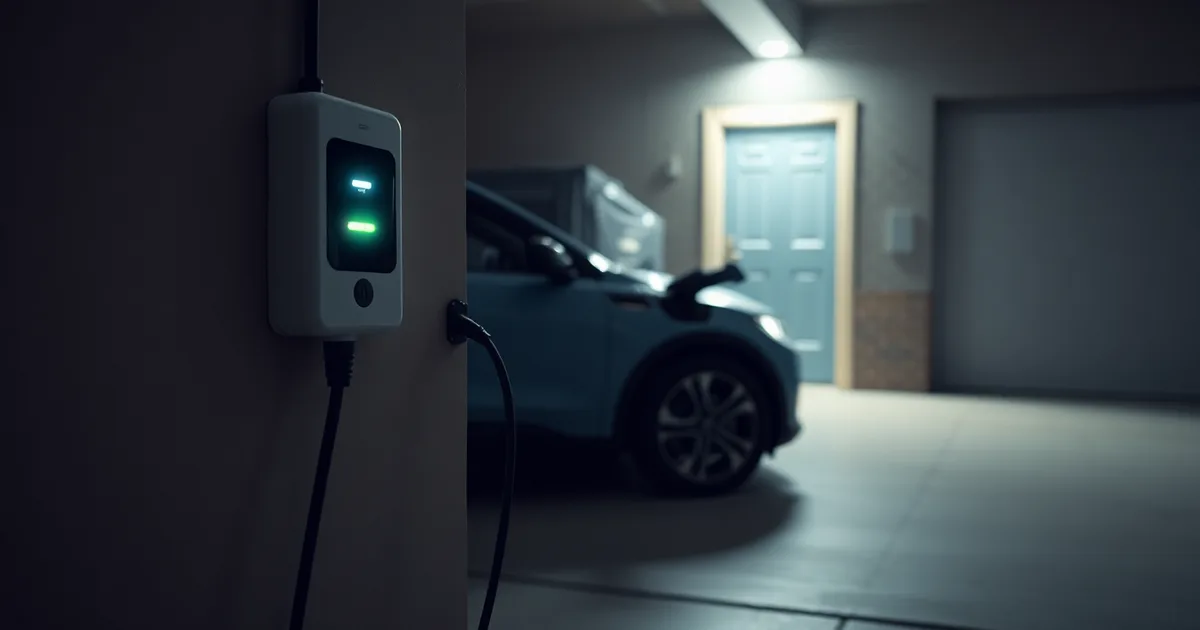
A 48-amp wall unit on a dedicated 60-amp breaker has 11.5 kW available and no reason to hold back. But plenty of 48-amp chargers are not on a dedicated circuit at all. They are on a circuit that is shared with something else, and a load management device is throttling them without ever throwing a fault code. The car shows a charge rate, the app shows "charging," and nothing looks broken. It is just being told to slow down.
The most common arrangement is a charger paired with a load-shedding device. A DCC-9 sits between your main panel and the EVSE and monitors total house draw with current transformers on the service conductors. When the dryer, oven, or electric water heater kicks on, the DCC-9 opens the contactor to the charger and drops it to zero. Wallbox Power Boost does the same job on the Wallbox Pulsar Plus by measuring service current and clamping charger output dynamically: your 48 A unit can fall to 24 A, then 16 A, then off, all within seconds of a 30-amp oven element cycling. If your charging sessions are mysteriously quick at 2 a.m. and crawling at 6 p.m., that is the signature. It is not a fault. It is the device doing exactly what it was installed to do.
Two chargers on one circuit is the other version. Some households run a Tesla Wall Connector and a second EVSE on a single 60-amp feed with power sharing enabled — the two units talk over a hardwired signal and split the 48 A between them, so each car gets 24 A whenever both are plugged in. On a Chevrolet Bolt EUV, whose onboard charger caps at 7.2 kW, that is a real loss: 24 A at 240 V is 5.76 kW, and the Bolt cannot recover the difference. On a 2024 Ioniq 5 with the 10.9 kW onboard charger, the same 24 A costs you roughly 3.2 kW of headroom you paid for.
How to tell which one is happening
Measure at the panel, not at the car. A clamp meter on the charger's circuit conductors during a session will show you the actual amperage the EVSE is delivering. If it reads 48 A and the car still adds 25 miles per hour instead of 35, the bottleneck is upstream of the charger — go back to your service capacity and the 80% continuous-load rule. If it reads 20-something, a load management device is active. Check the DCC-9 or Power Boost commissioning settings: many were configured for a 100 A service when the house actually has 200 A, or were left at a conservative default from the installer. Reconfiguring is free. A 100 A to 200 A service upgrade runs $1,800–$4,000, which is the alternative if the panel really cannot support a dedicated 60 A circuit.
One more thing worth checking before you call anyone: NEC 625.41 and 625.42 permit the load management approach explicitly, so an inspector will not flag it, and the installer had no obligation to tell you the charger was going to run at partial output. Read the commissioning report. If it says "set to 24 A maximum," that number is the answer to your question.
When your home's service panel is the real bottleneck
Your 48-amp wall unit can only pull what the panel can feed it, and most 100-amp homes were wired for a world with no EVs, no heat pumps and no induction ranges. Before you call anyone, run the numbers on paper — NEC 220.82 gives you a shortcut.
The calculation (NEC 220.82, Optional Feeder and Service Load) works like this: take 100% of the first 10 kVA of general lighting and receptacles, 100% of the largest cooking appliance, 100% of your HVAC or 65% of your heating load (whichever is larger), add 40% of the nameplate rating of everything else, then add 100% of any continuous load — including your EV charger. Divide by 240 V for amps. Most single-family homes land between 60 A and 95 A of calculated load, leaving 5–40 A of headroom on a 100 A service.
- Look at the nameplate on the meter base. A 100 A service is common in homes built before roughly 1980. Add a 32 A charger and you are running at 132 A of calculated demand on a 100 A service. Your electrician will not pull that permit.
- Check your utility's transformer and service drop. Many older neighbourhoods have a 25 kVA or 37.5 kVA transformer serving 4–6 homes. Two neighbours charging at 48 A simultaneously pushes a 25 kVA transformer past nameplate during a summer evening peak. Brownouts, tripped fuses, and a utility visit follow.
- Do the arithmetic on what 48 A actually draws. 240 V × 48 A = 11,520 W, or 11.5 kW. That is roughly the same continuous draw as two 5 kW wall heaters on full blast. If your panel has not been recalculated since the last HVAC install, the number you inherited is stale.
- Service upgrade. Going from 100 A to 200 A runs $1,800–$4,000 in the US as of 2025, before permits and any trenching. Expect 1–3 days of work, a utility disconnect, and a new meter base. In older subdivisions with undersized transformers, the utility may charge separately for a transformer upgrade — sometimes $2,000–$8,000, sometimes refused outright.
- Smart splitter / energy management. Devices like the DCC-9, Wallbox Power Boost, Emporia Level 2 with load management, or a SPAN Panel sit between your main breaker and the EV circuit and shed the charger the moment total draw approaches your service limit. Cost typically runs $500–$1,800 installed. They are substantially cheaper than a service upgrade and code-compliant under NEC 625.42 when listed for the purpose. They also cap your charge rate to whatever spare capacity exists — often 20–40 A, not the 48 A you wanted.
- Lower-amperage charger. Drop to a 32 A or 40 A hardwired unit on a 40 A or 50 A breaker. You lose 25–33% of charge speed, but you stay inside a 100 A service without spending on a splitter or an upgrade. A 32 A circuit adds roughly 20–24 miles of range per hour on a 300 Wh/mile EV, which covers most overnight top-ups from 20% to 80% in under 7 hours.
- Wait and re-check before you spend. A load calculation is not the same as a measurement. Ask your electrician to clamp the mains during peak evening hours — stove on, dryer on, AC on. If actual peak draw is 45 A, you have more room than the nameplate arithmetic suggests. If it is 85 A, you do not.
The thing owners get wrong most often is trusting the "spare breaker slots" argument. Empty slots mean nothing about available capacity — a 100 A panel with four open breakers is still a 100 A panel. The correct answer comes from the 220.82 calculation and a clamp meter reading, not from counting how many breakers are missing.
Does temperature or battery state slow down charging?
Before you blame the wiring, check the calendar. A 2025 dataset of observed charging sessions showed 20–50% charge power reduction once the pack dropped below 10°C (50°F) or climbed above 40°C (104°F). That is not a fault condition. The battery management system on a 2024 Hyundai Ioniq 5 or a Chevrolet Bolt EUV throttles current for the same reason you do not floor a cold engine: lithium plating at low temperature and accelerated cell degradation at high temperature both cost more than the lost minutes. Your 11.5 kW charger is still delivering 11.5 kW. The car is declining to accept it. Winter mornings are the usual culprit — a car parked outside overnight at −5°C will often pull 30–40% less than its nameplate for the first 15–25 minutes, then step back up as the pack warms. Some EVs precondition the battery when you route to a DC fast charger in the navigation, but few do it for a home Level 2 session, so the taper is invisible unless you are logging the session.
Heat does the same thing from the other direction, and it is easy to misread because the cable and connector feel hot too. Above roughly 40°C ambient — a shaded garage in Phoenix in July, or an unshaded driveway anywhere in the South — both the vehicle and the EVSE cut current. SAE J1772 handles the negotiation, and the charger's own thermal sensor will derate before anything trips. If your 48-amp unit is on a sunny west wall, moving it into shade or running the session overnight can recover most of the loss.
The 80–100% taper is not a defect
Charging from 20% to 80% is fast because the pack accepts full current across that band with little negotiation. Above 80%, the cells are close to full and the BMS must switch to a constant-voltage phase, dropping current steadily to avoid overcharging individual cells. Expect the last 20% to take as long as, or longer than, the middle 60%. On a 2023 Bolt EUV with its 7.2 kW onboard charger, the practical result is that a 20–80% session and an 80–100% session can take comparable time despite the huge difference in energy delivered. Nothing is broken. This is also why automakers and the DOE have pushed the 20–80% habit for daily charging — you get the miles you need and skip the slow tail.
One trade-off worth resolving honestly: if you need maximum range tomorrow, charge to 100% anyway and accept the slow final stretch, ideally starting earlier in the evening so the taper finishes before you sleep. If you do not need the range, stop at 80% and the session ends while the pack is still accepting full current — which is also easier on the cells over years. The point is that neither temperature nor state of charge is a wiring problem. If your car adds 25–30 miles per hour in mild weather at 30% state of charge and still adds 25–30 in a cold snap at 85%, then you have genuinely found a non-electrical cause. If it is slow in both conditions, the limit lives in the panel, the breaker, or the onboard charger, and no amount of seasonal adjustment will change that.
How to measure your actual charging speed in 10 minutes
This procedure works on any Level 2 setup and needs nothing but the car, the charger app and a phone camera. Do it once at a normal state of charge (say 40–60%) with the battery at ambient temperature, because cold-pack derating will contaminate every number you take. Write each figure down; the whole point is to build a chain of four numbers and find which one is short.
- Wait until the car is actually pulling current. Plug in, then give it 90 seconds. Most EVs taper hard in the first minute while the BMS negotiates with the EVSE over the SAE J1772 pilot signal, and reading during that window gives you a number that means nothing.
- Open the car's charging screen, not the charger's app. Tesla puts live kW under Charging in the vehicle UI; the Bolt EUV shows it on the Energy page; the Ioniq 5 shows kW, remaining time and AC vs DC on the charge status tile. Photograph the screen.
- Read the delivered kW and, if the car exposes it, the delivered amps. A 48 A charger on a 240 V circuit should show roughly 11.5 kW at the wall and something close to that at the car. If your screen says 7.2 kW, you have just found the bottleneck and it is inside the car.
- Open the charger app and compare its reported output to the car's. ChargePoint Home Flex, Emporia and Wallbox Pulsar Plus all log session amperage. A charger reporting 11.5 kW while the car reports 7.2 kW means the charger is fine and the onboard charger is the limit.
- Check for reduced-power or derating messages before you trust any of the above. Emporia shows "Limited by load management." Wallbox shows a lower current setpoint under Power Boost. A Tesla Wall Connector throws a solid amber LED for a ground or temperature fault and silently drops to half output. Any of these voids the measurement you just took.
- Do the arithmetic against the breaker. The continuous-load ceiling is 80% of the breaker rating (NEC 625.42, 2023 edition), so a 60 A breaker supports 48 A and a 50 A breaker supports 40 A — 9.6 kW, not 11.5 kW. Ten minutes with a calculator beats a $900 electrician visit.
- Convert kW to miles per hour using your own car's consumption. At 9.6 kW a car sipping 300 Wh/mile gains about 32 miles per hour; at 7.2 kW the same car gains roughly 24. Your 25–30 mph figure is a perfectly normal result for a 7.2 kW onboard charger on a correctly installed 40 A circuit.
- Log the number, then repeat once in cool weather and once on a hot afternoon. A 20–50% power reduction below 10°C or above 40°C cell temperature is normal 2025-era behaviour, not a fault, and it will otherwise send you chasing a problem that does not exist.
The failure mode is measuring on the wrong side of the handshake. If you read only the charger app, you are reading what the EVSE offered, not what the car accepted, and you will conclude the unit is broken when the limit sits in the vehicle. If you read only the car after a charging session has already tapered into its top-balance phase, every number comes back low and you learn nothing. Read both, at the same moment, in the first ten minutes of a session.
Should you upgrade your charger, your panel, or neither?
Find the binding constraint before you price anything. If your car's onboard charger is the cap, the wall unit is irrelevant and a bigger one is wasted money. A 2023 Chevrolet Bolt EUV accepts 7.2 kW no matter what you bolt to the wall, so a 48 A charger delivering 11.5 kW (240 V × 48 A) simply gets ignored past that ceiling. A 2024 Hyundai Ioniq 5 standard range tops out at 10.9 kW, which means a 48 A unit is already at the edge of useful. You can usually find your car's onboard limit in the spec sheet, or infer it: if your car pulls 32 A on a 40 A breaker and never more, the car is talking, not the circuit.
If the breaker is the cap and the car will take more, a hardwired circuit with a higher-amperage breaker is the right spend — but only after you know the panel can feed it. The 80% continuous-load rule (NEC 625.42, 2023 edition) is what turns a 50 A breaker into 40 A of usable charging, and it's the reason your electrician won't just swap in a 60 A breaker to make the numbers look better. A 60 A circuit gets you 48 A of charging; that's the practical ceiling for most residential EVSE without going to a service upgrade. Check the load calculation first, because a panel already near capacity won't accept the new breaker no matter how much you want it to.
If the panel itself is the cap, load management is almost always the cheaper fix. A 100 A to 200 A service upgrade runs $1,800–$4,000 in the US as of 2025, plus permit and inspection time that can stretch weeks. A DCC-9, Wallbox Power Boost, SPAN Panel, or Enphase IQ controller can throttle the charger when the house is drawing hard, letting you keep the existing service and still get most of the charging speed you wanted. The trade-off is real: load management means your car charges slower on the evenings you're running the oven, dryer and AC at once — but for a car that sits overnight, that's a rounding error, not a hardship.
Neither upgrade makes sense if your measured speed is already near the car's onboard limit. Before spending anything, plug in, note the starting state of charge and time, and check the app or the car's own display after 30 minutes. If you're seeing 9.6 kW on a car rated for 9.6 kW, the bottleneck is upstream of everything you can buy — and the answer is to stop shopping and start charging overnight instead of chasing a 40-mile-per-hour promise that no hardware in your driveway can deliver.
Frequently Asked Questions
Why is my 48 amp EV charger only charging at 32 amps?
Two limits produce that exact number. If the charger is plugged into a NEMA 14-50 outlet on a 50 A breaker, NEC's 80% rule caps continuous draw at 40 A, not 32 A, so look elsewhere: a 40 A circuit gives you 32 A. More often the car is the bottleneck. Many onboard chargers max out at 7.2 kW, which is about 30 A at 240 V. Check the charger's pilot signal and the car's displayed acceptance rate.
Can I install a 60 amp breaker for a 48 amp EV charger?
Yes, and it is required, not optional. A 48 A EVSE is a continuous load, and the NEC sizes continuous loads at 125% of draw, so 48 A needs a 60 A breaker. The circuit must be hardwired (no plug), with conductors rated 60 A at 75°C, typically 6 AWG copper. Anything smaller will nuisance-trip on a long charge.
Why does my EV charge slower when the AC is on?
A load-management device or a shared circuit is throttling the EVSE on purpose. When the air conditioner, oven or dryer kicks on, the controller drops charging amps so total service draw stays under the panel's limit. That is normal behaviour and it prevents main breaker trips. Nothing is broken. On a 100 A service with a 40 A EVSE, summer afternoons routinely cut charging to 16-24 A.
My charger says 9.6 kW but my car only adds 25 miles per hour — why?
Because miles per hour is a consumption figure dressed up as a charging spec. At 9.6 kW into a car that uses 350 Wh per mile, you get roughly 27 miles per hour, and charging losses knock that to about 25. The 40+ miles per hour on the box assumes a 250 Wh/mile car under ideal conditions. Your onboard charger may also cap at 7.2 kW, delivering 30 A instead of the full 40 A.
Does a NEMA 14-50 outlet limit my charging speed?
Yes. A 14-50 receptacle on a 50 A breaker permits only 40 A continuous, which is 9.6 kW at 240 V. A hardwired 60 A circuit allows 48 A, or 11.5 kW. That is a 20% difference, worth roughly 4-5 extra miles per hour on a 350 Wh/mile car. Most plug-in chargers are capped at 40 A for exactly this reason.
Why is my EV charging slower in winter?
Lithium-ion cells accept less current below about 10°C (50°F), and the battery management system cuts charge power to prevent lithium plating, which permanently degrades the pack. A cold-soaked battery at -10°C may take 30-50% longer on Level 2. Precondition the battery using the car's scheduled departure setting, or charge immediately after a drive while the pack is still warm.