Choosing the right coffee grinder is one of the most critical decisions for achieving perfect coffee extraction and flavor. This comprehensive coffee grinder types comparison covers burr grinders, blade grinders, and manual options, providing detailed analysis of their mechanisms, performance, and suitability for different brewing methods. Whether you're a beginner looking for an affordable entry point or an experienced coffee enthusiast seeking professional-grade consistency, understanding the differences between grinder types will help you make an informed purchasing decision that enhances your daily coffee experience.
What Are the Main Types of Coffee Grinders Available in 2026?
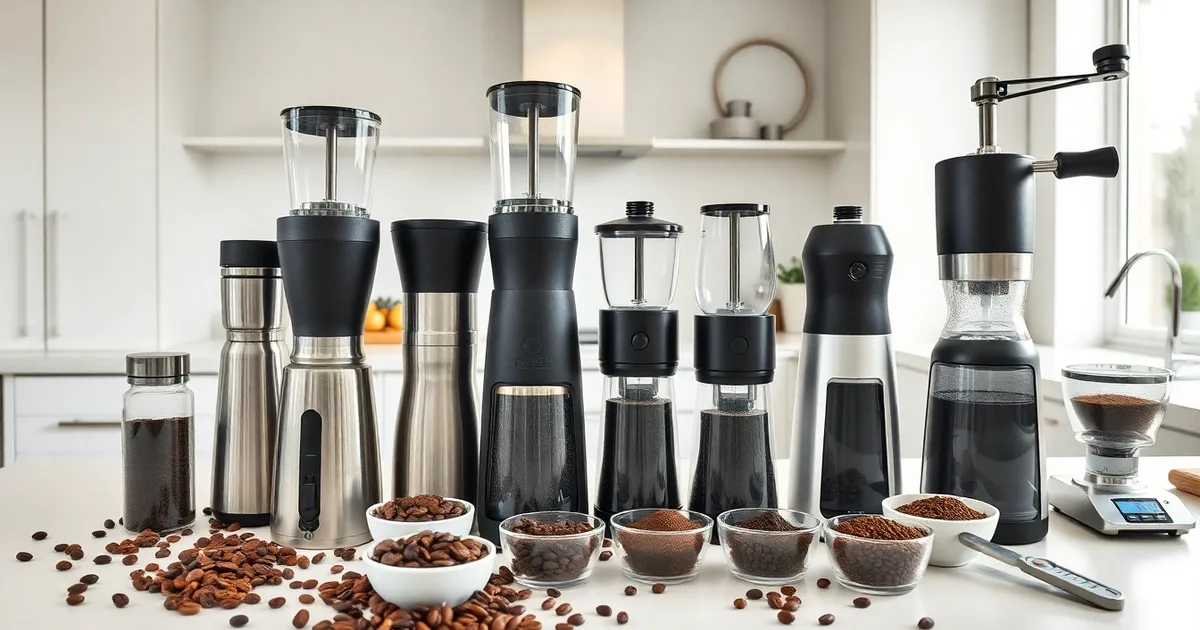
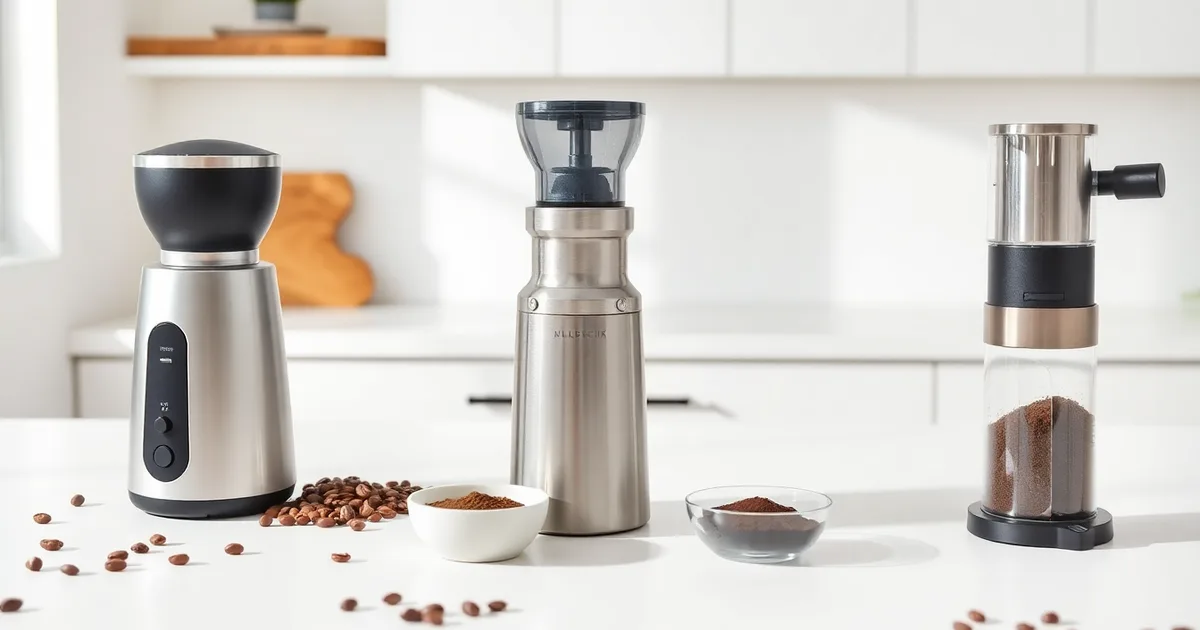
The coffee grinder market in 2026 offers three primary categories: burr grinders (conical and flat), blade grinders, and manual grinders. Each type employs different grinding mechanisms that significantly impact particle size consistency, heat generation, and overall coffee quality.
Burr grinders use two revolving abrasive surfaces to crush beans uniformly, while blade grinders employ spinning blades to chop beans into irregular pieces. Manual grinders operate through hand-cranked burr systems, offering precise control without electrical power requirements.
Understanding these fundamental differences is crucial for selecting a grinder that matches your preferred brewing methods and flavor preferences.
How Do Burr Grinders Work and What Makes Them Superior?
Burr grinders are widely considered the gold standard for coffee grinding due to their consistent particle size distribution. These grinders feature two burrs (grinding surfaces) that can be adjusted to control grind size precisely.
The mechanism works by feeding beans through an adjustable gap between the burrs, ensuring uniform crushing rather than random chopping. This consistency is essential for optimal extraction, as uniformly sized particles extract at similar rates, preventing over-extraction of fine particles and under-extraction of larger ones.
Burr grinders generate minimal heat during operation, preserving the volatile compounds responsible for coffee's aromatic complexity. Professional baristas and coffee experts prefer burr grinders because they deliver repeatable results crucial for achieving consistent flavor profiles across different roast levels.
Conical vs Flat Burr Grinders
Conical burr grinders feature cone-shaped burrs with the beans fed from above, while flat burr grinders use parallel grinding discs. Conical burrs typically produce slightly less heat and operate more quietly, making them popular for home use.
Flat burr grinders often provide more uniform particle distribution, especially for espresso grinding, but may generate slightly more heat and noise. Both types significantly outperform blade grinders in consistency and adjustability.
What Are the Advantages and Disadvantages of Blade Grinders?
Blade grinders represent the most affordable entry point into coffee grinding, using spinning metal blades to chop coffee beans. While budget-friendly, they produce inconsistent particle sizes that can negatively impact extraction quality.
The primary advantage of blade grinders is their low cost and simplicity. They require minimal maintenance and can grind various quantities quickly. However, the random chopping action creates a mixture of fine powder and large chunks, leading to uneven extraction.
Blade grinders also generate significant heat through high-speed operation, potentially damaging delicate flavor compounds in freshly roasted beans. The lack of grind size adjustment makes them unsuitable for precision brewing methods like espresso or pour-over coffee.
When Blade Grinders Make Sense
- Budget constraints: Ideal for those with limited budgets who prioritize fresh grinding over precision
- Infrequent use: Suitable for occasional coffee drinkers who don't require daily grinding
- Basic brewing methods: Acceptable for automatic drip coffee makers with built-in filtration
- Temporary solution: Can serve as an interim option while saving for a burr grinder
Are Manual Coffee Grinders Worth the Extra Effort?
Manual coffee grinders combine burr grinding precision with portable convenience, requiring hand-cranking to operate. These grinders have gained popularity among coffee enthusiasts who value control, quietness, and travel-friendly designs.
Manual grinders typically feature conical burr systems that produce consistent particle sizes comparable to electric burr grinders. The slower grinding speed generates virtually no heat, preserving maximum flavor potential in your coffee beans.
The main drawback is the physical effort required, especially when grinding for multiple cups or espresso-fine settings. However, many users find the ritual meditative and appreciate the complete control over grinding speed and technique.
Benefits of Manual Grinding
- Zero heat generation: Slow grinding preserves volatile aromatic compounds
- Complete silence: Perfect for early morning grinding without disturbing others
- Portability: No electrical requirements make them ideal for travel or camping
- Durability: Fewer moving parts mean less maintenance and longer lifespan
- Cost efficiency: High-quality manual grinders cost less than equivalent electric models
Which Grinder Type Is Best for Different Brewing Methods?
Different brewing methods require specific grind sizes and consistency levels, making grinder selection crucial for optimal results. Understanding these relationships helps narrow down the most suitable grinder type for your preferred brewing style.
| Brewing Method | Grind Size | Recommended Grinder Type | Consistency Importance |
|---|---|---|---|
| Espresso | Extra Fine | High-end Burr Grinder | Critical |
| Pour Over (V60, Chemex) | Medium-Fine to Medium | Burr or Quality Manual | High |
| French Press | Coarse | Burr, Manual, or Blade | Medium |
| AeroPress | Fine to Medium | Burr or Manual | High |
| Cold Brew | Extra Coarse | Burr or Manual | Medium |
| Auto Drip | Medium | Any Type | Low to Medium |
Espresso Grinding Requirements
Espresso demands the finest grind consistency and precise adjustability. Only high-quality burr grinders can achieve the uniform extra-fine particles necessary for proper espresso extraction. The ability to make micro-adjustments is essential for dialing in the perfect shot.
What Should You Consider When Buying a Coffee Grinder in 2026?
Several key factors influence coffee grinder performance and suitability for your specific needs. Considering these elements ensures you select a grinder that delivers consistent results while fitting your budget and usage patterns.
Essential Buying Criteria
- Grind consistency: Look for uniform particle size distribution across all settings
- Adjustability range: Ensure the grinder covers your preferred brewing methods
- Build quality: Durable materials and construction affect longevity and performance
- Capacity: Choose appropriate hopper and grounds container sizes
- Noise level: Consider operating volume, especially for morning use
- Ease of cleaning: Regular maintenance requirements impact long-term satisfaction
- Price point: Balance features with budget constraints
How Much Should You Spend on a Coffee Grinder?
Coffee grinder pricing in 2026 spans from under $30 for basic blade grinders to over $500 for professional-grade burr grinders. The investment level should align with your coffee consumption habits and quality expectations.
For occasional coffee drinkers using automatic drip methods, a $50-100 entry-level burr grinder provides significant improvement over blade alternatives. Serious enthusiasts brewing pour-over or espresso should consider $150-300 models that offer superior consistency and adjustability.
Professional or prosumer grinders ($300+) deliver exceptional performance and durability but may exceed most home users' needs. Remember that a quality grinder can last decades with proper maintenance, making it a worthwhile investment for regular coffee consumption.
Budget Categories and Recommendations
- Under $50: Quality manual grinders or basic blade grinders
- $50-150: Entry-level electric burr grinders suitable for most home brewing
- $150-300: Mid-range burr grinders with excellent consistency and features
- $300-500: Premium home grinders approaching commercial quality
- $500+: Professional-grade equipment for serious enthusiasts or small cafes
What Are the Top Coffee Grinder Brands and Models in 2026?
Leading coffee grinder manufacturers have continued innovating in 2026, introducing improved burr designs, quieter motors, and enhanced user interfaces. Established brands maintain their reputations while newer companies challenge market leaders with competitive features.
Baratza remains a top choice for home users, offering reliable burr grinders with excellent customer support and parts availability. Breville combines user-friendly features with consistent performance, while OXO provides accessible entry points to quality grinding.
For manual options, 1Zpresso and Comandante lead the market with precision engineering and portable designs. These brands demonstrate that manual grinding can achieve professional-level consistency without electrical power requirements.
How Does Grinder Choice Impact Coffee Health Benefits?
The relationship between grinder type and coffee's health benefits centers on extraction efficiency and compound preservation. Consistent grinding enables optimal extraction of beneficial compounds like antioxidants and polyphenols while minimizing bitter over-extraction.
Burr grinders' uniform particle sizes allow for precise brewing control, potentially maximizing the extraction of health-promoting compounds. The lower heat generation compared to blade grinders helps preserve temperature-sensitive nutrients and aromatic compounds.
Freshly ground coffee from any grinder type offers superior nutritional value compared to pre-ground alternatives, as grinding accelerates oxidation and compound degradation. The key is matching your grinder choice to brewing methods that optimize both flavor and nutritional extraction.
Practical Tips for Choosing Your Perfect Coffee Grinder
- Assess your brewing habits: Match grinder capabilities to your preferred methods and daily consumption
- Prioritize consistency: Uniform particle size impacts flavor more than advanced features
- Consider noise sensitivity: Manual grinders offer silent operation for early morning grinding
- Evaluate counter space: Measure available space before selecting larger electric models
- Research customer support: Brands with good service and parts availability ensure long-term satisfaction
- Read professional reviews: Coffee industry experts provide valuable insights beyond consumer feedback
- Test grind samples: Many specialty coffee shops allow customers to test different grinder outputs
- Plan for growth: Choose a grinder that accommodates potential brewing method expansion
- Factor in maintenance: Regular cleaning requirements vary significantly between grinder types
- Consider gift potential: Quality grinders make excellent gifts for coffee enthusiasts
Coffee Grinder Maintenance and Longevity Tips
Proper maintenance significantly extends grinder lifespan and maintains optimal performance. Regular cleaning prevents oil buildup that can cause rancid flavors and mechanical issues.
Burr grinders require periodic deep cleaning and burr replacement, typically every 500-1000 pounds of coffee ground. Manual grinders need less maintenance due to fewer moving parts but benefit from regular disassembly and cleaning.
Blade grinders require minimal maintenance beyond regular cleaning but have shorter lifespans due to motor wear from high-speed operation. Regardless of grinder type, using quality beans and avoiding overly oily roasts helps maintain peak performance.
Selecting the right coffee grinder type fundamentally transforms your coffee experience by enabling consistent extraction and optimal flavor development. Burr grinders offer superior consistency for serious coffee enthusiasts, while manual options provide portable precision without electrical requirements. Blade grinders serve budget-conscious consumers but compromise on uniformity and heat generation. Your choice should align with brewing methods, usage frequency, and quality expectations. Investing in an appropriate grinder type pays dividends through improved daily coffee quality and long-term satisfaction. Consider your specific needs, budget constraints, and growth potential when making this important decision that will influence every cup you brew.