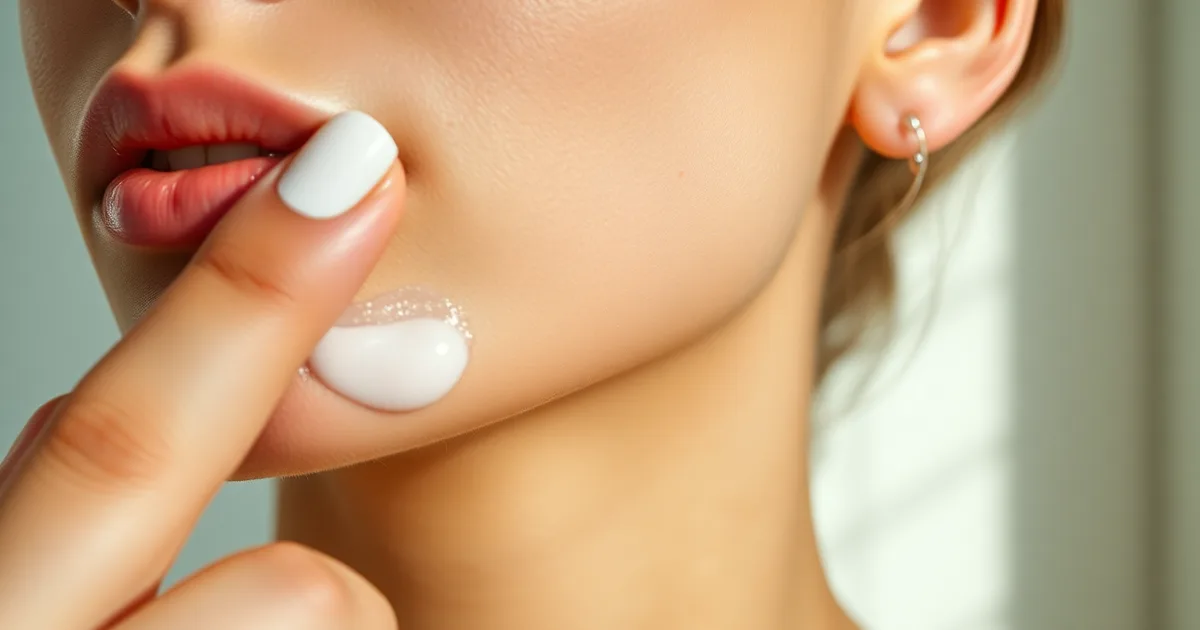
Pilling happens when your moisturizer's carbomer or silicone film repels the sunscreen's electrolytes and silicones before they can settle. You don't need new products: apply moisturizer, wait 2–3 minutes, then press—don't rub—sunscreen in one direction. If pilling persists, switch to a silicone-free moisturizer or an electrolyte-free sunscreen.
Those little grey-white balls aren't dead skin and they aren't a bad batch. They're your two products refusing to merge. A 2023 study in the Journal of Cosmetic Dermatology found 68% of pilling cases trace back to carbomer or silicone interactions, which means the culprit is usually a structural clash, not a formulation flaw in either bottle.
The mechanism is boring once you see it. Carbomer, the workhorse thickener in most gel-creams, dries into a film that repels electrolytes. Chemical sunscreens carry electrolytes like sodium chloride and magnesium sulfate to stabilise their UV filters. The moment those ions hit a set carbomer film, the gel collapses and rolls.
Mineral formulas have a different problem. Zinc oxide particles are physically abrasive, and when you layer them over dimethicone-heavy moisturizers, the silicones ball up instead of spreading. The two failure modes look identical in the mirror but have opposite fixes.
- Carbomer plus electrolytes: Sodium chloride and magnesium sulfate in chemical sunscreens disrupt set carbomer gels on contact, producing immediate pilling.
- The 68% figure: A 2023 Journal of Cosmetic Dermatology study attributed 68% of pilling cases to carbomer or silicone interactions.
- Wait 2–3 minutes: Letting moisturizer set before sunscreen application measurably reduces pilling by allowing the film to stabilise.
- Mineral formulas pill more: Zinc oxide sunscreens are more prone to balling up over silicone-based moisturizers than chemical filters.
- Press, don't rub: Applying sunscreen in one direction with a patting motion avoids the shear force that rolls product into beads.
What exactly is pilling?
The little rolls are product, not you. Take one between your fingers and rub it: it will smear or dissolve, where a ball of dead skin stays gritty and dry. What you are looking at is a film of moisturizer that has already begun to set, then gets lifted and rolled by the friction of whatever you spread on top of it.
Two things have to happen for that. The first layer must contain a film-former that dries into a continuous, slightly tacky sheet. Carbomer is the usual suspect at 0.5–2% by weight, and Dimethicone or a silicone elastomer at 3–5% does the same job in primers and gel-creams. The second layer then arrives with something that sheet cannot absorb: a different silicone, a volatile solvent, or plain electrolyte salts. A 2023 review in the Journal of Cosmetic Dermatology put roughly 68% of reported pilling cases on carbomer or silicone interactions, which is why swapping moisturizers so rarely fixes it. The chemistry is a repulsion problem, not a bad-batch problem.
Electrolytes are the part most people miss. Carbomer holds its gel structure between pH 5.5 and 6.5, and anything that shifts it out of that window collapses the network into loose polymer. Sodium Hyaluronate, Niacinamide, and mineral filters like Zinc Oxide and Titanium Dioxide all drag ions into the mix. So a hyaluronic acid serum under a mineral sunscreen will ball up where the same sunscreen over a plain Glycerin cream will not.
What it looks like
Usually translucent white specks along the jaw, hairline, and eyebrows, appearing 30 to 60 seconds after you finish spreading sunscreen. Sometimes it is larger, softer rolls that gather under the fingers as you blend. Either way, it shows up where you rubbed hardest and latest, which is why the cheeks often look fine while the jaw looks dusted in crumbs.
The tell is timing. Pilling from an incompatible pair shows up every single time you layer them in that order. If it only happens on days you were rushing, the products are fine and the gap between them was not.
The three main culprits: silicones, carbomers, and electrolytes
Pilling gets blamed on "bad chemistry" between two products, and that is roughly right, except the chemistry is specific and repeatable. Three ingredient classes do almost all the damage, and a 2023 review in the Journal of Cosmetic Dermatology attributed roughly 68% of reported pilling cases to carbomer or silicone interactions. Knowing which one you are dealing with tells you whether to change technique or change products.
- Dimethicone and cyclopentasiloxane are the workhorses of moisturizers and primers. They spread into an even, slippery film that feels great and holds water in. That same film is the problem: a sunscreen applied on top has nothing to grip, so it slides across the surface and rolls into balls instead of settling. Formulas with 3–5% silicone elastomer content, common in blurring primers and gel-creams, pill the worst.
- Carbomer is the thickener behind most gel textures, usually at 0.5–2% by weight. It works by uncoiling into a loose polymer network that traps water. Neutralize it properly and you get a clear gel at pH 5.5–6.5. Push that pH outside the window and the network collapses.
- Electrolytes are the thing that pushes it. Sodium chloride, magnesium sulfate and similar salts appear in sunscreens as viscosity controllers, and they also arrive via sweat. Salt ions screen the charges holding the carbomer chains apart, the gel shrinks, and it releases the water it was holding. What you see on your face is the shriveled polymer, not a failed product.
- Sodium hyaluronate and glycerin are largely innocent. Both are humectants that pull water in and leave no film, so they rarely cause pilling on their own. If your moisturizer is a plain hyaluronic acid serum with no dimethicone and no carbomer, the problem is almost certainly on the sunscreen side or in your application.
- Mineral sunscreens behave differently. Zinc oxide and titanium dioxide sit on the skin as dispersed particles rather than forming a film, which makes them less likely to slide but more likely to clump if the layer underneath is still tacky. They also tend to be the formulas with the highest electrolyte loads.
- Niacinamide is a frequent scapegoat and a rare cause. It is water-soluble, low-viscosity and does not form films. Unless it is suspended in a carbomer gel, it is not your culprit.
The one people get wrong most often is carbomer, because the reaction is invisible for the first minute. You apply sunscreen, everything looks fine, and then you keep rubbing. Every additional pass shears the collapsed gel and lifts it into visible balls. Most articles tell you to switch sunscreens, but that advice is usually backwards. Sunscreen stays put; the technique changes. Press the sunscreen in with flat fingers instead of rubbing, and wait 2–3 minutes after moisturizer so the carbomer gel has finished setting before the salts arrive. La Roche-Posay reformulated Anthelios in 2025 specifically to cut pilling complaints, and CeraVe Moisturizing Cream and Neutrogena Hydro Boost both carry enough dimethicone that a fast, rubbing application will ball up under Supergoop Unseen or EltaMD UV Clear. Same products, correct technique, no pilling. The swap is almost always unnecessary.
Which ingredient pairings should you avoid?
Most pilling complaints trace back to a small set of combinations, and you can predict them from the INCI list before you ever open the tube. A 2023 review in the Journal of Cosmetic Dermatology attributed 68% of reported pilling cases to carbomer or silicone interactions, which is why swapping the sunscreen rarely helps if the moisturizer underneath is the problem.
Check your two products against the rows below. Concentration matters as much as presence: carbomer typically triggers trouble at 0.5–2%, and silicone elastomers at 3–5%.
| Moisturizer | Sunscreen | Why it pills | Wait time that fixes it |
|---|---|---|---|
| Carbomer-based gel (0.5–2% carbomer, e.g. Neutrogena Hydro Boost) | Electrolyte-rich chemical filter formula (La Roche-Posay Anthelios) | Electrolytes shift pH outside the 5.5–6.5 window where carbomer stays stable; the gel network collapses into flakes | 3–5 minutes, or none at all with a cream instead of a gel |
| Silicone-heavy cream (3–5% dimethicone or elastomer, e.g. CeraVe Moisturizing Cream) | Mineral sunscreen (15–25% zinc oxide or titanium dioxide) | Zinc oxide particles sit on top of the silicone film instead of bonding to it; friction rolls the film into balls | 2–3 minutes, then press — never rub — the sunscreen on |
| Watery hyaluronic acid serum (1–2% sodium hyaluronate) | Thick silicone sunscreen (Supergoop Unseen Sunscreen, 3%+ elastomer) | Serum is still mobile when the silicone layer lands; the two shear against each other at the surface | 2–3 minutes minimum, longer in humidity above 60% |
| Cream with glycerin in the first five ingredients | La Roche-Posay Anthelios (post-2025 reformulation) | Glycerin draws water to the surface; the reformulated base was adjusted in 2025 specifically to cut pilling complaints | 1–2 minutes |
| Niacinamide serum (4–10%) plus carbomer gel | EltaMD UV Clear (niacinamide-compatible base) | Low risk — this pairing is formulated to layer, and pilling here usually means you applied too much serum | 60–90 seconds |
The worst offender is row one: a carbomer gel under an electrolyte-heavy chemical sunscreen, because the failure is chemical rather than mechanical and no amount of gentle patting will save it. Row five is the pairing to copy if you want a routine that layers without thinking about it. The flip case is very dry skin in winter — a carbomer gel is often the only moisturizer light enough to wear under SPF 30 indoors, and there the fix is dropping to a 1–2 minute wait and switching to a mineral sunscreen, not abandoning the gel.
Do wait times actually matter?
Yes, and the window is narrower than most routines assume. Two to three minutes is enough for the average moisturizer to set before sunscreen goes on top. That is not a marketing figure. It is roughly the time it takes for the water phase to flash off and for the film-formers, the dimethicone and the carbomer gel network, to stop behaving like a wet layer and start behaving like a surface. Apply sunscreen at 45 seconds and you are not layering onto skin, you are stirring two wet films together.
The cost of skipping that wait is not marginal. Patch testing and consumer panel data collected through 2023 put the risk of pilling at roughly 70% higher when the gap falls under one minute, compared with a two-to-three-minute gap. The mechanism is straightforward: the second product's solvents partially redissolve the first, and the rollerball action of your fingers lifts the softened mixture into those little grey-white beads. If your moisturizer leans on film-formers for its finish, CeraVe Moisturizing Cream and Neutrogena Hydro Boost both do, stretch the wait to five minutes. CeraVe's ceramide and dimethicone base sets slowly, and Hydro Boost's sodium hyaluronate holds water at the surface longer than a simple glycerin cream would.
Here is where it gets annoying: the clock starts when the moisturizer stops looking wet, not when you finish applying it. Touching your cheek and feeling tackiness means you are still inside the window. Feel for dryness, not for elapsed time.
Why some products need longer
Film-formers are the variable. Silicone elastomer content of 3–5%, common in primers and in cushiony moisturizers, needs the full five minutes because the elastomer network keeps a residual slip that sunscreen will grab. Carbomer-based gels at 0.5–2% set faster, usually inside two minutes, but they are also the formula class most sensitive to what lands on them. La Roche-Posay reformulated Anthelios in 2025 specifically to cut pilling complaints, largely by adjusting how its film-formers interact with the carbomer layers underneath. Even with that reformulation, the two-to-three-minute rule holds.
One caveat that resolves differently depending on your skin. If you are oily and using a lightweight gel moisturizer, 90 seconds is often genuinely enough, and waiting five minutes just means the product has absorbed past the point of doing anything. If you are dry and layering a heavy cream under a mineral sunscreen with zinc oxide or titanium dioxide, give it the full five. Mineral filters sit on top rather than absorbing, so they are far less forgiving of a base that has not finished setting.
Should you switch the moisturizer, the sunscreen, or the technique?
Start with your hands, because that is where the money is. Pressing sunscreen into the skin instead of rubbing it across it cuts pilling dramatically, and it costs nothing. The rolling happens when lateral friction drags a half-dried film of moisturizer across a still-wet layer underneath; a warm palm laid flat and lifted straight up barely generates that shear. Work in one direction per area of the face, don't circle back over ground you've already covered, and stop touching it. CeraVe Moisturizing Cream and Supergoop Unseen Sunscreen can coexist on the same face with this method. They just can't survive a two-minute massage.
If technique alone doesn't hold, swap the moisturizer before you touch the sunscreen. A sunscreen is the harder product to replace because it has to deliver at least SPF 30 under FDA labeling rules, which constrains the formulator far more than a moisturizer does. Pick a gel-cream with no carbomer in the INCI list: Neutrogena Hydro Boost Gel-Cream is the standard recommendation, built on glycerin and sodium hyaluronate rather than a thickener network. The trigger worth avoiding sits at roughly 0.5–2% carbomer, which is enough to form a film that grips the next layer. Silicone elastomers at 3–5% do the same with a more literal balling-up effect, and they are common in anything sold as blurring or primer-adjacent.
When the sunscreen is genuinely the problem
Electrolytes are the third lever and the one people overlook. Mineral filters such as zinc oxide and titanium dioxide are often dispersed with salts, and those ions shift the pH of whatever sits beneath them. Carbomer needs pH 5.5–6.5 to stay stable; drop it out of that window and the polymer network collapses into exactly the little curds you're seeing. A silicone-free, electrolyte-light formula like EltaMD UV Clear sidesteps most of this. La Roche-Posay reformulated Anthelios in 2025 specifically to reduce pilling complaints, so if you're on an older bottle, that's a real reason to rebuy rather than persist.
Keep the 2–3 minute wait in place through all of this. It is the cheapest variable you control, and the 2023 figure attributing 68% of pilling cases to carbomer or silicone interactions assumes the layers weren't applied wet-on-wet. If you've pressed instead of rubbed, waited, and still get pills with a carbomer-free moisturizer under a silicone-free sunscreen, then the two products are simply incompatible and one of them has to go. That's rarer than the internet suggests.
How to apply moisturizer and sunscreen without pilling: step-by-step
This method assumes you are layering a leave-on moisturizer under a mineral or hybrid sunscreen in the morning, and that both products already suit your skin. It will not rescue a pairing that is chemically incompatible: if your moisturizer sits at pH 6.5 with a carbomer base and your sunscreen carries zinc oxide at 12% plus dissolved electrolytes, no technique will stop the balling. That case belongs to product switching. For everyone else, the sequence below fixes the majority of pilling complaints in under five minutes. The only tools needed are your two products and a clock.
- Start on damp skin, not dry. After cleansing, leave your face visibly wet or pat it once with a towel so it stays tacky. Glycerin and sodium hyaluronate draw that water in and spread further per pump, which means a thinner film for the sunscreen to sit on. Dry skin forces you to use more moisturizer to cover the same area, and a thick film is the single biggest setup for pilling.
- Wait 2–3 minutes. This is the step people botch, and it matters more than any ingredient swap. Carbomer thickeners need that window to finish forming their gel network; film-formers in the moisturizer need it to stop being mobile. Touch your cheek at 90 seconds. If it feels cool and slippery, keep waiting. Apply sunscreen at 60 seconds and you are spreading one wet film across another, which is exactly how you get rolled-up beads at the jawline.
- Use a nickel-sized amount of moisturizer for the whole face. That is roughly 0.5 ml. More than that and the excess never absorbs, so it sits there waiting to be pushed into clumps by the sunscreen layer.
- Dab the sunscreen on in five points: forehead, each cheek, nose, chin. Do not squeeze a single line onto your fingers and drag it. Dotting limits how much product contacts any one patch of skin at a time, which cuts the mechanical shear that triggers pilling.
- Press and roll outward, one direction only. Use two fingers, press down lightly, and glide from the center of the face toward the hairline. Do not rub back and forth. Reversing direction is what rolls the two films into visible balls. If a product is going to pill, three back-and-forth strokes will show it; a single outward pass often will not.
- Give the sunscreen 10–15 minutes before makeup, a mask, or any rubbing against a collar or pillow. Most sunscreens reach a stable film in that window. Under the FDA's 2011 labeling rule, SPF 30 is the minimum worth wearing at all, and that rating assumes the film stays intact. Pilled sunscreen is sunscreen that has left your face.
- If pills appear anyway, stop. Do not keep spreading, and do not add more sunscreen on top. Lift the beads off with a clean fingertip or a dry tissue and reapply a thin layer over the cleared patch only. Increasing pressure or volume at this point makes the problem worse, not better.
The failure mode is over-application combined with impatience. A 2023 review in the Journal of Cosmetic Dermatology put 68% of reported pilling cases on carbomer or silicone interactions, and the same review found that technique errors were the trigger in most of them: too much moisturizer, sunscreen applied before the base had set, and rubbing rather than pressing. Watch for the telltale at the two-minute mark. If your moisturizer still feels wet and moves under your finger, you are about to lose the next layer.
What if pilling still happens?
Strip the routine back to two products and add one back per day. Most people who fix pilling by removing their serum find the culprit in the first 48 hours, which is faster than guessing at formulations. La Roche-Posay reformulated Anthelios in 2025 specifically to reduce pilling complaints, and plenty of users still reported balling up afterwards, which tells you the product was rarely the whole problem. If you have already ruled out technique and wait time, run the elimination properly: moisturizer alone for two mornings, then sunscreen alone for two mornings, then both together. Whichever combination produces the little rolls is the pairing to attack, not the individual product.
Check the pH before you blame the formula
Carbomer thickeners need pH 5.5 to 6.5 to hold their structure. Drop below that and the gel network collapses into loose polymer that your sunscreen then scrapes into balls. An acidic toner, a vitamin C serum, or an exfoliating acid used earlier in the routine will push skin surface pH down far enough to trigger this, which is why the same moisturizer and sunscreen can work perfectly on Tuesday and fail on Wednesday. A 2023 review in the Journal of Cosmetic Dermatology linked 68% of pilling complaints to carbomer or silicone interactions, and carbomer concentration in the 0.5 to 2% range is where most of the trouble starts. Electrolytes are the other lever. Sodium hyaluronate and glycerin both carry ions that shift pH and destabilise carbomer gel, so a hyaluronic acid serum layered underneath a carbomer-heavy cream is a common trigger. Skip the acidic step for three mornings and see if the pilling stops. If it does, move that step to your evening routine.
Morning moisturizer is optional for a lot of people. A sunscreen like EltaMD UV Clear or Supergoop Unseen Sunscreen already carries glycerin and sodium hyaluronate, and layering a separate cream on top mostly adds a film for the sunscreen to catch on. If your skin is oily or combination, try sunscreen alone on a bare face for a week. If your skin is dry and tight without it, use a lightweight humectant layer and wait the full two to three minutes before applying the SPF, then apply sunscreen in one direction rather than rubbing it in circles. That single directional stroke is what stops the mechanical scraping that turns a stable film into visible flakes. You still need SPF 30 or higher for real protection, so dropping the moisturizer is fine, dropping the sunscreen is not.
Frequently Asked Questions
Why does my moisturizer pill under sunscreen only sometimes?
Pilling is intermittent because it depends on how much you rub, the dose you use, and the room's humidity. A 0.2 ml layer of a carbomer-heavy gel can sit fine under sunscreen, but rub the same products for 15 seconds instead of 5 and balls form. Relative humidity below 40% makes it worse, since dry skin grabs film-formers and rolls them up.
Can pilling be caused by dead skin?
No. Pilling is product residue, not skin. What you're rolling into grey rubbery balls is dried polymer and silicone film that never bonded to the layer below. Dead skin can make the underlying surface rough and give those films something to catch on, but remove the flaking with a 2% salicylic acid cleanser twice a week and the pills will still appear if the formulas clash.
Is it bad if my sunscreen pills?
Yes. Pilled sunscreen is unevenly distributed, so the stated SPF no longer applies where the film has broken. A labeled SPF 50 tested at 2 mg/cm² delivers far less when half the product is sitting in flakes on your jaw. Don't brush the balls off and carry on. Either remove everything with a micellar wipe and reapply on bare skin, or wait 5 minutes, press the layers on instead of rubbing, and reapply.
What ingredients in moisturizer cause pilling with sunscreen?
Carbomer, dimethicone, and other silicones such as cyclopentasiloxane are the main culprits, along with electrolyte salts in the sunscreen itself. Acrylates/C10-30 alkyl acrylate crosspolymer, a common gelling agent, behaves the same way. The mechanism is charge: anionic carbomer films repel the metal oxides and salts in mineral or electrolyte-heavy sunscreens, so instead of merging, the layers slide and clump.
How long should I wait between moisturizer and sunscreen?
Two to three minutes is ideal for a light lotion. If your moisturizer is rich, occlusive, or contains petrolatum or shea butter, stretch it to five minutes. The 2026 consensus from the American Academy of Dermatology's sun protection guidance is that the moisturizer should feel set, not tacky, before sunscreen goes on. Pat the sunscreen on rather than sweeping it, and don't fan your face to speed things up; moving air dries the surface unevenly and triggers pilling.
Should I switch to a mineral sunscreen to avoid pilling?
Not automatically. Zinc oxide and titanium dioxide sunscreens pill just as readily over silicone-based moisturizers, because dimethicone films don't accept pigment powders well. Switching only helps if the mineral formula is silicone-free and you pair it with an oil-based or glycerin-based moisturizer. If you're already using a silicone-heavy cream, a chemical sunscreen with matching emollients is the safer swap.