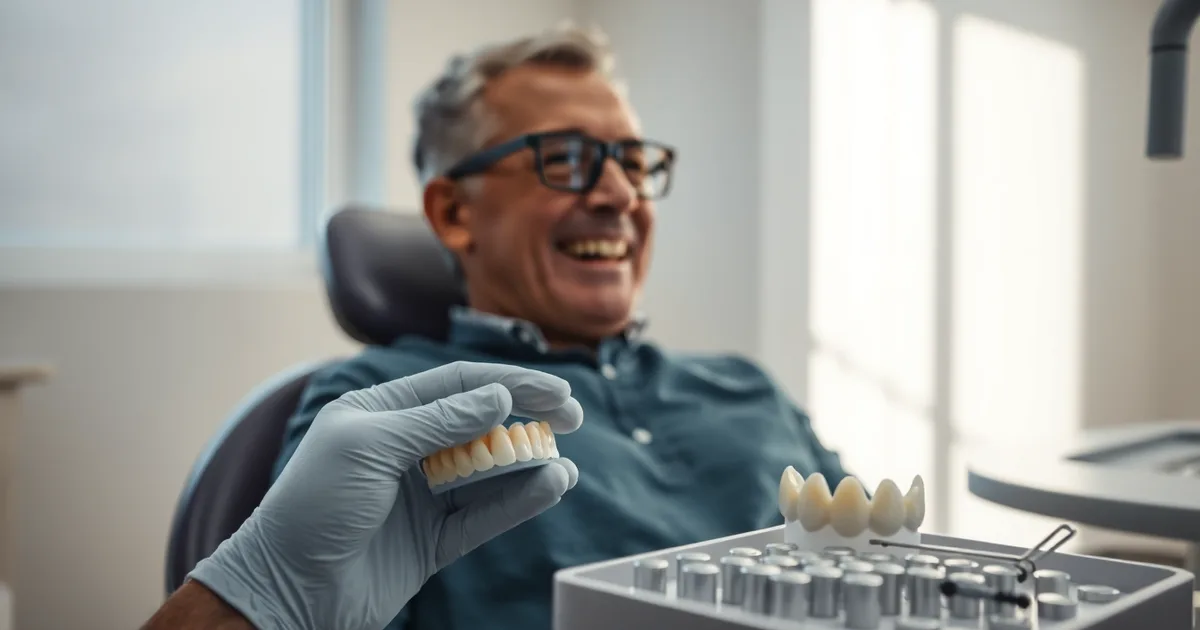
A loose but intact dental bridge needs a dentist within 3 to 7 days, not an emergency room. Stop chewing on that side, skip anything sticky or hard, and never glue it back in yourself. Most cases are fixed by cleaning and recementing the existing bridge in a single visit.
What surprises people is the price gap. A recementation runs roughly $50 to $300 depending on your city and whether the dentist uses temporary or permanent cement, while a new bridge starts around $1,500 and climbs past $5,000 before you count the extra appointments. The frame and crowns are usually fine — it is the cement layer underneath that has failed after years of load cycling.
That window matters more than the cost. Leave a bridge rocking on its abutment teeth for two or three weeks and saliva and food debris work under the crown margins, which is where decay starts. Once that happens the abutments may need re-prepping, and you have bought yourself the replacement you were trying to avoid.
Do not reach for denture adhesive or super glue in the meantime. Both get into the crown margins, and cyanoacrylate in particular has to be drilled out before the bridge can be seated properly again.
- Same-day call: Contact your dentist the day you notice movement and push for an appointment within 7 days.
- Recementation cost: Expect $50–$300 per bridge, against $1,500–$5,000+ for a replacement.
- In-chair time: Most dentists remove, clean and re-cement with permanent cement such as RelyX or Ketac in 30–60 minutes.
- Two-week limit: A bridge loose longer than 2–3 weeks risks decay under the crowns and may not be salvageable.
- Never self-repair: Over-the-counter denture adhesive and super glue damage crown margins and make recementation harder.
Is a loose dental bridge an emergency?
A loose but intact bridge is urgent, not emergent. If you can wiggle it with your tongue and nothing is broken, you do not need an emergency room or a 2 a.m. call to a answering service. You need a phone call to your dentist when the office opens. Most US practices can see an urgent loose bridge case within 3–7 days, according to a 2026 survey of 500 dentists, and that window is comfortable for a bridge that is merely mobile.
What turns urgent into same-day is a specific trio of symptoms: severe or throbbing pain that wakes you up, visible swelling in the gum or face, or bleeding that will not stop. Those point to infection or trauma under the bridge, not simple cement failure, and delay has real consequences. Add a fourth trigger — a bridge so loose it rocks on its abutment teeth or feels like it will drop out mid-sentence — and you should be seen within 24–48 hours, because a swallowed bridge is a choking hazard and a bridge that lifts off can let the abutment teeth drift or crack.
Between those poles sits the ordinary case, which is the one most people are actually in. The bridge has been in for years — average bridge lifespan runs 10–15 years on 2025 American Dental Association data — the cement has washed out at one margin, and the crown margin no longer seals. That is a slow problem, not a fast one, but slow still means weeks, not months. Decay becomes likely after roughly 2–3 weeks of looseness, and if you leave a loose bridge untreated entirely, the 2023 figure for abutment tooth loss sits at 15% within three years. Same-day call, appointment inside a week, no chewing on that side until you are seen.
What to eat (and avoid) while you wait
Everything below is damage control. The bridge is held by cement that has already failed somewhere, and the only thing keeping the abutment teeth from moving is the prosthesis sitting where it is. Food that levers it up, pulls it sideways, or gets wedged under the pontic accelerates the clock. A 2026 survey of 500 US dentists found most offices can fit an urgent loose bridge within 3–7 days, so you are eating defensively for under a week in the typical case.
- Cut the hard stuff entirely. Raw apples, raw carrots, bagels, crusty bread, nuts and ice all load the bridge with point force. A bagel crust can require 20–30 kg of bite force to shear, and that force goes straight into the weakest cement interface. If you want an apple, grate it or stew it.
- Say no to sticky. Toffee, caramel, gummy sweets, dried fruit and chewing gum generate tensile pull rather than compression. Tensile pull is exactly the direction a loose bridge resists worst. Gum is the single worst offender because people chew it for twenty minutes at a time.
- Go soft and cool-to-warm. Yogurt, soup, mashed potatoes, scrambled eggs, cottage cheese, oatmeal, smoothies and well-cooked pasta need almost no chewing. Keep temperatures moderate; a very hot drink can sting if the abutment margin is exposed, and it tells you nothing useful about the bridge itself.
- Chew on the opposite side, every single time. Not "mostly." Make it a rule you follow without deciding. The chewing-side switch costs you nothing and removes most of the daily load from the loose unit.
- Cut food into pieces you can swallow without a second bite. Roughly pea-to-grape size. Anything that needs tearing with the front teeth should be cut with a knife first. Front teeth put the worst lateral leverage on a bridge, especially a three-unit span.
- Skip alcohol-heavy and very sugary drinks between meals. If the crown margin is open, sugar sits directly against exposed dentine and any residual cement ledge. Sipping a fizzy drink over an afternoon is worse than drinking it with a meal.
- Do not floss under or around the loose bridge. This one is counterintuitive and belongs on the avoid list. Floss can catch the open margin and lift the bridge further, or snap a piece of cement off. Rinse with warm salt water instead, and leave the interproximal cleaning to the dentist who recements it.
The item people get wrong most often is gum. It feels harmless because it is soft, and it is the fastest way to work a loose bridge free — the repeated up-and-down pull is precisely the failure mode. The second most common mistake is deciding that a food is safe because it is soft. A day-old croissant is soft. A soft pretzel is soft. Both are chewy enough to grab a pontic and rock it. When in doubt, ask whether the food would hold its shape if you squeezed it between two fingers.
How dentists re-cement a loose bridge
Recementation applies when the bridge itself is intact and the abutment teeth underneath are sound. If the porcelain is fractured, a connector has failed, or decay has reached the pulp, the bridge comes off for good and you are pricing a replacement instead. That distinction is worth understanding before you sit in the chair, because the gap between the two procedures is roughly $50 to $300 for a recement versus $1,500 to $5,000 or more for a new bridge in 2026 US prices.
The procedure is a cleaning job followed by a bonding job, and the cleaning is where most of the appointment time goes. Expect 30 to 60 minutes. Most general dentists do it in a single visit with materials already on the shelf.
- The dentist or hygienist removes the bridge. A crown-and-bridge remover or a small pneumatic device applies controlled force at the margin. This is the step patients dread and it rarely hurts, because the bridge is already loose. If the abutment teeth are sensitive, a single injection of local anesthetic covers the whole appointment. Budget 5 to 10 minutes.
- Both sides get cleaned of old cement. The abutment teeth are scaled and the inside of the bridge retainers is scraped or air-abraded. Old cement left behind is the single biggest cause of a second failure, so this step is unglamorous and non-negotiable. Temporary cement (Temp-Bond and similar) comes off easily; a failed permanent cement such as a resin or glass ionomer takes longer. Budget 10 to 20 minutes.
- An explorer and bitewing radiograph check for decay, cracks and margin fit. The dentist probes the crown margins and looks for recurrent caries under the retainers. A crack in an abutment tooth changes everything. This is where a recementation turns into a root canal referral, and it is also why the 2-to-3-week window matters: leave a loose bridge long enough and decay becomes likely. Budget 5 to 10 minutes.
- If everything is sound, the bridge is dried and isolated. Cotton rolls, suction, sometimes a rubber dam on the abutments. Cement will not bond to a wet field, and a contaminated retainer means the bridge comes loose again within months. For a porcelain-fused-to-metal (PFM) bridge this is straightforward; zirconia frameworks are less forgiving of moisture and demand a clean, dry field.
- The dentist mixes and seats permanent cement. Common choices are resin-modified glass ionomer such as RelyX Unicem or GC FujiCEM, or a conventional glass ionomer such as Ketac Cem. The bridges are filled, seated with firm pressure, and held while the cement sets. Budget 5 to 10 minutes of setting time depending on the product.
- Excess cement gets removed before it fully hardens. Set cement at a crown margin is a plaque trap and irritates the gum. A scaler and floss pull the squeeze-out. Flossing under the pontic should be able to pass, just.
- The bite is checked and adjusted. Articulating paper identifies high spots. A bridge that sits a fraction of a millimetre proud will feel wrong and will load the abutment teeth unevenly. Adjustment takes two minutes with a fine diamond bur.
- You leave with instructions and, often, a follow-up. Nothing hard or sticky for 24 hours. Many dentists schedule a two-week check to confirm the bridge is still seated and the gum has settled.
Here is how this differs from replacement. A new bridge means preparing the abutment teeth again, taking impressions or an intraoral scan, sending the case to a lab, and wearing a temporary for two to three weeks. It costs ten to twenty times more and removes more healthy tooth structure. Given that recementation holds for 5 years in roughly 70 to 80% of cases (2024 data in the Journal of Prosthetic Dentistry), repair first is the sensible default for a bridge that has simply come unglued. Replacement earns its price when the abutment teeth are compromised or the framework has failed.
The failure mode to watch for is a dentist who jumps to replacement without showing you the reason. Ask to see the radiograph and ask what, specifically, rules out recementation. If the answer is "it will just come loose again," that is a guess, not a diagnosis. The other common failure is the dentist who skips the cleaning step and reseats the bridge over old cement. That one comes back loose in a few months, and by then you have burned your easy window.
Recementation vs. replacement: which will you need?
Your dentist is not choosing between a good option and a bad one. They are checking three things: whether the bridge still fits the abutment teeth, whether those teeth are still sound underneath, and whether the metal or ceramic frame has survived. If all three pass, the bridge goes back on with new cement in a 20-minute appointment. If any one fails, recementing it just postpones the inevitable, and you pay twice.
A bridge under 10 years old with clean margins and no decay under the crowns is the easy call. Past 15 years, the calculus shifts, because the cement is often the first thing to fail and it usually fails at the crown margin, where bacteria then work undisturbed. A 2024 study in the Journal of Prosthetic Dentistry put five-year success for recementation at 70–80%, which sounds decent until you realise the failures cluster in exactly the older, decay-adjacent bridges.
| Factor | Points to recementation | Points to replacement |
|---|---|---|
| Bridge age | Under 10 years (ADA average lifespan: 10–15 years) | Over 15 years of service |
| Condition of abutment teeth | No decay, no mobility, no fracture on radiograph | Decay under a crown, or a cracked abutment |
| Bridge frame and porcelain | Zirconia or PFM intact, no chip at the pontic | Cracked framework or repeated porcelain fracture |
| Time since it loosened | Seen within 2–3 weeks, before decay sets in | Loose for months, or previously recemented twice |
| Typical cost (US, 2026) | $50–$300 per bridge | $1,500–$5,000+ per bridge, more if an implant is needed |
| Appointment required | One 20–30 minute visit, no lab work | Two or more visits plus 2–3 weeks of lab fabrication |
For most readers, the recementation column wins, and it wins by a wide margin. A 45-year-old with a nine-year-old PFM bridge, no decay on the bitewing, and no pain is looking at roughly $150 and a single visit, versus $3,000 and three weeks in a temporary. The flip case is a 68-year-old with a 17-year bridge, a radiolucency under the molar abutment, and a history of two previous recementations, where recementing is the more expensive choice in the long run because the tooth is likely to need a root canal or extraction within a year or two, and a 2023 dataset put the risk of abutment tooth loss at 15% within three years when a loose bridge is left untreated. Get the radiograph before you agree to either.
What happens if you wait too long?
The clock here runs in weeks, not months. Once a bridge lifts off its abutment teeth, saliva and food debris get pumped underneath it every time you bite, and the crown margin stops sealing. Data from the American Dental Association and multiple prosthodontics follow-ups put the window for predictable recementation at roughly 2–3 weeks; past that, decay under the pontic and the abutment crowns becomes likely enough that a dentist has to assume it is there. A bridge that was a $50–$300 recementation in week one can turn into a $1,500–$5,000+ replacement simply because a cavity formed in a spot you cannot see or feel.
Movement is the second problem, and it is the one patients underestimate. The abutment teeth are no longer splinted together by the bridge, so they drift and tilt independently. That matters because a re-cemented bridge only fits one position. If the teeth have shifted even a fraction of a millimetre, the restoration will not seat, and no amount of RelyX Unicem or GC FujiCEM will fix a framework that no longer matches the teeth it was made for. At that point the options narrow to a new bridge, a dental implant, or a removable partial — all of which cost more and take longer than the recementation you could have had in September.
The 3-year number worth knowing
Leave a loose bridge untreated and the risk is not just to the restoration. 2023 data put the risk of losing one or more abutment teeth at 15% within three years — and once an abutment is gone, the bridge design is void regardless of how well the metal or zirconia has held up. To put that in context, a 2024 study in the Journal of Prosthetic Dentistry found recementation succeeds 70–80% of the time at five years when it is done promptly. The difference between those two outcomes is mostly timing, not technique.
Most US dental offices can see a loose-but-intact bridge within 3–7 days, according to a 2026 survey of 500 dentists, so there is rarely a real reason to wait past the first week. Call on a Monday, get in by Thursday, and the odds stay firmly on the recementation side of the ledger. If you are chewing on the other side and telling yourself it feels fine, remember that a bridge that has lasted 10–15 years — the ADA's 2025 average — is exactly the one whose underlying teeth are old enough to decay quickly once the seal is broken.
Can you fix a loose bridge yourself?
No, and the products people reach for first are the ones that do the most damage. Super glue is the obvious temptation and the worst option: cyanoacrylate bonds to saliva-moistened enamel unpredictably, sets hard against the gum line, and has to be cut off with a bur. Denture adhesive is gentler but no better. It is formulated for an acrylic plate resting on a broad ridge of soft tissue, not for a crown margin that needs a gap of a few tens of microns to seat properly. Pharmacy "temporary dental cement" sits somewhere in between, and it still fails the same test — you cannot dry the field, you cannot see the margin, and you cannot verify the fit.
Each of those fixes leaves a film of material trapped under the bridge. That film is a sheltered, sugar-fed reservoir sitting directly against the abutment teeth, and it is invisible to a toothbrush. The margins of the crowns get clogged with set cement that the dentist then has to clean out before the real recementation, which turns a 20-minute appointment into a longer and more expensive one. Worse, material wedged between the pontic and the gum can push the bridge slightly off its seat, and a bridge that has been forced out of alignment may no longer fit the prepared teeth at all. That is how a recementation becomes a replacement.
Only a dentist or dental hygienist can do this properly, and the reason is equipment, not expertise. Proper recementation means lifting the bridge, cleaning old cement off both the retainers and the abutment teeth, checking the margins and the fit, drying the field with isolation, then seating it with a definitive cement such as RelyX Unicem, Ketac Cem, or GC FujiCEM — all of which need a dry field and controlled working time to bond correctly. Nothing sold in a pharmacy aisle can do that.
What you can do at home is keep the bridge from moving. Stop chewing on that side entirely, avoid anything sticky or hard, and if the bridge is lifting when you bite, keep your teeth apart rather than testing it. Roughly 70–80% of recemented bridges are still in place five years later, per a 2024 study in the Journal of Prosthetic Dentistry, and that figure assumes the bridge was cleaned and seated by someone who could see what they were doing. It does not apply to a bridge you glued yourself.
When a loose bridge becomes a dental emergency
Most loose bridges are not emergencies. They are urgent, which is a different category: you need a chair within days, not within hours. But a small share tip into genuine emergency territory, and the symptoms below are how you tell the difference. If any of them apply to you, stop reading and call an emergency dental line rather than the reception desk that books three weeks out.
- Pain that wakes you up, or pain you can localise to one tooth. A bridge that has merely broken its cement seal usually feels mobile and odd, not painful. Sharp or throbbing pain points to pulpal involvement in an abutment tooth underneath the crown, and that tooth may already need a root canal before anything gets re-cemented. Waiting on this one converts a $200 recementation into a $1,200 to $2,000 endodontic-plus-crown case.
- Swelling in the gum or face near the bridge. Gum swelling that is tender, shiny, and growing over a few hours is a different animal from the mild puffiness that can follow a loose crown rubbing. Facial swelling that reaches the eye or the underside of the jaw is a same-day hospital matter. Spread from a maxillary molar to the cavernous sinus is rare but it is the reason dentists take facial swelling seriously.
- Fever above 38 °C (100.4 °F), or feeling generally unwell. A fever with a dental source means the infection is no longer contained in the gum. Call an emergency line the same day. Antibiotics alone will not fix it; the source has to be opened or the bridge removed and the tooth treated.
- Pus, a persistent bad taste, or a salty discharge. If you can press on the gum above the bridge and see pus at the crown margin, there is a draining abscess. Note the 2023 figure of roughly 15% abutment tooth loss within three years when a loose bridge is left untreated — a draining sinus tract is one of the main routes to that outcome.
- Bleeding that does not stop after a few minutes of gentle pressure. Some spotting when a loose bridge irritates the margin is normal. Steady bleeding, or blood that keeps returning, needs same-day assessment.
- The bridge moves so much it could come off in your mouth. This is the swallowing risk people worry about, and it is real. A three-unit PFM bridge is small enough to pass into the airway if it dislodges while you are lying back or asleep. Do not eat solid food, do not sleep without checking it, and if it does come free, do not put it back yourself — keep it in a cup and get seen.
- You have a condition or medication that suppresses healing or immune response. Diabetes with an HbA1c above roughly 8%, active chemotherapy, long-term corticosteroids, or a bisphosphonate history all lower the threshold for calling it an emergency. For these patients, a gum infection around an abutment can move faster than the usual two-to-three-week window.
The item people get wrong most often is pain. They assume that because it does not hurt, the bridge can wait. Reversed. The absence of pain is what makes a loose bridge urgent rather than emergent, and it is also what lets decay and abutment tooth movement quietly accumulate during the two to three weeks before the situation becomes expensive. The bridge that hurts is often the one that gets fixed in time. The bridge that just feels a bit wobbly is the one that shows up six weeks later needing a $3,000 replacement.
How much does it cost to fix a loose bridge?
Recementation is the cheap half of this decision, and it is not close. A 2026 survey of 500 US dentists put the typical fee at $50–$300 for the whole bridge, and most practices can fit an urgent loose-bridge case inside 3–7 days. The cement itself is a rounding error: a capsule of RelyX Unicem or GC FujiCEM runs the practice a few dollars, and what you are paying for is the 20–30 minutes of chair time, the cleanup of old cement from both crown margins, and the bite check.
Replacement is a different budget line entirely. PFM bridges sit at the low end because the metal frame is inexpensive to fabricate; full-zirconia is the high end, and anything involving a new abutment tooth, a dental implant, or a root canal on an already-compromised abutment pushes past the figures below. A 2025 ADA figure puts average bridge lifespan at 10–15 years, so a bridge you have had for 12 years may have been heading for replacement anyway — but "may" is not "must," and a 2024 study in the Journal of Prosthetic Dentistry found recementation held for 5 years in 70–80% of cases.
| Procedure | Typical cost (US, 2026) | Insurance coverage | Your out-of-pocket | Appointment |
|---|---|---|---|---|
| Recementation (existing bridge) | $50–$300 | 80–100% | $0–$60 | 20–30 min, 1 visit |
| Replacement, PFM bridge | $1,500–$3,000 | 50% after deductible | $750–$1,500 | 2–3 visits over 2–4 weeks |
| Replacement, zirconia bridge | $3,000–$5,000+ | 50% after deductible | $1,500–$2,500+ | 2–3 visits over 2–4 weeks |
| Root canal on an abutment tooth | $700–$1,200 (molar) | 50–80% | $140–$600 | 1–2 visits, 60–90 min each |
| Untreated looseness past 3 years | $0 now, $3,000–$8,000 later | 50% after deductible | Full replacement plus implant | 6–12 months total |
The recementation row wins for almost everyone reading this, and the gap is roughly tenfold — $50–$300 against $1,500–$5,000. It only flips when the dentist probes the abutment teeth and finds decay or a fracture under the crown margin, or when the bridge is past its 10–15 year service life with visible wear on the pontic and opposing teeth. In that case recementation is money spent buying months, not years. So ask for the specific finding, not the verdict: "Is the abutment tooth sound, or is there decay under the margin?" If the tooth is sound, pay the $50–$300 and keep the bridge. If it is not, the replacement discussion starts there, and no cement brand on the market changes that.
Frequently Asked Questions
Can a loose dental bridge tighten back up on its own?
No. A bridge is held by cement, not by spring tension, so once that seal fractures there is no mechanism for it to re-seat itself. The underlying abutment teeth cannot pull the framework back down. Waiting only lets bacteria and saliva work under the margins. It needs professional recementation, usually a 20-to-30-minute appointment.
How long can I leave a loose bridge before seeing a dentist?
Aim to be in a chair within 3 to 7 days. Past two to three weeks, the odds shift hard against you: decay under the open margin and drifting of the abutment teeth become likely, and a bridge that could have been recemented often has to be cut off and remade. A replacement runs into the thousands. Call today and describe it as a loose fixed bridge.
What can I eat with a loose bridge?
Soft foods only, and chew on the opposite side: scrambled eggs, yogurt, mashed potato, soup, well-cooked pasta, banana. Skip anything hard, sticky or crunchy — ice, nuts, crusty bread, toffee, apples, popcorn kernels, sticky rice. Biting into a bagel or a carrot is how a rocking bridge goes from loose to off. Keep the chewing load off that quadrant entirely until it is recemented.
Will a loose bridge fall out?
Yes, if it is very loose and you keep chewing on it. A bridge that rocks when you press it can lift off mid-meal, sometimes within days. If it does come out, do not swallow it, do not try to force it back on yourself, and do not sleep with it in your mouth. Store it in a clean container or a cup of water and get to a dentist.
Can I use denture adhesive on a loose bridge?
No. Denture adhesive is formulated for a removable acrylic denture sitting on a gum ridge, not for a fixed bridge seated on prepared crown margins. The paste creeps under the framework and along the margins, and getting it out of there is difficult. It also hides the gap where decay is starting, which delays the diagnosis. See a dentist instead.
How much does it cost to re-cement a loose bridge?
Expect roughly $50 to $300 per bridge in the US in 2026, depending on the city and whether the dentist needs to clean out old cement or replace a broken solder joint. Most dental insurance plans cover recementation as a minor restorative or emergency procedure, often at 80 percent after any deductible. If the visit turns into a new bridge, you are looking at $1,500 to $5,000 instead.