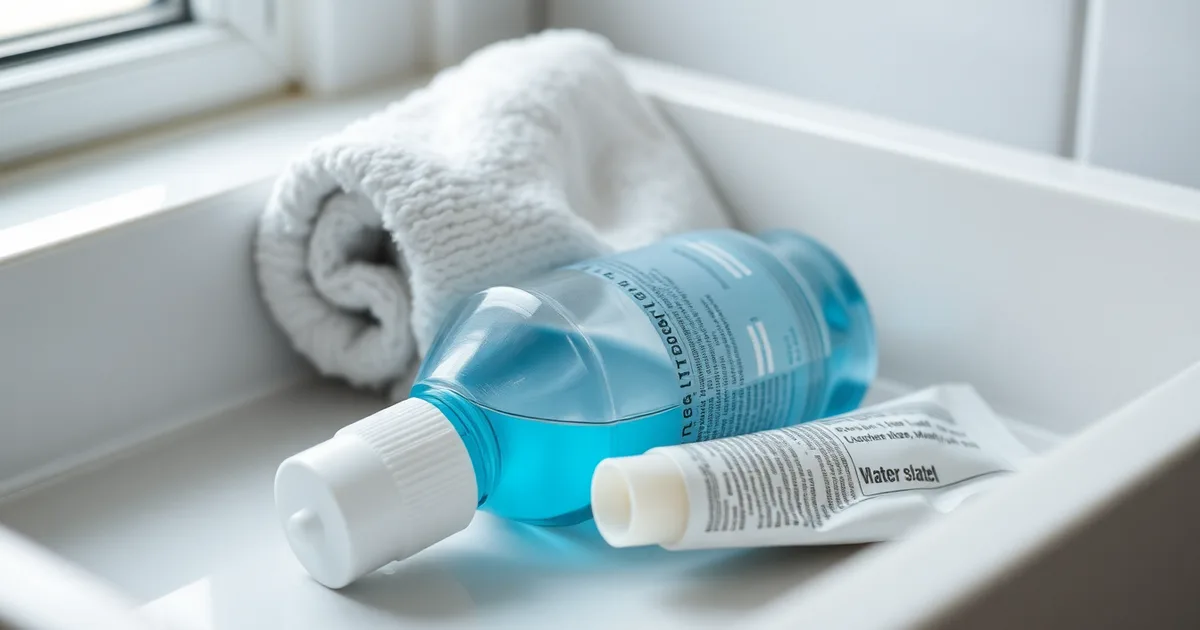
Lube does expire, and expired lube can irritate tissue in ways that mimic or trigger a yeast infection — but yeast does not grow inside the bottle. The likelier culprit is glycerin, a sugar alcohol that feeds Candida albicans. If you get yeast infections often, read the ingredient list before the expiry date.
Almost nobody checks the date on a lube bottle, partly because the FDA doesn't require one. Personal lubricants are regulated as cosmetics, not drugs, so a manufacturer can legally ship a product with no expiry stamp at all. The 2–3 year shelf life you occasionally see printed applies to an unopened container. Once air and skin bacteria are in the bottle, water-based formulas are realistically good for 3–6 months. Silicone sits at the other end: no water content means nothing for microbes to grow in, so opened silicone lube holds for 3–5 years.
The ingredient question is where this gets uncomfortable. A 2023 study in Obstetrics & Gynecology found that women using glycerin-based lubricant had 1.7 times the risk of recurrent vulvovaginal candidiasis compared with those using glycerin-free products. Glycerin is a sugar alcohol, and Candida albicans happily metabolises it. You can be scrupulous about dates and still be reintroducing food for yeast every time you open the drawer.
What does expired lube actually do, then? The preservatives degrade first. Once they do, mould and bacteria can colonise the bottle, and the breakdown products themselves sting. That irritation — burning, redness, unusual discharge — gets read as a yeast infection, which is a reasonable guess and sometimes the wrong one.
- Glycerin raises recurrence: A 2023 Obstetrics & Gynecology study linked glycerin-based lubricants to 1.7x higher rates of recurrent vulvovaginal candidiasis than glycerin-free alternatives.
- No FDA expiry rule: Personal lubricants are classed as cosmetics, not drugs, so the FDA does not require an expiry date on the label.
- Opened water-based lube: Use within 3–6 months of opening, against 2–3 years for a sealed bottle.
- Silicone lasts longer: With no water content, silicone-based lube stays usable for 3–5 years even after opening.
- Signs it has turned: Changed colour, sour or rancid smell, stringy texture, visible separation, or burning on application.
Does lube actually expire?
Yes, and the date is usually hiding somewhere you have not looked. Water-based lubricants are roughly 70–90% water, which makes them a hospitable environment for mould and bacteria the moment the preservative system weakens. That system — typically parabens, phenoxyethanol, or sorbic acid — degrades gradually even while the bottle sits closed. An unopened water-based product generally holds for 24–36 months. Once you break the seal, the practical window drops to 3–6 months. Silicone-based formulas are a different animal: they contain no water, so nothing grows in them, and brands like Uberlube print a 5-year shelf life. Astroglide and KY Jelly sit in the water-based camp and carry shorter dates accordingly.
Finding that date is the first problem. The FDA regulates personal lubricants as cosmetics, not medical devices, which means expiry dates are voluntary and manufacturers are not required to print one (FDA, 2024). Some bottles carry a batch code you have to decode on the company's website. Some carry nothing. A 2022 survey by Good Clean Love found that 68% of women never check the expiration date on their lube at all, which tracks — if the date is invisible, nobody checks it.
The pump bottle in your drawer is the worst case. Every use pushes air and whatever is on your hands back into the reservoir, and a pump head sitting in a humid bathroom cabinet grows its own biofilm. That is the mechanism behind the "it smells different" moment: oxidized preservatives, not yeast. Where things get genuinely risky is when the preservative has failed outright. A 2024 review in Obstetrics & Gynecology on lubricant safety flagged that contaminated water-based product can introduce Pseudomonas, Staphylococcus, and Candida species directly, and that the resulting irritation is often mistaken for a yeast infection the lube "gave" you.
What expiry does and does not tell you
An in-date bottle can still cause trouble, and this is the part most people miss. Glycerin, the second or third ingredient in most drugstore lubricants, is a sugar alcohol that Candida albicans metabolises as fuel. The osmolality data is what should worry you more than the date: glycerin-heavy formulas have measured above 3000 mOsm/kg against a normal vaginal osmolality of 260–290 mOsm/kg, and a healthy vaginal pH of 3.8–4.5 against lubricant pH values of 4.5 to 7. A 2019 study in Sexually Transmitted Infections found women using glycerin-containing lubricant had 1.5x higher odds of bacterial vaginosis, published in 2020.
So the honest answer to "did my expired lube cause this?" is: probably not directly, but it may have contributed. If you are trying to work out whether to bin the bottle, the expiry date is a weak signal and the ingredient list is a strong one. Recurrent vulvovaginal candidiasis affects roughly 5–8% of women of reproductive age (CDC, 2023), and for that group, switching to a glycerin-free, pH-balanced water-based formula — Good Clean Love makes one, as do several pharmacy-house brands — matters more than whether the tube says 2024 or 2027.
How to tell if your lube has gone bad
Water-based lubricants typically last 24–36 months sealed and 3–6 months once opened, but the FDA treats personal lubricants as cosmetics rather than medical devices, which means expiry dates are voluntary. Plenty of bottles carry no date at all, and a 2022 survey by Good Clean Love found 68% of women never check one. That leaves your senses as the primary diagnostic tool, and they are more reliable than most people assume.
- Colour shift. A water-based lube that was clear and has turned yellow, milky, or cloudy has oxidised or begun growing something. Separation is the same story: if a puddle of watery fluid sits on top of a thicker gel, the emulsifiers have failed and the preservative system that kept bacteria in check has likely failed with it. Shake it. If it will not recombine after ten seconds, bin it.
- Smell. Silicone lubricants like Uberlube are chemically inert and stay odourless for their full five-year shelf life. Water-based and oil-based products are not. A sour, rancid, or vaguely yeasty note means microbial activity or lipid oxidation. Natural and oil-based lubes are the worst offenders here. Coconut oil goes rancid in roughly 12–18 months past opening, faster in a warm bedroom.
- Texture. Stringiness, grittiness, or a consistency noticeably thicker than when you bought it all point to the same conclusion. Grit is often crystallised preservative or polymer that has come out of solution. Stringiness in a glycerin-based product usually means water has evaporated and the glycerin concentration has climbed — which matters for reasons below.
- Immediate burning or stinging. Some tingling comes from legitimately intended warming or cooling agents such as menthol or capsaicin. Sharp burning, stinging, or itching within seconds of application is not normal and is not a sign your body is "adjusting." Stop, wipe it off with warm water, and do not reapply. This reaction can come from a degraded product or simply from an ingredient your vulvar tissue does not tolerate — propylene glycol is a common culprit.
- Packaging changes. A bottle that has swollen, a pump that now squirts unevenly, or a tube with a pinhole leak has probably been contaminated. Lubricant bottles stored loose in a nightstand drawer collect lint, dust, and whatever else lives there. Wipe the nozzle with a tissue before and after each use, and close it properly.
- Storage history. Heat accelerates degradation. A bottle that spent a summer in a car or on a windowsill is compromised well before its printed date. Anything stored above roughly 25°C for extended periods, or exposed to direct sunlight, should be treated as suspect regardless of what the label claims.
- Expiry date, if present. When there is one, take it seriously for opened products, especially water-based formulas. An unopened bottle is generally good for its full stated shelf life. Once opened, treat the 3–6 month mark as a soft deadline.
The one people most often get wrong is texture. Stringiness and thickening get dismissed as "it's still slippery, so it's fine" when in fact evaporation has concentrated everything in the formula — including glycerin, a sugar alcohol that Candida albicans feeds on directly. A bottle that has thickened is not just less pleasant; it is delivering a more concentrated sugar load to tissue that a healthy vagina keeps at pH 3.8–4.5 with Lactobacillus in charge. That is the mechanism worth worrying about, and it has nothing to do with whether the lube is expired.
Here is the part most articles get backwards. Expired lubricant can irritate, and irritation can make you more vulnerable to infection, but degraded lube does not manufacture yeast. Glycerin does the feeding. Glycerin-based formulas can exceed 3000 mOsm/kg against a normal vaginal osmolality of 260–290 mOsm/kg, and a 2019 study published in Sexually Transmitted Infections found women using glycerin-containing lubricant had 1.5 times the odds of bacterial vaginosis. Recurrent vulvovaginal candidiasis affects roughly 5–8% of women of reproductive age, per the CDC, and those are exactly the people who should be reading ingredient lists rather than date stamps.
If you are prone to yeast infections, switch to a glycerin-free, paraben-free lubricant even if the bottle in your hand is brand new and cost you £18. Good Clean Love, Uberlube, and a growing number of pharmacy own-brands all make them. Check for glycerin, propylene glycol, and anything ending in -paraben on the label. If you are not prone to infections and your lube smells and looks normal, use it until the texture or smell tells you otherwise. The expiry date is a rough guide. The ingredient list is the actual answer.
Can expired lube cause a yeast infection?
The short answer is no, but not because expired lube is harmless. Yeast needs sugar to multiply, and a plain water-based or silicone-based lubricant is not a growth medium — Candida albicans cannot colonise a bottle of dimethicone. Glycerin changes that calculation. It is a sugar alcohol, added to drugstore staples like Astroglide and KY Jelly as a humectant, and Candida feeds on it. A 2019 study published in Sexually Transmitted Infections found that women using glycerin-containing lubricant had 1.5 times the odds of bacterial vaginosis, and recurrent vulvovaginal candidiasis affects roughly 5–8% of women of reproductive age, per the CDC. If you are in that group, the date stamp on the bottle is the wrong thing to be reading.
What expiry actually changes is the preservative system. Most water-based formulas rely on parabens, phenoxyethanol, or similar agents to hold bacteria and mould at bay for three to six months after opening. Once those degrade, the bottle becomes a warm, wet container of nutrients. You can end up applying a film of Pseudomonas or a surface mould directly to mucosal tissue, which produces irritation rather than infection in the strict sense. The 2022 Good Clean Love survey found 68% of women never check the expiration date, so this is less a fringe scenario than the default one. Worth noting that the FDA classifies personal lubricants as cosmetics, not medical devices, which means expiry dates on the label are voluntary — Mayo Clinic guidance treats an opened bottle past six months as a discard regardless of what is printed.
Here is where people get confused. Irritation from a contaminated or degraded lubricant produces itching, burning, and discharge, which is the exact symptom set of a yeast infection. But a swab will come back negative for Candida overgrowth, because there is none. The fix is stopping the irritant, not taking fluconazole. If you are reaching for a Monistat kit every time this happens, you are treating a contact dermatitis with an antifungal.
Two things drive the risk higher than the calendar. Osmolality above 3000 mOsm/kg — common in glycerin-heavy formulas, against a normal vaginal range of 260–290 — pulls water out of epithelial cells and thins the Lactobacillus population that keeps vaginal pH at 3.8–4.5. Add a pH of 4.5 to 7 in the product itself and you have thoroughly upset the local environment before any microbe gets involved. The honest trade-off: for someone with no history of yeast infections or BV, a four-month-old bottle of glycerin lube is probably fine. For anyone with recurrent vulvovaginal candidiasis, parity of expiry date against ingredient list is not close — pitch the glycerin, keep the silicone. Uberlube and similar silicone formulas carry a five-year shelf life and no sugar source whatsoever.
The glycerin connection: why your lube might be feeding the yeast
Glycerin is a sugar alcohol, and Candida albicans treats it like a meal. The yeast metabolises glycerol readily in laboratory culture, which is why a lubricant built on it can keep a colonisation simmering rather than letting the vagina reset. A 2019 study published in Sexually Transmitted Infections (analysed further in 2020) found women using glycerin-containing lubricant had roughly 1.5 times the odds of bacterial vaginosis, and the same disruption that lets Gardnerella move in tends to let Candida follow. Compare that to expiry, which is a far messier and less consistent villain.
The second problem is concentration. Glycerin-based lubes can measure above 3000 mOsm/kg, against a normal vaginal osmolality of 260–290 mOsm/kg. That is a tenfold gradient pulling water out of the vaginal epithelium, and the resulting dryness and micro-abrasion do more to set up an infection than a bottle that sat in a drawer six weeks past its date. Many of these products also sit at pH 4.5 to 7, while a healthy vagina runs 3.8–4.5. Lactobacillus — the bacteria that keep that acid barrier intact — does not thrive when the environment shifts alkaline.
Read the ingredient panel, not the expiry stamp
Labels saying "natural" or "plant-based" mean very little here. Vegetable glycerin is still glycerin; it is the same molecule whether it came from a coconut or a petrochemical plant, and Candida cannot tell the difference. Watch for glycerin, glycerine, glycerol, and glyceryl derivatives on the INCI list, plus propylene glycol, which behaves similarly for many people. Astroglide and KY Jelly, the two most common drugstore brands, both lean on glycerin or glycol in their standard formulations.
If you get recurrent infections — and roughly 5–8% of women of reproductive age do, per CDC figures — the swap worth making is to a glycerin-free, pH-balanced option such as Good Clean Love's plant-based line, or to silicone, where Uberlube carries a five-year shelf life and contains nothing Candida can eat. Silicone costs more per bottle and cannot be used with silicone toys, which is the trade-off. For everyone else, glycerin lube is usually fine, and the half-used bottle in the drawer is a secondary concern. The variable that predicts your next yeast infection is far more often the ingredient list than the printed date.
Lube ingredients to avoid if you're prone to yeast infections
If you get yeast infections more than twice a year — recurrent vulvovaginal candidiasis affects roughly 5–8% of women of reproductive age, per the CDC — the expiry date on your bottle is a distraction. The ingredient panel is the thing that decides whether a lube is compatible with your flora. Read it before you read the date, because the FDA classifies personal lubricants as cosmetics rather than medical devices, which means the manufacturer chooses whether to print an expiry date at all.
Below are the ingredients worth checking for, what they actually do inside the vagina, and what to buy instead.
| Ingredient | Why it's a problem | Typical concentration or value | Safer alternative | Example product |
|---|---|---|---|---|
| Glycerin | Sugar alcohol that Candida albicans can metabolise as a carbon source; also pulls water into vaginal tissue | Often listed 2nd-4th on the panel; drives osmolality above 3000 mOsm/kg vs. normal vaginal 260–290 mOsm/kg | Glycerin-free water-based or silicone-based formula | Sliquid H2O, Uberlube |
| Propylene glycol | Same osmotic problem as glycerin at lower potency; irritant for some users at concentrations above 10% | Frequently 5–15% in drugstore water-based lubes | Silicone base (dimethicone) or cellulose-thickened water base | Uberlube, Good Clean Love Almost Naked |
| Parabens (methyl-, propyl-) | Preservative class; weak oestrogenic activity in vitro and a common contact irritant, though not directly yeast-feeding | Usually under 0.4% single / 0.8% total in cosmetics | Preservative-free single-use sachets, or phenoxyethanol-based | Sliquid Organics |
| High osmolality (any cause) | Draws fluid out of vaginal epithelium; linked to epithelial damage and a 1.5x higher odds of bacterial vaginosis in a 2019 Sexually Transmitted Infections study | Above 3000 mOsm/kg in some glycerin-heavy brands; ISO 29664 targets under 1200 mOsm/kg | Formulas labelled iso-osmotic or under 1200 mOsm/kg | Good Clean Love, Sliquid |
| Silicone (dimethicone, cyclopentasiloxane) | Not a yeast substrate; no sugar, no osmotic load, pH-neutral | 100% silicone base; 5-year shelf life unopened per Uberlube's 2025 labelling | N/A — this is the alternative | Uberlube, Pjur |
| Water, cellulose, aloe vera | Non-issue carriers and thickeners; aloe is mildly soothing, not antifungal | Water typically 70–90% of water-based formulas; cellulose under 2% | N/A | Good Clean Love Almost Naked |
For someone with a yeast-infection history, the silicone row wins outright: Uberlube and similar dimethicone formulas contain no sugar, sit at a pH-neutral 7, and carry a 5-year unopened shelf life, which removes the expiry anxiety entirely. If you need a water-based lube for condom compatibility with polyisoprene or for use with silicone toys, the flip case is Good Clean Love or Sliquid H2O — both glycerin-free and formulated below the 1200 mOsm/kg ISO 29664 threshold, so the trade-off is a shorter opened shelf life (3–6 months) in exchange for a texture many people prefer. The one case where the table flips back: if you're also prone to bacterial vaginosis, silicone's occlusive film can trap bacteria against the vaginal wall in some users, and a glycerin-free water-based option becomes the better call. Neither Astroglide's classic formula nor KY Jelly's standard version belongs in a nightstand belonging to someone with recurrent Candida — both lead with glycerin.
What to do if you think expired lube gave you a yeast infection
This applies when you used a lubricant — expired or just old — and within roughly 12 to 72 hours developed itching, thick white discharge, burning on urination, or a sour, beer-like odour. It assumes you can reach a pharmacy or telehealth line within the next day or two and that you are otherwise healthy. It does not apply if you have a fever, pelvic pain, or a raw, weeping rash: skip straight to step 6.
- Stop using that bottle and throw it out — tonight, not after you finish it. Opened water-based lube has a working life of about 3 to 6 months regardless of what the label says. Write the date on the cap when you open the next one; it costs nothing and it is the only reliable way to know. Check the bottle's ingredient list before you bin it, because that list is the actual evidence you will take to a clinician.
- Take a photo of the label and note the batch number before discarding it. Ten seconds. If you end up needing treatment for a persistent infection, the glycerin content, any propylene glycol or paraben, and the osmolality claim (rarely printed, but some brands publish it) tell a doctor more than your description will. Photograph the nozzle too if you saw discolouration or separation.
- Give your vulva and vaginal area 24 to 48 hours of nothing: no soap on the vulva, no douching, no scented wipes, no new lube. Warm water only. Plain water will not clear an infection on its own, but it removes the irritant and stops you from adding a second one while you work out what you are dealing with.
- If you have had a lab-confirmed yeast infection before and this feels identical, start an over-the-counter antifungal. Miconazole 2% cream or 100 mg suppositories for 7 days, or clotrimazole 1% cream for 7 to 14 days, run about $10–$25 at a US pharmacy. The 1-day and 3-day high-dose products work, but they cause more burning for many people; the 7-day course is gentler. Finish the whole course even if itching stops on day three.
- Do not treat a possible UTI with antifungal cream, and do not treat a yeast infection with leftover antibiotics. Antifungals do nothing for bacteria, and antibiotics wipe out the Lactobacillus that keep your vaginal pH at 3.8–4.5 — which is how a course of antibiotics turns into a yeast infection two weeks later. If it burns when urine passes and you are running to the bathroom constantly, that is a UTI until proven otherwise, and it needs a urine test and usually nitrofurantoin or trimethoprim.
- See a clinician if symptoms are still there after 7 full days of antifungal treatment, if you have a fever above 38°C (100.4°F), chills, or pain low in your abdomen or one side, or if this is your first suspected yeast infection. First episodes are worth swabbing, because bacterial vaginosis, trichomoniasis, and contact dermatitis from lubricant look similar from the outside and require completely different treatment. Recurrent vulvovaginal candidiasis — four or more episodes in a year — affects roughly 5–8% of women of reproductive age, and it usually needs a longer prescription regimen, not another box of cream.
- When you replace the lube, change the category, not just the bottle. Pick a silicone-based product such as Uberlube (5-year shelf life, no water, no glycerin, so nothing for Candida albicans to feed on) or a water-based option formulated without glycerin, low osmolality, and pH-matched near 4.5 — Good Clean Love's BioNude and similar products sit in that range. Expect to pay $15–$30 for 100 ml. Note that silicone lube cannot be used with silicone toys or latex condoms in some formulations; for those, the glycerin-free water-based route is the one to take.
The step people botch is number 4, and they botch it in a specific way: they apply the cream externally, feel relief within a day, and stop. The itch lives in the vaginal mucosa, not the outer skin, so an external-only, half-finished course leaves the Candida population intact and slightly more resistant than it started. The second most common failure is blaming the lube alone. A 2022 Good Clean Love survey found 68% of women never check the expiration date, and a 2019 study in Sexually Transmitted Infections found 1.5x higher odds of bacterial vaginosis in women using glycerin-containing lubricant — which means the ingredient list probably mattered more than the date stamp, and swapping to a new brand without reading its label just resets the same problem.
How long does lube last after opening?
The unopened bottle is the easy part. Most water-based lubricants carry a 24–36 month shelf life sealed, and that date usually survives contact with a nightstand drawer that stays under about 25°C. The clock that matters starts the day you break the seal. Once air and skin bacteria are in the bottle, a water-based product is good for roughly 3–6 months, not the two years printed on the base.
Formula matters more than the printed date. Water-based lubes are the only category here that supports microbial growth, because water is the thing microbes need and silicone has none. Oil-based products sit in between: they resist bacteria reasonably well but oxidise, and rancid oil smells like old cooking fat the moment you open the cap. Here is what each type actually gives you after opening.
| Lube type | Sealed shelf life | After opening | Storage | Sign it has turned |
|---|---|---|---|---|
| Water-based (most drugstore brands, e.g. Astroglide, KY Jelly) | 24–36 months | 3–6 months | Cool, dark drawer below 25°C; cap tight | Separation, stringiness, sour or yeasty smell |
| Silicone-based (e.g. Uberlube) | 5 years per manufacturer (2025) | 3–5 years | Anywhere out of direct sun; no water means no microbial growth | Cloudiness, grit, or a change in glide |
| Oil-based (coconut, jojoba, mineral blends) | 12–24 months | 6–12 months | Dark, cool, sealed; refrigeration extends it | Rancid smell, darkened colour, tacky texture |
| Flavoured or warming water-based | 18–24 months | 2–4 months | Cool and dark; sugar and glycerin shorten the window | Colour shift, crystallisation, altered scent |
| Glycerin-free water-based (e.g. Good Clean Love) | 24 months | 3–6 months | Cool, dark drawer | Same as standard water-based |
Silicone wins on shelf life outright, and for anyone who keeps one bottle in a drawer for occasional use, it is the better buy: five years against six months means you are not throwing away three-quarters of a $15 bottle. Water-based remains the right call if you use condoms or silicone toys, since silicone lube degrades both, and that is the one case where the short window is worth the hassle. Buy small water-based bottles, date the cap with a marker when you open it, and if you are prone to yeast infections, note that the FDA treats personal lubricants as cosmetics rather than medical devices, so expiry dates are voluntary (FDA, 2024) — a bottle with no date at all tells you nothing about how long it has been sitting there.
Do you need to throw away lube that's past its expiry date?
A water-based lube that has been opened and is past its date goes in the bin. Opened water-based formulas typically hold up for 3–6 months once air and skin bacteria get into the bottle, even though the unopened shelf life runs 24–36 months. Past that window, the preservatives — usually parabens, phenoxyethanol, or potassium sorbate — have degraded enough that mould and Pseudomonas can colonise what is essentially a sugar-and-water gel. That is a real infection risk, even if the yeast itself isn't what's growing in there.
Silicone-based lube is a different calculation. Dimethicone and cyclopentasiloxane don't support microbial growth the way water does, and brands like Uberlube publish a five-year shelf life from manufacture (2025). If your silicone bottle is two years past the date, still clear, still odourless, and hasn't separated, using it is low-risk. If it smells sharp, has gone cloudy, or feels gritty between your fingers, toss it regardless of the date. Silicone shouldn't change texture. Ever.
Worth knowing why the date on the bottle is even there: the FDA classifies personal lubricants as cosmetics, not medical devices, so expiration dates are voluntary (2024). Some manufacturers print them; some don't. A missing date isn't a green light — it just means the brand opted out of telling you. Astroglide and K-Y Jelly, both drugstore staples, do print dates on most SKUs; if yours doesn't have one and it's been in a hot car or a bathroom cabinet for two years, treat it as expired.
The arithmetic is not close. A new bottle of Good Clean Love or a basic water-based option costs roughly $10–20. A course of fluconazole for a yeast infection runs $15–40 depending on insurance, plus the discomfort, plus the fact that recurrent vulvovaginal candidiasis — which affects roughly 5–8% of women of reproductive age (CDC, 2023) — often needs longer treatment. If you're staring at a questionable bottle right now, and you're someone who gets yeast infections more than twice a year, the honest answer is to replace it and move on.
Frequently Asked Questions
Can expired lube give you a yeast infection?
Expired lube does not contain yeast, so it cannot directly give you an infection. What happens is that its preservatives degrade — typically after the printed date on a water-based product — letting mould and bacteria multiply in the bottle. Those organisms irritate vaginal tissue and disrupt normal flora, which can tip you into a yeast infection.
The more common trigger is glycerin, a sugar alcohol used as a humectant in many water-based formulas. Candida albicans feeds on it, which is why glycerin gets flagged in recurrent-infection research far more often than expiry dates do.
How do I know if my lube is expired?
Look for a printed date first, though many brands omit one entirely. If there is no date, judge by appearance and smell: stringy texture, separated liquid, a sour or off odour, or a colour shift all mean discard it. Water-based lubes are usually good for 3–6 months after opening, not the two years the bottle implies.
Is glycerin-free lube better for yeast infections?
Yes. Glycerin is a sugar, and studies going back to the 1990s link glycerin-containing lubricants to higher rates of recurrent vulvovaginal candidiasis. If you get yeast infections more than twice a year, switch to a glycerin-free formula such as Uberlube or Good Clean Love. Check the label for glycerin, glycerol and glycerine — they are the same ingredient under three spellings.
What are the signs of a yeast infection from lube?
Itching, burning, redness and thick white discharge that appears within a few hours to roughly 24 hours of using the product. That short window is the tell — a reaction tied to a specific lubricant shows up fast. If you have never had a confirmed yeast infection before, see a clinician rather than self-treating, because bacterial vaginosis and contact dermatitis produce overlapping symptoms.
Does silicone lube expire?
Silicone lubricants carry a shelf life of roughly 3–5 years and often stay usable well past opening, because they contain no water and therefore support no microbial growth. There is nothing for mould or bacteria to live on. Discard it only if the texture turns gritty or the smell changes, which usually signals contamination from a dirty cap or fingers.
Can I use expired lube if it looks fine?
For water-based lube past its date, do not risk it. The preservatives that kept mould and bacteria out may already have degraded, and a clear appearance proves nothing at a microbial level. Silicone-based lube past expiry is generally fine if the colour and odour are unchanged; its formula has no water to go off.