That sharp alcohol or beer smell means anaerobic yeasts are fermenting sugars in a pile that has gone too wet and oxygen-starved, usually above 60% moisture. The batch is almost always salvageable: turn it daily, work in dry carbon like sawdust or shredded leaves, and the smell should clear within 3–5 days.
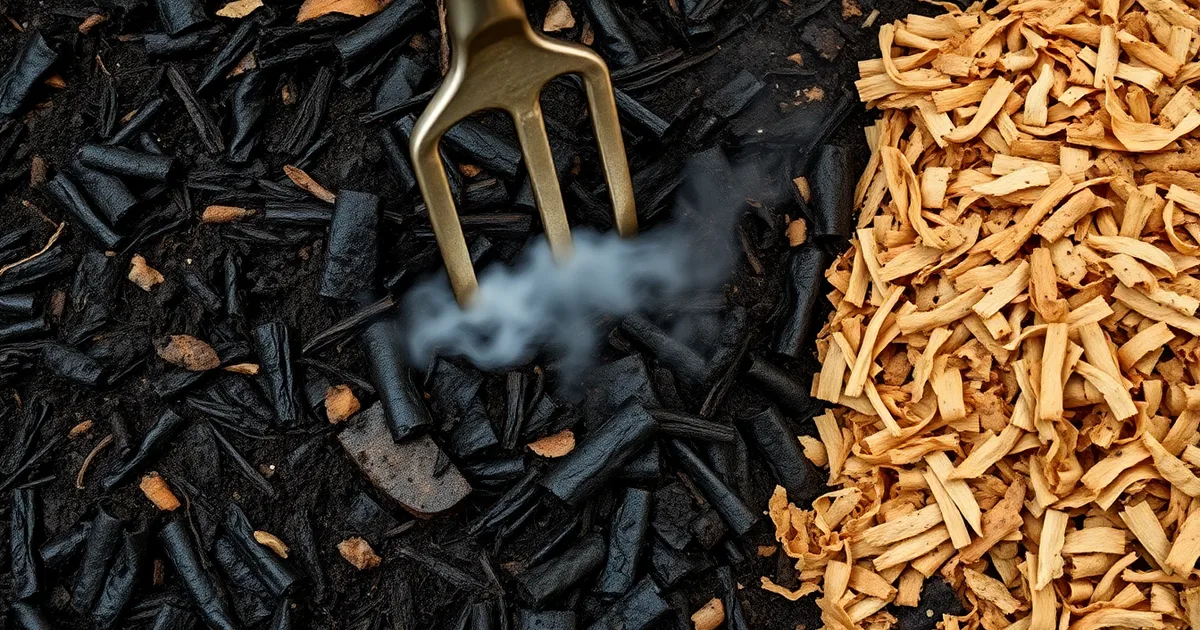
You notice it right after a turn, when the fork opens a pocket of air and the smell comes up like a stale keg. Home composters hit this most often after heavy rain, after adding a lot of kitchen scraps or fresh grass clippings at once, or after leaving a tarp sealed over a pile for a week. Grass clippings are the usual culprit: they are roughly 80% water and mat down into an airtight layer within a day or two.
The number that tends to surprise people is how narrow the margin is. Ideal compost moisture is 40–60%, and the alcohol smell generally starts once you cross 60%. That is not a big gap. The squeeze test is the practical check: wring a handful of compost and you want one or two drops of water, not a steady trickle. Above that, the pore spaces fill with water, oxygen can't diffuse in, and yeasts that thrive without oxygen take over from the aerobic bacteria you actually want.
What those yeasts produce is ethanol and carbon dioxide, which is why the pile smells like a brewery rather than like rot. That distinction matters. A sour, boozy smell is a moisture-and-oxygen problem and responds quickly to fixing those two things. A rotten-egg or ammonia smell is a different, harder problem, and compost tea brewed from alcohol-smelling material can damage plants through ethanol toxicity, so don't water with it until the pile is back to an earthy smell.
- Moisture threshold: Alcohol odors appear above roughly 60% moisture, while the target range for active compost is 40–60%.
- What is happening: Anaerobic yeasts ferment sugars into ethanol and CO2, producing the beer-like smell.
- Turning works fast: Aerating the pile halts anaerobic yeast activity within 24–48 hours, though full recovery takes 3–5 days of daily turning.
- Carbon ratio: Mix 1 part dry carbon such as sawdust or shredded leaves to 2 parts wet compost by volume to soak up the excess water.
- When to give up: Persistent hydrogen sulfide (rotten eggs) or ammonia means the batch may be beyond saving, and alcohol-affected compost tea can harm plants via ethanol toxicity.
What does an alcohol smell in compost actually mean?
That beer-and-bread smell is Saccharomyces cerevisiae doing exactly what it does in a fermenter. When oxygen in the pore spaces drops below roughly 5%, yeasts switch from respiration to fermentation and convert available sugars into ethanol and carbon dioxide. Ethanol concentrations in actively fermenting compost have been measured at up to 2% by volume, which is more than enough for your nose to catch from a metre away. The yeast is not a contaminant you introduced by accident; it lives on fruit peel, grass clippings and the surface of every leaf in the pile, waiting for the oxygen to run out.
What the smell tells you is that the pile has gone anaerobic in places, not that it has failed. Aerobic bacteria need 40–60% moisture content to thrive, but past that upper bound water fills the air channels and oxygen diffusion collapses. A pile that reads 70% on a moisture meter will ferment. Fungal dominance also pushes pH down toward the 4.0–5.5 range where yeasts outcompete the bacteria you actually want, well below the 6.0–7.5 that thermophilic composting runs at. The alcohol itself is a symptom; the saturated, airless condition underneath it is the problem.
Telling the three failure smells apart
A sharp vinegar tang is acetic acid, produced by Acetobacter feeding on the ethanol your yeasts just made — it usually means the pile has been anaerobic for a week or more rather than a day. Beer or fresh bread means ethanol and a young problem. Rotten eggs is hydrogen sulfide, and that one deserves separate treatment: it forms under strongly anaerobic, sulfate-rich conditions and shows up in waterlogged, compacted piles where nothing has moved in a long time. Ammonia, by contrast, smells like urine or bleach and signals the opposite error, too much nitrogen and not enough carbon.
If you are getting ethanol and nothing else, you caught it early. Berkeley method and windrow composting both tolerate brief fermentative episodes. The University of Illinois Extension's guidance is blunt about the fix being mechanical rather than chemical: turn the pile, and the yeasts lose their advantage within a day.
Why is my compost wet and smelling like beer?
An alcohol smell does not come from rot. It comes from Saccharomyces cerevisiae and its relatives doing exactly what they do in a brewery: converting sugars to ethanol in the absence of oxygen. When that smell shows up, it means the pile has crossed from aerobic decomposition into anaerobic respiration, and there are only a handful of reasons that happens. Work through them in order, because the first two are almost always the culprit.
- Moisture has pushed past 60%. The US Composting Council puts the working range for aerobic composting at 40–60% moisture content. Above 60%, water fills the pore spaces between particles and displaces the air that bacteria and fungi need. Yeasts tolerate low-oxygen conditions far better than the aerobic crowd, so they take over and start producing ethanol.
- Rain has been getting in. An open bin or an uncovered windrow after a wet fortnight will gain water faster than it sheds it. If your pile sits in a low spot or under a downspout, a single storm can add several gallons before you notice. Cover it with a tarp or a lid, but leave the sides open for airflow.
- Kitchen scraps are carrying too much water. Cucumber, melon rind, tomato, citrus pulp and coffee grounds are 80–95% water by weight. A pile fed mostly on these and grass clippings has no dry structure to hold air. This is the most common cause in home bins that get turned regularly but still smell sweet and alcoholic.
- Browns are missing or too fine. The carbon-to-nitrogen ratio should sit somewhere near 25–30:1 by weight, and browns are what physically open the pile up. Sawdust, shredded cardboard, dry leaves and straw each create air channels. As a working correction, Rodale Institute recommends roughly 1 part sawdust to 2 parts wet compost by volume — that is a lot more carbon than most people add.
- The pile has not been turned, and it has compacted. Gravity plus wet material equals density. Without turning, the centre collapses into a matted block, and anaerobic pockets form inside it while the surface still looks fine. Turning frequency matters here: daily turning clears an alcohol smell in 3–5 days according to Rodale Institute's 2022 guidance, whereas a weekly turn can stretch the same recovery to two weeks or more.
- Your bin is too small to hold heat and air. Piles under roughly 3 feet (0.9 m) cubed lose heat too fast to sustain the 130–150°F (55–65°C) window that indicates healthy thermophilic activity, which should be reached within 3 days of a proper turn. A cold, wet, small pile is a fermentation vessel, not a compost heap.
- pH has drifted acidic. Yeast fermentation runs best at pH 4.0–5.5, while ideal compost sits at 6.0–7.5. An acidic, wet pile keeps selecting for the organisms you do not want. A handful of wood ash or agricultural lime per cubic foot, worked in, will nudge it back — go light, because overshooting into alkalinity drives off nitrogen as ammonia.
The item people most often get wrong is the carbon. They read "add browns" and scatter a thin layer on top, which does nothing for the material 8 inches down where the ethanol is actually being made. Sawdust, shredded cardboard and dry leaves have to be mixed through the wet mass so every handful of soggy scraps ends up touching something dry. A University of Illinois Extension fact sheet makes the same point in blunter terms: if you can squeeze a drop of water out of a fistful, it is too wet, and the fix is bulk carbon incorporated throughout, not a dusting on the surface.
Worth saying plainly, since most general composting guides will tell you to throw the whole batch out: an alcohol smell is a reversible condition, not a verdict. Ethanol levels in fermenting compost have been measured at up to 2% by volume in the Journal of Environmental Management (2021), which sounds alarming until you remember that ethanol is volatile and evaporates readily once air gets back in. Aerate, add carbon, and check moisture with a meter rather than your hand. If the pile hits 130–150°F (55–65°C) within three days, the yeasts have already lost.
Is alcohol-smelling compost safe to use in the garden?
The short answer is yes, with a caveat about timing. Ethanol itself is not a persistent soil poison — it is water-soluble, volatile, and soil microbes oxidise it within days once air returns. But freshly anaerobic compost can carry up to 2% ethanol by volume (Journal of Environmental Management, 2021), and at that concentration it suppresses germination rather than feeding seedlings. If you spread it on a seed bed and plant immediately, you may see patchy emergence, curled radicles, or a stall in lettuce and carrot rows while the rest of the garden looks fine.
The harder risk is biological, not chemical. Anaerobic conditions favour facultative anaerobes, and that group includes E. coli, Salmonella, and Listeria. A pile that has gone sour and yeasty has also been sitting at low oxygen and often at pH 4.0–5.5 from yeast fermentation, well below the 6.0–7.5 range where a healthy aerobic pile stabilises. Pathogens do not necessarily multiply in a cold, acidic pile, but they survive far longer in it than in a thermophilic one holding 130–150°F (55–65°C). That distinction matters most if you grow root crops, salad greens, or anything eaten raw, and if the pile received manure or kitchen scraps containing meat and dairy.
How to use it without losing a season
Two paths, and which one you take depends on how much room you have and how soon you need the ground. If you have a spare bed or a spot for a holding pile, aerate hard — turn daily, add one part sawdust to two parts wet compost by volume, and watch the moisture meter land at 40–60% (US Composting Council, 2023). The Rodale Institute's 2022 turning trial found the alcohol note clears in 3–5 days under daily turning, and the pile should hit 130–150°F within three days of that first turn. Once it cools and smells earthy, cure it two to four weeks before it touches seedlings. If you cannot wait, spread the material as a surface mulch 2–3 inches deep around established perennials, shrubs, or fruit trees — never work it into the root zone of germinating seed, and keep it off leafy greens you plan to eat raw. The ethanol flashes off, the worms move in, and it feeds the soil from the top down.
One thing that catches people out: compost that smells of alcohol often smells of hydrogen sulfide underneath, that rotten-egg note that means sulfur-reducing bacteria are also active. If you catch both, treat this as a manure-tier material and keep it away from edible crops for a full curing cycle. A pile that only ever smelled yeasty and beery, never foul, is a much easier fix. The University of Illinois Extension's guidance on anaerobic piles is blunt about this — the smell tells you which microbial community won, and "won" is temporary if you give the aerobes their conditions back.
How to fix a compost pile that smells like alcohol
This plan applies to a pile that smells of beer, wine or nail-polish remover but still looks like compost — brown and green stuff, no white slime mould bloom across the whole surface, no black ooze. You need a fork or aerator, a dry carbon source within reach, and about 45 minutes. If the pile has gone grey-black and smells of sewage or rotten eggs, you are dealing with hydrogen sulfide and a different, longer job.
- Turn the whole pile, not just the top. Get the fork to the bottom and pull the outside material into the centre. The core is where the anaerobic yeasts are working — Saccharomyces cerevisiae and its relatives ferment sugars in the absence of oxygen, and ethanol can build to around 2% by volume in a badly compacted pile (Journal of Environmental Management, 2021). Every layer you break open stops that. Budget 20–30 minutes for a 1 m³ bin.
- Mix in dry carbon at roughly 1 part sawdust to 2 parts wet compost by volume. Shredded leaves, torn cardboard, wood chips and straw all work; sawdust is fastest because the particle size is small. Do not add a thin dusting and call it done — you are trying to physically separate the soggy clumps so air can move between them. A 1 m³ pile that is genuinely wet needs two or three wheelbarrow loads.
- Do the squeeze test before you add anything else. Grab a fistful from 30 cm inside the pile and squeeze. Ideal is 40–60% moisture content (US Composting Council, 2023) — the feel of a wrung-out sponge, with maybe one drop escaping your knuckles. If water runs down your wrist, add more carbon and turn again. If it crumbles and feels dusty, you have overcorrected and need a watering can. A $15–$30 moisture meter takes the guesswork out, but your hand is accurate enough once calibrated.
- Rebuild the pile loose. Do not stomp it down or tarp it tightly. A pile that has been compressed is a pile that will ferment again within a week. Leave it as a rough heap roughly 90–120 cm tall; anything shorter loses heat too fast at the edges.
- Take a temperature reading at 30–45 cm depth with a 50 cm compost thermometer. Write down the number and the date. You should see the pile climb to 130–150°F (55–65°C) within three days of turning. That heat is not a bonus — it is the evidence that bacteria have taken the pile back from the yeasts.
- Turn daily for the next three to five days. Rodale Institute's 2022 field guidance puts recovery from an alcohol smell at 3–5 days with daily turning, and that matches what most home bins do in practice. Turn in the morning, when the pile is coolest and the smell has had the night to redevelop — that is when you will notice the difference soonest.
- Watch the pH and the smell shift together. Yeast fermentation runs at pH 4.0–5.5; a healthy aerobic pile sits at 6.0–7.5. You do not need a meter to track this. Beer smell fading into an earthy, mushroomy note means the fungal and bacterial populations have rebalanced and you are back on track.
The failure mode is undercorrecting on carbon. Gardeners add one bag of shredded paper to a pile that has been quietly stewing for a month, see the smell drop for 48 hours, and stop. Then it comes back stronger, because the underlying saturation never changed. If the alcohol note returns after day three, double the carbon and turn twice more — the pile is telling you it is still wetter than 60%.
One trade-off worth naming: daily turning works fast but costs you heat, and heat is what kills weed seeds and pathogens. If your pile contains perennial weed roots or diseased plant material, turn every second or third day instead, accept a 7-day recovery, and let the core hold above 131°F (55°C) for at least three consecutive days. For a pile of kitchen scraps and grass clippings, turn daily and take the quick fix.
When should you throw out compost?
An alcohol smell alone never justifies scrapping a batch. Ethanol from Saccharomyces cerevisiae and other fermenting yeasts peaks around 2% by volume in a waterlogged pile (Journal of Environmental Management, 2021), and that figure collapses once you aerate and add carbon. The smells that should stop you are different in kind: hydrogen sulfide (rotten eggs), free ammonia, and visible mold are products of decay you cannot reverse by turning.
Ammonia signals a C:N ratio that has swung too far toward nitrogen, often below 20:1, and it burns plant roots if the compost is used before curing. Rotten egg smell means true anaerobic putrefaction, not fermentation — a different microbial regime than the one producing your beer note. Mold is the clearest disqualifier because spores persist through the curing phase.
| Sign | What it indicates | Recovery action | Time to safe use | Verdict |
|---|---|---|---|---|
| Alcohol/beer smell, moisture 65–75% | Yeast fermentation, pH 4.0–5.5 | Turn daily, add 1 part sawdust to 2 parts compost by volume | 3–5 days (Rodale Institute, 2022) | Salvage |
| Rotten egg smell (hydrogen sulfide) | Anaerobic putrefaction, moisture often above 80% | Spread thin, turn twice daily, target 40–60% moisture | 7–14 days if smell clears | Salvage if odor drops in 48 hours; discard if it persists |
| Sharp ammonia smell | C:N below 20:1, excess nitrogen | Add 2–3 parts browns (cardboard, dry leaves) per 1 part greens | 10–21 days to rebalance | Salvage |
| Visible white or green mold on surface | Fungal dominance, often Aspergillus or Penicillium | None reliable at home | Not applicable | Discard |
| Meat, dairy, or grease visible in pile | Protein putrefaction, attracts rodents | Remove solids; do not compost the rest for food crops | Not applicable | Discard the contaminated portion |
| Pile stays below 90°F (32°C) after 3 days of turning | Insufficient microbial activity, likely still anaerobic | Rebuild with fresh greens and a 25:1 to 30:1 C:N | Start over; 8–12 weeks | Discard and restart |
For most readers, the alcohol row wins: turn daily, add sawdust at a 2:1 wet-to-carbon ratio by volume, and check with a compost thermometer that the pile hits 130–150°F (55–65°C) within three days. That temperature rise is your confirmation that aerobic bacteria have displaced the yeasts. The flip case is anything involving visible mold or meat — those go to a commercial facility or get buried 18 inches deep away from vegetable beds, because home piles rarely reach the 160°F (71°C) needed to kill pathogen spores and fungal colonies. A moisture meter reading above 75% combined with a rotten egg smell after 48 hours of turning means the anaerobic zone has gone too deep to fix, and you are better off solarizing the batch under clear plastic for 4–6 weeks than gambling on it.
Does the alcohol smell attract pests?
Yes, and faster than most gardeners expect. The same volatile compounds that reach your nose — ethanol at concentrations up to 2% by volume in a fermenting pile, plus the esters and acetaldehyde that accompany it — are a chemical beacon for insects that make their living on rotting fruit. Drosophila melanogaster and its relatives can detect ethanol at parts-per-billion levels; a pile running at pH 4.0–5.5 is essentially a fermenting orchard floor to them. Yellowjackets and paper wasps follow the same trail in late summer, when their colonies have switched from hunting protein to scavenging sugar.
Rodents are the slower but more consequential problem. Mice and rats are not drawn to ethanol itself so much as to the sweet, cidery smell that fermentation produces from buried kitchen scraps — banana peels, apple cores, corn cobs, bread. A pile that smells like a brewery is telling every rat within roughly 30 metres that there is edible material inside it. That matters more in suburban gardens than rural ones, because rat pressure scales with neighbour density. If you have seen droppings or gnaw marks on the bin lid, assume the alcohol smell has already done its work.
Breaking the scent trail
The fix is not repellent, it is covering. Bury every food scrap at least 10 cm (4 in) below the surface and never leave fresh scraps on top, even for an afternoon — fruit flies can complete a generation in eight days at 25°C, so a single exposed melon rind becomes an infestation before the pile finishes reheating. After burying, cap the exposed surface with 5–10 cm of dry browns: shredded cardboard, autumn leaves, sawdust, straw. That carbon layer absorbs the volatile organic compounds before they reach open air and simultaneously pulls the surface moisture back toward the 40–60% range the US Composting Council recommends.
If you are adding sawdust specifically for this job, roughly 1 part sawdust to 2 parts wet compost by volume is enough to knock the smell down within a day; more than that and you risk drying the pile past the point where it will reach 130–150°F (55–65°C) after turning. Keep a lid or tarp on the bin between turnings. Berkley-method composters who turn daily and bury scraps properly rarely report fly or rodent problems at all, which is one reason that method has stayed popular since 1990 despite its labour cost.
What about compost tea made from alcohol-smelling compost?
Do not brew it. Compost tea concentrates whatever is living and dissolving in the pile, and a pile mid-fermentation is a bad donor. Ethanol in fermenting compost has been measured at up to 2% by volume (Journal of Environmental Management, 2021), and the same yeasts that produce it, chiefly Saccharomyces cerevisiae, leave behind acetic and lactic acids that push the material toward pH 4.0–5.5. In a bucket of water those compounds go straight onto leaf surfaces. Roots tip-burn, seedlings stall, and the damage looks like over-fertilising when it is really a mild chemical burn.
The pathogen argument is the one that should settle it. Aerobic curing at 130–150°F (55–65°C) is what kills E. coli and Salmonella; a pile sitting wet and oxygen-starved at ambient temperature never reached that range, so those organisms survive and keep dividing. Molasses or sugar added to the brew, which many tea recipes call for, feeds them further. Cornell and University of Illinois Extension both advise against using immature compost in tea for exactly this reason: the brewing step multiplies bacteria roughly a thousandfold over 24–36 hours, and it does not care which ones.
Fully aerated, cured compost is a different product. It should smell like damp forest floor, sit at 40–60% moisture (US Composting Council, 2023), hold a pH of 6.0–7.5, and show no readable ethanol. Finished compost from a Berkeley-method pile or a well-managed windrow that has cooled and rested for three to four weeks qualifies. Tea brewed from that is dominated by aerobic bacteria and fungi, and it is safe on vegetables you are about to eat raw.
If you already have a batch steeping from a smelly pile, tip it on ornamental beds or the compost heap itself, not on anything edible. Clean the brewer with hot water and a diluted hydrogen peroxide rinse before the next run. A 5-gallon batch costs you a few dollars of molasses and an afternoon; a case of food poisoning costs rather more.
Preventing alcohol smell in the first place
Every batch that goes yeasty does so for the same handful of reasons, and all of them are cheaper to prevent than to fix. The goal is boring: keep 40–60% moisture, keep air moving, keep the carbon ahead of the nitrogen. Here is what that looks like in practice, roughly in order of how often each one is the actual culprit.
- Hold the C:N ratio between 25:1 and 30:1. Below roughly 25:1, surplus nitrogen feeds bacterial blooms that collapse into anaerobic pockets within days. Above 30:1, the pile stalls and never heats. Kitchen scraps run near 15–20:1 on their own, so every bucket of peels wants a matching volume of browns.
- Turn every 1–2 weeks, and the whole pile, not just the top. Turning at that interval keeps porosity open without burning through your carbon too fast. Rodale Institute's 2022 field trials found daily turning cleared an active alcohol smell in 3–5 days, which is the rescue dose, not the maintenance dose. Maintenance turning is slower and cheaper.
- Check moisture with a meter or a squeeze test, not by eye. A $20–$40 moisture meter read at three depths beats guessing. Without one, grab a fistful from the middle and squeeze: it should feel like a wrung-out sponge, with maybe one drop of water showing. Dripping means you are well past 60% and closer to yeast territory.
- Add bulking agents that hold structure, not just carbon. Wood chips, shredded bark, and 2–4 cm woodchip fractions create rigid air channels that survive compression from the weight above. Sawdust works as a carbon source but packs tight, so use it sparingly. A working ratio when a pile is already wet: 1 part sawdust to 2 parts wet compost, by volume.
- Mix browns in as you add greens, not after. Layering a bucket of scraps on top of the pile and walking away is the single most common path to anaerobic conditions. Have a bag of wood chips or shredded cardboard beside the bin and add a handful with every deposit. It takes eight seconds.
- Watch the pile reach 130–150°F (55–65°C) within three days of turning. A compost thermometer with a 50 cm probe costs about $25–$40. If the pile is not hitting that range after a turn and a carbon addition, something is off with moisture or ratio, and the alcohol smell is usually not far behind.
- Keep the pile at pH 6.0–7.5. Yeasts like Saccharomyces cerevisiae thrive at pH 4.0–5.5, so an acidic pile tilts the microbial mix toward fermentation. Finished compost sitting in that range is a warning sign. A light dusting of wood ash or agricultural lime corrects mild acidity, but go easy: over-liming pushes you toward ammonia loss instead.
The one people get wrong most often is the squeeze test. They check the top of the pile, which dries out in sun and wind, and conclude the whole thing is fine while the core sits at 70% moisture and smells like a brewery three inches down. Sample from the middle, at least 30 cm in, from two or three spots. If you are not going to buy a moisture meter, at least dig a hole before you trust your hand.
Frequently Asked Questions
Why does my compost smell like beer?
Yeast is fermenting sugars in a pile that has gone anaerobic. When moisture climbs above roughly 60 percent and oxygen drops below about 5 percent, Saccharomyces and related yeasts convert plant sugars to ethanol, and you smell it as beer, wine or fresh bread. The same conditions suppress the aerobic bacteria that normally keep a pile sweet.
Can I still use compost that smells like alcohol?
Yes, but not straight from the pile. Turn it, mix in dry browns such as shredded cardboard or dead leaves at roughly two parts brown to one part green, and let it cure for two to four weeks until the ethanol is gone. Fresh, alcohol-laden compost can stall germination and burn seedlings because the organic acids and ethanol are still active.
How long does it take to fix alcohol-smelling compost?
Three to five days of daily turning and carbon addition usually clears the smell. A 1 cubic metre pile turned twice a day typically drops back to an earthy smell within 72 hours once moisture is under 55 percent. Larger, wetter piles or cold weather push that toward a week, so check moisture after each turn.
Does alcohol smell mean my compost is toxic?
Not toxic, but not safe to use fresh. Ethanol itself is not a heavy-metal or chemical hazard, and it dissipates. The real risk is that anaerobic piles can harbour E. coli, Salmonella and Listeria, which survive at levels above 1,000 CFU/g in cool, wet compost. Cure and, for food crops, apply at least 90 days before harvest.
What is the difference between alcohol and ammonia smell in compost?
Alcohol means too wet and too little oxygen, so yeast ferments sugars. Ammonia means too much nitrogen and not enough carbon, so bacteria release NH₃ gas. Aim for a carbon-to-nitrogen ratio near 30:1. If it smells like beer, add browns and turn. If it smells like urine or bleach, add browns and water less.
Should I add sugar to compost to speed it up?
No. Sugar feeds yeast, not the thermophilic bacteria that drive hot composting, so a tablespoon of molasses or syrup in a wet pile reliably produces the alcohol smell you are trying to fix. If you want faster decomposition, add a nitrogen source such as grass clippings or coffee grounds, keep moisture around 50 percent, and turn every two days.