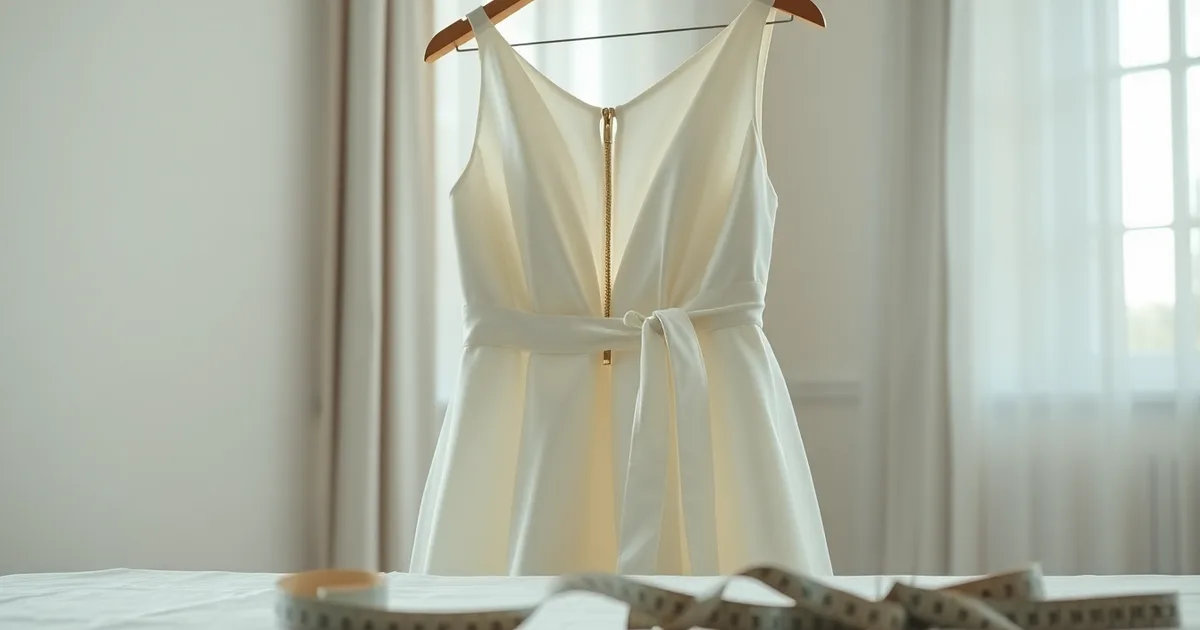
A zipper that won't close means the dress is 1–3 inches too small at the ribcage or waist seam, not that the zipper is broken. Don't force it. A tailor can convert to a corset back for $40–$70, insert side gussets for $35–$60, or let out a seam for $25–$50, typically within 24–48 hours.
The zipper is a symptom. It gaps because the fabric on either side of it has nowhere left to go. Ripping out that zipper and sewing in a new one costs $25–$45 and adds zero circumference, which is why the repair quote you got on the phone was never going to solve this.
What most bridesmaids don't realise is how little fabric is hiding in the seams. Standard wedding and bridesmaid construction uses a 5/8-inch seam allowance, which means letting a seam out completely yields at most 1.25 inches total across the dress. If your gap is bigger than about 1 inch per side, letting out seams alone won't close it.
That leaves two real options, and which one you pick depends on the gap. Under 1 inch: side gussets or seam letting. 2–4 inches, or a body that might shift before the wedding: corset back. Both are routine work for a bridal alterations shop, and neither is a same-day home fix. Call ahead and say the words "corset back conversion" and "48 hours" when you book, because not every shop keeps that turnaround open this late.
- Corset back is the only adjustable fix: A lace-up panel replacing the zipper adjusts across 2–4 inches, so it still fits if your weight shifts before the wedding day.
- Seam allowance is smaller than you think: A 5/8-inch allowance let out completely gains 1.25 inches total, so it only closes gaps under roughly 1 inch per side.
- Zipper replacement adds nothing: Swapping the zipper runs $25–$45 and does not add a single inch of circumference. Skip it.
- Rush fees are standard, not a scam: US bridal shops average $40–$95 for a corset-back conversion plus a $25–$40 rush fee for 24–48 hour turnaround as of 2026.
- Size exchanges are almost impossible now: Most bridesmaid dresses are ordered 4–6 months out, and David's Bridal, Azazie and Birdy Grey allow only 14–30 day returns, so a new size in the final week is off the table.
Can a tailor actually fix a bridesmaid dress that's too small in one week?
Yes, but the list is short and unforgiving. Three alterations genuinely buy you inches: a corset-back conversion, a gusset set into the side seam under the arm, or letting out an existing seam that has allowance left in it. Everything else — zipper replacement, "stretching," a prayer and a long spoon — does not create fabric that isn't there. A $25–$45 zipper replacement is the single most common waste of money in this situation, because the YKK zip on your dress is almost certainly fine. It gapped because the ribcage or waist seam is 1–3 inches short of closing, and a new zipper in the same seam will gap in exactly the same place by Saturday morning.
Turnaround, realistically: 24–48 hours at a shop that does bridal work regularly, and yes, you will pay for it. Rush fees in 2026 run $25–$40 on top of the alteration itself, and a corset-back conversion averages $45–$70. Some shops quote 72 hours because they're fitting you between existing bridal orders; ask what time of day the dress comes back, not what day. What is genuinely impossible in a week is anything requiring new fabric in a matched dye lot, a full bodice rebuild, or an exchange. Check the return window before you rule it out — major US brands including Azazie and Birdy Grey typically allow 14–30 days from delivery, and Reformation and BHLDN run similar windows, so if you're inside it and the size is wrong, returning is cheaper than every alteration on this page.
On dry cleaners: many offer alterations, and a few are excellent. The ones that offer to "stretch" the dress are neither. There is no steam, press, or spray that permanently adds circumference to a woven polyester lining, and the heat involved is how you end up with a shiny, scorched panel that no tailor can hide. ASTM D2594 covers the stretch recovery of spandex-blend fabrics, and even a Spandex-heavy bridesmaid dress only gives 2–4% with body heat — roughly half an inch on a 26-inch waist, temporary, and gone by the ceremony.
What actually gets you the inches
A corset-back conversion replaces the zipper panel with lacing and a modesty panel, and it is the only fix that adds two or more inches of real adjustment while making the dress forgiving of a late lunch. A gusset is the quieter option when the dress has a back you don't want to alter — a triangular panel of matching or near-matching fabric let into the side seam, invisible from the outside if the seamstress is good. Letting out a seam is the cheapest and first thing any tailor will check; standard allowance is 5/8 inch per side, which yields about 1.25 inches total once both sides are released. Go in asking which of the three your dress can take, and bring the shoes.
Which is better: corset back conversion or side gussets?
Two structural fixes exist, and they solve different problems. A corset-back conversion replaces the zipper and the upper centre-back seam with a laced panel — usually a modesty panel behind it so you are not showing skin down to the waist. It buys you 2–4 inches of adjustability that you can tighten or loosen on the morning of the wedding, which matters because a dress that closes at 7am can gape by 2pm. Side gussets add a wedge of matching or toning fabric at the side seam under each arm: 1–2 inches per side, hidden by your own arm in most poses. Neither touches the zipper, because the zipper is not the failure point.
| Fix | Extra room gained | Cost (2026, US) | Best on | Fails or shows on |
|---|---|---|---|---|
| Corset back conversion | 2–4 in total | $45–$70 | Any back style with a centre seam | Closed keyhole backs; dresses with no centre-back seam to open |
| Side gussets (both sides) | 2–4 in total (1–2 in per side) | $35–$60 | A-line, fit-and-flare, empire waists | Column and bias-cut dresses — the wedge reads as a visible seam |
| Letting out side and centre-back seams | 1.25 in total from a standard 5/8 in allowance | $25–$50 | Gaps under 1 in per side where the allowance is untouched | Dresses already altered once, or cut with 3/8 in allowances |
| Zipper replacement | 0 in | $25–$45 | Nothing in this situation | Always — the new zipper gaps the same amount as the old one |
| Rush fee, any of the above | No fabric change, time only | +$25–$40 for 24-hour turnaround | Any fix booked inside 48 hours | Tailors who are already booked; call before you travel |
The corset back wins for most people reading this, and it wins for one reason: it is adjustable after the alteration. If your weight shifts by two pounds, if the Spandex blend relaxes 2–4% under body heat by the ceremony, or if you eat a full dinner at the reception, you retie the laces instead of holding your breath. It is also the only option that works when the gap is 2 inches or more, because gussets are capped at 1–2 inches per side before they start distorting the drape.
The flip case is real, though. If your dress is a bias-cut column in silk or a heavy crepe with a low, keyhole-style back and no centre seam to sacrifice, a corset conversion means rebuilding the entire back panel, which pushes past $150 and risks a visible seam line down the spine. On that dress, gussets are the better call — or a gusset on one side plus letting out the existing 5/8-inch allowance on the other, which lands around $60–$90 total. And if your tailor offers to replace the zipper instead, walk out. A tailor who proposes a zipper swap as the fix for a closed gap has not measured you, is not listening, and will hand back a dress with a new zipper that gaps exactly as much as the old one — except now you have paid $25–$45 and lost two days.
What can I do tonight without a tailor?
Everything below buys time, not fit. It redistributes tension away from the gap so the zipper stops climbing open, and it works best when the shortfall is 1 inch or less. Measure the gap first: zip the dress as far as it will go without pulling, then measure the distance between the zipper halves at the top. That number decides which of these is worth your evening.
- Bra extender on the dress, not the bra. Hook a three-row extender ($6–$12 at Target or Amazon in 2026) onto the dress's own hook-and-eye above the zipper. It gives you roughly 1 inch of slack exactly where a fitted bodice pulls hardest. Choose a color close to the lining; a white extender against navy crepe reads as a mistake in photographs.
- Low-back converter strap. Sold at David's Bridal for $10–$18, this moves the closure point down your spine by about 1 inch, which lowers the whole back line rather than adding fabric. It only helps if the dress has bra hooks and you are willing to wear a low-back bra or adhesive cups underneath.
- Leave the top 1–2 inches open and cover it. A pashmina, a structured bolero, or shoulder-length hair down the back hides an unzipped top completely. This is the only option here that costs nothing and it is genuinely undetectable in most ceremony photos.
- Check the seam allowance before you buy anything. Standard allowance is 5/8 inch, and letting out both side seams gains about 1.25 inches total. That is a tailor's job, but knowing the number tells you whether a $25–$45 zipper replacement is even relevant. It is not: the zipper is not the constraint.
- Do not count on stretch. Spandex-blend dresses gain 2–4% under body heat by ASTM D2594, which on a 28-inch waist is about 1 inch. Useful, but it arrives after 20 minutes of wearing, not on demand, and it disappears the moment you step into air conditioning.
- Pin the gap from the inside with safety pins if you must. Two pins placed horizontally across the open section, catching the seam allowance only, will hold for a few hours. They will also leave holes in satin that a steamer will not close. Reserve this for a dress you do not plan to resell.
- Photograph the gap now. A phone photo taken straight-on, in the lighting you will actually be standing in, gives a seamstress the one thing she cannot get from your description over the phone. Most will quote a corset-back conversion at $45–$70 with a $25–$40 rush fee for 24-hour turnaround, and they will want that photo before they commit.
The item people get wrong is the bra extender. It is designed for a bra band, and a dress bodice hook is often a different gauge, so it either will not clip or it pops under tension within an hour. Buy two, test the fit tonight while you can still return the unused one, and check the return window on the dress itself before you alter anything — major US brands including Azazie, Birdy Grey and David's Bridal run 14 to 30 days, and a home alteration voids it.
How much does each fix really cost — and what's the catch?
A corset-back conversion runs $40–$70 at most US tailors in 2026, and that is the flat quote before anyone mentions a deadline. Quote the turnaround first: a 24-hour job adds $25–$40, which is why the same conversion priced at $45 on a Tuesday costs $85 on a Thursday before a Saturday wedding. Side gussets sit $35–$60, seam let-out $25–$50, and both carry the identical rush surcharge.
Two costs stay invisible until the invoice. Corset conversion almost always requires a modesty panel behind the lacing, a $10–$20 add-on that tailors rarely include in the headline price. Seam let-out assumes a standard 5/8-inch seam allowance is still intact inside the dress; if a previous alteration already trimmed it, that row of the table below simply disappears for you.
| Fix | Base cost | Rush fee (24 hr) | Realistic all-in range | The catch |
|---|---|---|---|---|
| Corset back conversion | $40–$70 | $25–$40 | $75–$110 | Modesty panel runs $10–$20 extra; adds a visible lace-up the bride may not have approved |
| Side gussets | $35–$60 | $25–$40 | $60–$100 | Needs matching fabric; contrast panels stay visible from the front in photos |
| Seam let-out | $25–$50 | $25–$40 | $50–$90 | Standard 5/8-inch allowance gains only 1.25 inches total, and only if it hasn't already been trimmed |
| Bra extender (DIY) | $6–$12 | $0 | $6–$12 | Buys 1–2 inches at the hook closure only; useless if the gap runs the length of an invisible zipper |
| Low-back converter strap (DIY) | $10–$18 | $0 | $10–$18 | Occasionwear stock, hit or miss — David's Bridal and Amazon carry it, most Target stores don't |
| Zipper replacement | $25–$45 | $25–$40 | $50–$85 | Fixes nothing if the dress is too small — the new YKK zipper will gap exactly like the old one |
Seam let-out wins on price, but only if you genuinely need 1.25 inches or less and the seam allowance is still there — open the dress and check before you book. Anything past 1.5 inches at the waist or ribcage flips the answer to corset back: it absorbs 2–4 inches of gap, forgives a final-fitting weight swing, and costs $75–$110 all-in with rush, which beats a $50 zipper replacement that fixes nothing.
Can I just lose weight before Saturday?
No. Two to three inches off a ribcage in six days is not a weight-loss problem, it is a physics problem, and the physics does not care how motivated you are. The measurement that is failing on you is taken around the fullest part of your ribs, just under the bust, where there is almost no fat to lose in the first place. Most of it is bone and the muscle you breathe with. A crash diet in wedding week costs you water, glycogen and the contents of your gut, which shows up on a scale and almost nowhere on a tape measure at the ribcage. Even a genuinely successful five-pound week, which nobody has, buys you roughly half an inch at the waist and about a quarter inch at the ribs. You need ten times that.
What a crash diet does buy you is a worse dress. Cutting carbohydrates hard drops sodium and water fast, and by day three most people are lightheaded standing up too quickly — at a ceremony that runs 30 to 45 minutes on your feet, often in a warm room, in September. Dehydration flattens your face and your energy before it flattens your ribcage. Then there is the rebound: a single glass of champagne and a plate of reception food after four days of almost nothing puts glycogen and water straight back into the tissue, and the dress that zipped at 9am is straining by the toasts. Bridesmaids faint at weddings. It happens, someone catches them, and it is the story everyone tells for a decade.
The fix that actually follows your body is the one you wear on the day. A corset-back conversion, $45–$70 at most US shops as of 2026, replaces the zipper with lacing and a modesty panel, which means the fit is set by how tight you pull the laces that morning rather than by a number a pattern grader decided eighteen months ago. It tolerates a 2–3 inch gap. It also tolerates the two pounds of water and dinner you will carry by 9pm, which no zipper does. If a shop is already doing other work on the dress, the conversion is often the cheapest single line on the ticket, and it is the only one of these fixes that adjusts on the day instead of on a deadline.
What do I tell the bride?
Message her the same day you find out, before you have a plan. The script that works is short and specific: "The dress is too small at the zipper. I'm seeing a tailor tomorrow and it'll be fixed by Thursday. I'll send you the receipt." Note what it does. It names the problem once, states a date, and closes the loop on who owns the outcome. What it does not do is ask her a question. A bride in the final two weeks is fielding vendor calls, seating charts and a photographer's shot list, and a bridesmaid who hands her one more decision — "should I try to exchange it, or find someone, or what do you think?" — has just converted her own problem into the bride's problem.
If the dress came through a group order from Azazie, Birdy Grey or David's Bridal, resist the urge to say anything about the brand or the size chart in that first message. Return windows at the major US brands run 14–30 days and most of them closed weeks ago; rehashing the ordering decision changes nothing and gives the bride something to feel guilty about. She picked the dress. You are absorbing the cost. Keep those two facts separate.
Then send the receipt. Ten seconds of photography, and it settles the only question the bride actually cares about, which is whether this is handled or whether it will surface again at 6am on the wedding day. Cover the fix yourself unless the bride offers — a corset back conversion runs $45–$70 in 2026 and a rush fee adds $25–$40, which is real money but not the kind of money worth a negotiation in the last week. If she does offer to split it, take the offer without drama. Declining a bride's money is its own form of making her think about it.
One exception. If the gap is large enough that the tailor says the ribcage seam cannot be resolved without visible reconstruction — usually past three inches — tell her that on the same day, and tell her the options you were given rather than a verdict you invented. She may prefer you in a different dress from the same collection, and she has the authority to make that call. What she cannot do is make it blind.
How do I find a tailor who can do this tomorrow?
This procedure is for a dress you already own, with the wedding 24 to 72 hours out, and a zipper that gaps 1 to 3 inches at the ribcage or waist seam. It assumes you have roughly $90–$130 available, a car or a rideshare budget, and about two hours today. It does not work on a Sunday, and in much of the US it does not work on a Monday either, because bridal alteration shops cluster Tuesday through Saturday.
- Search "bridal alterations [your city]" and skip every result that is a dry cleaner with a sewing machine in the back. Dry cleaners send work out or hand it to whoever is free. Google Maps listings with "Dry Cleaning" as the primary category and alterations as a secondary tag are the ones to skip, no matter how many five-star reviews they have. You want shops whose photos show dress forms, a serger, and a rack of gowns in plastic. Fifteen minutes of scrolling.
- Call three shops, not one. The opening question is not "can you fix a zipper." It is: "Have you done a corset-back conversion in the last 30 days?" A bridal shop that does them regularly will answer without hesitation and can describe the last one. A shop that says "we can do anything" is telling you they have not. If two of the three say no, keep calling — a 20-mile drive to a shop that has done six this month beats a 2-mile drive to one that has done zero.
- Ask for a 24-hour turnaround and get the rush fee quoted before you drive over. Expect $25–$40 on top of the base. The conversion itself runs $45–$70 in 2026, so a fair total for a rush corset-back is $70–$110. Anything under $45 total means someone is planning to hand-sew it, and hand-sewn corset loops fail. Anything over $150 is a shop pricing you out because they don't want the job.
- Bring the dress, the shoes, and the exact bra and shapewear you will wear on the day. This is the step people botch. A corset back is fitted to your ribcage as it will be on the day. Show up in a sports bra and the conversion comes out too loose in the bust and too tight at the waist. Wear the shoes too — a 3-inch heel changes your posture, and your posture changes your ribcage measurement. If you forget the bra, buy a low-back converter strap ($10–$18 at David's Bridal) on the way rather than fitting in the wrong one.
- Ask the fitter to measure the gap with the dress on before they quote. If they quote without putting you in the dress, walk. A 2-inch gap at the zipper top and a 2-inch gap at the waist seam call for different work — one may only need a 5/8-inch seam let-out at the side seam, which gains 1.25 inches total and costs far less than a full conversion.
- Confirm in writing, text is fine, the pickup time and the price. Vague promises are how people end up without a dress on Friday night. Ask them to text you a photo of the finished back panel before you leave the shop. A decent tailor will not find this strange; the bad ones will.
- Budget the pickup into your day. Do not send a friend. Try the dress on in the shop before you pay and bend forward, sit down, and raise both arms. If the corset laces pop or the modesty panel shows daylight, that gets fixed now, not at the venue.
The failure mode is the shop that says yes to everything and then, at hour 20, tells you they couldn't source the boning or the lacing and offers to "just take the zipper out and pin it." Do not accept that. Take the dress back unfinished and drive to the next name on your list — a naked back with no corset panel is worse than a gaping zipper, because a gaping zipper can still be covered with a wrap, a bolero, or a well-placed brooch from the bride's emergency kit. The one thing that cannot be rescued is a seam that has been cut open and re-closed badly by someone who was never going to finish the job.
Frequently Asked Questions
Can a zipper be replaced to make a dress bigger?
No. A new zipper adds zero circumference to a dress. Replacing one runs $25–$45 at a US dry cleaner or tailor in 2026, and the fit problem stays exactly where it was, because the zipper failed under strain rather than being defective. Your dress needs extra fabric at the seam, not new hardware.
Zipper replacement only makes sense when the teeth are actually broken or the pull has separated from the slider.
How much does it cost to convert a bridesmaid dress to a corset back?
$40–$70 in the US in 2026, including the lacing panel and the boning to keep the back edge from rolling. If you need it back in 24–48 hours, expect a rush fee of $25–$40, which pushes the total toward $110.
Prices sit at the high end for satin and lined crepe, and at the low end for unlined cotton or chiffon. Chain alterations shops quote less than independent seamstresses but often take longer.
Can I let out a bridesmaid dress myself?
Only if the dress has a 5/8-inch seam allowance and the gap is under 1 inch per side. Most bridesmaid dresses ship with 3/8 inch or less, and unpicking those seams leaves visible needle holes in satin, chiffon and crepe that no iron will close.
Check the allowance first by turning the dress inside out and measuring from the stitch line to the raw edge. Under 1/2 inch, hand it to a tailor.
What if the dress is too small in the bust but fits everywhere else?
Start with a bra extender ($6–$12) and a low-back converter strap ($10–$18); each buys roughly 1 inch of relief, and both are drugstore or Amazon purchases you can have tomorrow. If the gap still exceeds an inch once you have adjusted the bra, you need a bust gusset or a corset back conversion.
How long does a corset back conversion take?
A skilled tailor does the actual work in 2–4 hours. Most quote 24–48 hours turnaround because of queue, especially in wedding season from May through September, and a same-day request usually carries a rush fee of $25–$40.
Book at least two weeks before the wedding if you can. The week of a Saturday ceremony, every tailor in the area is already full.
Is it safe to use safety pins to close a zipper on the wedding day?
No. Safety pins pop open under the tension of a fitted bodice, the exposed coils scratch skin and snag fabric, and the metal shows the moment anyone stands behind you. Hidden corset-style ribbon lacing threaded through the zipper pull holes holds longer, but it is still a temporary fix that will fail during dancing.